
Lieferung heute & morgen

Qualitätsgarantie

Willkommens-Angebote freischalten: KOSTENLOSE Lieferung | Bis zu 80 % RABATT | Kostenlose 30-Tage-JoyPlus-Testphase
App herunterladen
The desire for the perfect cappuccino or a rich espresso no longer has to be an exclusive perk of your favourite café. With the right barista accessories, you can bring that experience right into your own kitchen. However, the market is saturated with tempting offers, and not every shiny gadget delivers on its promise. Many ambitious home baristas invest in expensive equipment, only to be disappointed by the results.
Before you make a purchasing decision, it's important to understand the most common pitfalls that lead to frustration and unnecessary expenses:
To avoid these problems, it's crucial to focus on the core parameters that truly make a difference to your coffee enjoyment at home.
Selecting the right equipment doesn't have to be complicated. Focus on three essential areas to make an informed decision that suits your needs.
The choice of machine is the foundation of your coffee setup. The decision between a fully automatic and a portafilter machine depends on your priorities: control or convenience.
For lovers of cappuccino and latte macchiato, the quality of the milk froth is decisive. Herein lies the difference between a standard plant-based milk and a special barista edition.
A barista oat milk like Oatly Barista or Alpro Barista is specially formulated to froth well. The key is an optimised protein and fat content. This composition allows for the creation of fine-pored, stable microfoam that is not only suitable for latte art but also provides a velvety mouthfeel. Conventional plant-based milks are mostly unsuitable for this purpose and result in an unstable, large-bubbled foam.
Often underestimated, but essential for the success of milk-based drinks, is the right accessory. A high-quality milk pitcher for latte art isn't just for aesthetics; it's a functional tool.
Pay attention to a precisely shaped spout. It allows for a controlled flow of milk, which is essential for creating patterns. The material, usually stainless steel, ensures excellent heat conduction, helping you feel the optimal temperature during frothing. A pitcher with sufficient volume (e.g., 450–500 ml) gives the milk enough room to expand during frothing and develop a silky texture.
Based on these criteria, we have identified a few products that are suitable for different needs and experience levels.
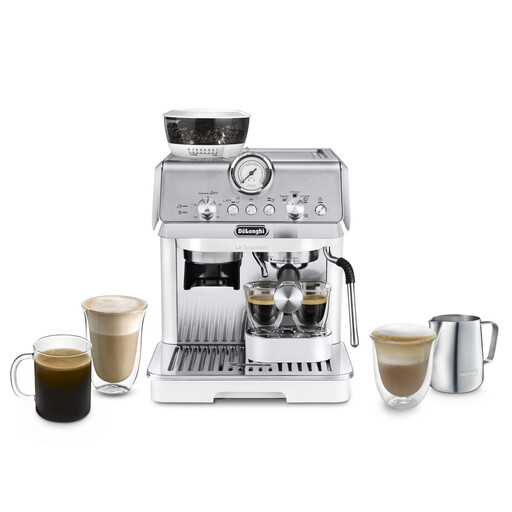
Why This Fits Their Persona: This machine offers the manual control of a portafilter machine but comes with a complete barista kit and preset recipes. This makes it an ideal device for those who want to learn the barista process without being overwhelmed.
It bypasses the trap of overly complex professional machines with its intuitive operation and an included accessory kit that avoids additional purchase costs.
Integrated grinder with 8 grind settings and 3 temperature levels for full control over extraction. The My LatteArt system enables the creation of fine-pored milk foam.
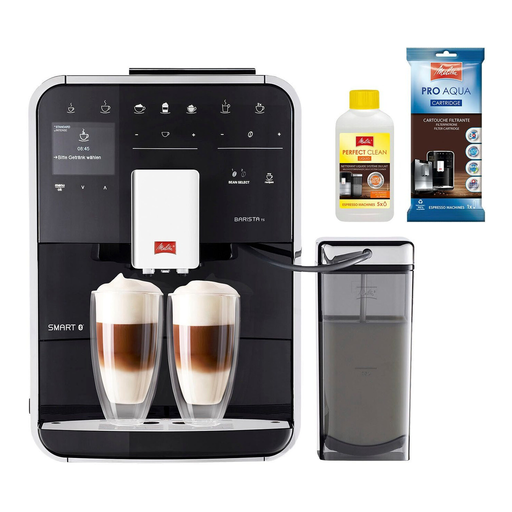
Why This Fits Their Persona: Perfect for households where different coffee preferences need to be met quickly and with consistently high quality. App control and the memory function for up to 8 people offer maximum convenience.
Solves the problem of hidden maintenance with a removable brew group and fully automatic cleaning and descaling programs that ensure longevity.
The two-chamber bean system allows for an easy switch between different types of beans. With 21 pre-programmed coffee variations, there's something for every taste.
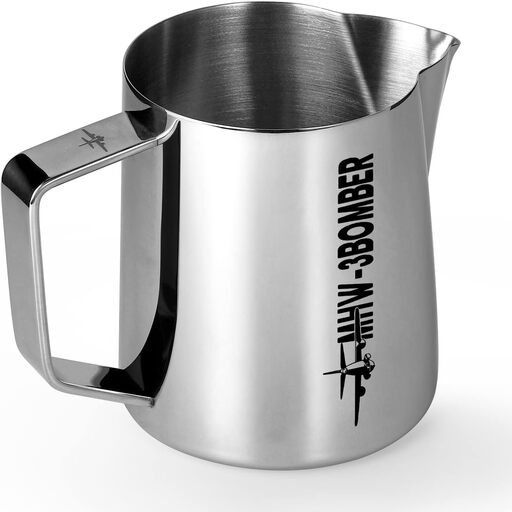
Why This Fits Their Persona: For those who already own a good machine and want to refine their milk-based drink skills. The precision spout is specially designed for intricate latte art and offers maximum control.
Instead of a generic pitcher with poor pouring control, this model offers a thoughtful, patented design for an objectively better pouring result and greater precision.
The patented spout design with two curved flow channels allows for a stable and precise milk flow. Made from 304 food-grade stainless steel for durability and safety.
Choosing the right plant-based milk is crucial for the perfect milk foam. We have curated a selection of products specifically designed for barista applications.
1. How often should a home espresso machine be descaled?
The frequency largely depends on the water hardness in your area and how often you use it. Most modern machines have an automatic indicator that reminds you. As a general rule, with average use and medium water hardness, descaling every 2 to 3 months is recommended. Always follow the manufacturer's specific instructions to avoid voiding the warranty and to ensure the longevity of the device.
2. Does every plant-based milk alternative for coffee work for frothing?
No. For a stable, fine-pored microfoam suitable for latte art, a special barista oat milk or another plant-based barista edition is required. These products have an adjusted protein and fat content to improve frothing capability. Conventional plant-based milks often result in only large bubbles or no foam at all.
3. What is the advantage of a portafilter machine with a built-in grinder?
The key advantage is freshness. Coffee beans lose their aroma very quickly after grinding. An integrated grinder ensures that the beans are freshly ground for every cup, which significantly improves the taste and crema of the espresso. Furthermore, this combination is more space-efficient than a separate machine and an additional coffee grinder.