
Lieferung heute & morgen

Qualitätsgarantie

Willkommens-Angebote freischalten: KOSTENLOSE Lieferung | Bis zu 80 % RABATT | Kostenlose 30-Tage-JoyPlus-Testphase
App herunterladen
As a Joybuy Product Recommendation Officer, I see countless products marketed as "educational" every day. My job is to filter this information and provide you with practical advice so you can make an informed decision—especially when it comes to the development of our little ones. Many parents are specifically looking for a screen-free learning tablet for kids to reduce screen time while nurturing their child's curiosity.
However, the educational toy market is filled with promises that aren't always kept. Before making a purchase, you should be aware of the most common pitfalls that lead to disappointment and unnecessary expense.
Common Pitfalls When Buying Educational Toys:
To ensure you get a durable, safe, and genuinely enriching toy, you should carefully examine three core areas.
Your child's safety is the top priority. Look for toys made from robust, non-toxic materials like ABS plastic, which is known for its durability. A crucial criterion is the CE marking, which confirms that the product meets applicable EU requirements for safety, health, and environmental protection. Also, check if the design is suitable for toddlers—with no small, easily detachable parts that could pose a choking hazard. This is especially important for an educational toy for ages 3 and up.
A good interactive learning toy does more than just play sounds. It should require active participation from the child. Look for devices that respond to the child's actions with clear audio feedback, for example, through an interactive pen that recognises pictures or words on flashcards. A broad range of topics is also important. A good word learning toy should cover not only individual terms but also simple sentences or logic games to engage different cognitive skills. Using flashcards for toddlers is a proven method for this.
The device should be intuitive for a child aged 3 to 5 to operate. Large buttons, a clear layout, and a child-friendly design are crucial here. A rechargeable battery, ideally with a modern Type-C port, is not only more environmentally friendly but also more practical than constantly replacing batteries. Portability is another plus, allowing the toy to provide screen-free entertainment on trips or at the grandparents' house.
Based on the criteria above, we have identified products that are suitable for different needs.
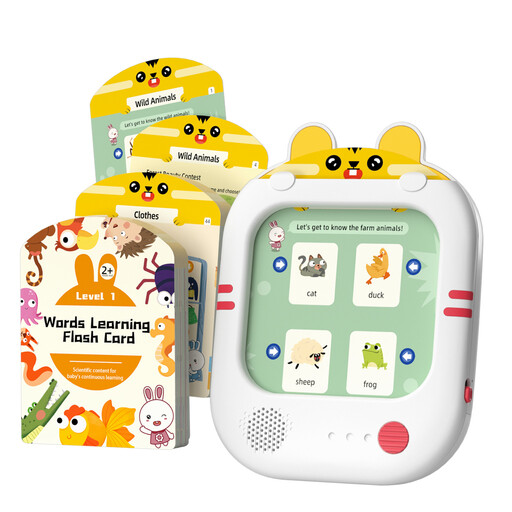
Why it's a great fit: This set was specifically designed for the needs of toddlers, directly addressing concerns about excessive screen time. It offers a structured, playful learning experience to promote language and logical thinking, making it an excellent and thoughtful gift for 3-year-old boys and girls.
The tablet comes with 47 double-sided flashcards covering over 180 words and 180 logic games. This provides extensive content without immediate follow-up costs, preventing the toy from quickly becoming boring.
The screen-free toy is easy on the eyes and promotes concentration. The interactive pen with clear audio pronunciation enables independent learning and provides an immediate sense of achievement.
We have compiled a complete, up-to-date list of products that fully meet these strict selection criteria and German safety regulations.
Most of these devices are designed as an educational toy for ages 3 and up. At this age, children have typically developed the necessary fine motor skills to handle the pen and cards safely. Furthermore, their language development is in a crucial phase, so they benefit greatly from interactive learning content like a word learning toy.
Look for a solid construction made from durable materials like ABS plastic. The most important safety feature is the CE marking, which confirms compliance with EU standards. Check the product for any loose or easily breakable small parts, especially if younger siblings are in the household.
The content often includes basic vocabulary, numbers, colours, animal sounds, and simple logic puzzles. Some models, like the Alilo Learning Tablet, offer a comprehensive starter pack with many flashcards for toddlers. Before purchasing, check exactly what's included to determine if all relevant topics are covered or if there might be future costs for expansions.