
Lieferung heute & morgen

Qualitätsgarantie

Willkommens-Angebote freischalten: KOSTENLOSE Lieferung | Bis zu 80 % RABATT | Kostenlose 30-Tage-JoyPlus-Testphase
App herunterladen
As a Joybuy Product Recommendation Officer, I see countless drivers struggle daily with incompatible charging solutions for their mobile devices. A dead smartphone on the way to an important meeting or a tablet that runs out of battery on a long family trip is more than just an annoyance. The selection of chargers is vast, yet many products fail to deliver on their promises.
This guide will help you avoid the typical pitfalls and find a USB-C car charger that truly fits your needs. We'll focus on the facts so you can make an informed decision.
Before we get to the solutions, it's important to understand the most common issues that lead to frustration and unnecessary expense.
To avoid the problems mentioned above, you should carefully check three technical features before buying.
The crucial figure isn't the total output, but the maximum power a single port can deliver. If you plan on charging a laptop in the car, you'll need a charger with a USB-C port that can provide at least 45W, or preferably 60W or more. For fast-charging modern smartphones, 20W to 30W per port is usually sufficient. A good 100W car charger should be able to intelligently distribute this power even when multiple ports are in use.
Modern devices use specific protocols for fast charging.
While USB-C is the new standard, many charging cables and older devices still use USB-A. A dual USB car charger that offers both USB-C and USB-A ports is often the most practical solution. This allows you to charge new and older devices simultaneously without needing to carry multiple adapters.
Here are some models that are suitable for different user profiles in the UK, based on their objective specifications.
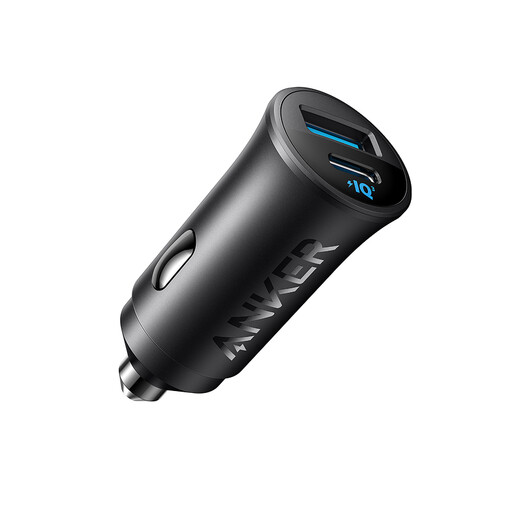
Why it's a good fit: Ideal for commuters who primarily want to charge their smartphone reliably and quickly. Its compact design is unobtrusive in the cockpit, and the combination of USB-C and USB-A offers flexibility for different cables.
The 30W USB-C port delivers dedicated fast-charging power for a single device, thus avoiding the trap of weak, shared power. Anker's MultiProtect technology also addresses safety concerns like overheating.
Combination of a 30W USB-C and a USB-A port. Very compact design that sits flush with the cigarette lighter socket.
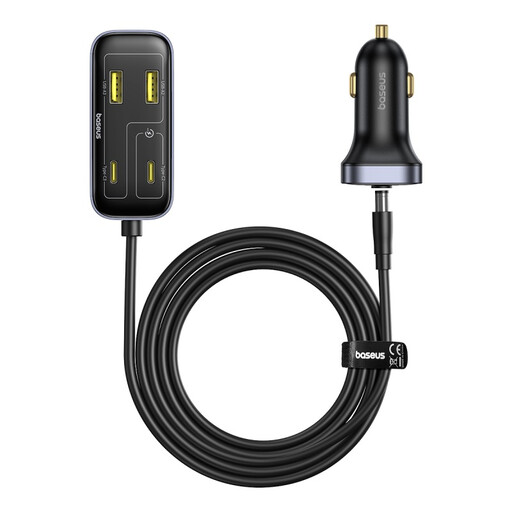
Why it's a good fit: Designed for long trips with multiple passengers. The extension unit brings charging ports directly to the back seat, allowing children to charge their tablets or gaming consoles without cable clutter across the car.
This model solves the accessibility problem. Instead of just charging in the front, it distributes ports throughout the vehicle. With 110W of total power and dedicated fast-charging ports (up to 30W), it bypasses the weak power trap for multiple users.
A total of 6 ports (3x USB-C, 3x USB-A). Separate hub unit for the back seat. Supports fast charging on multiple ports simultaneously.
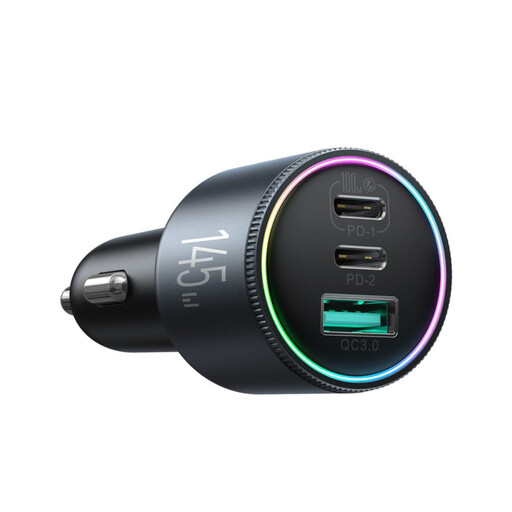
Why it's a good fit: For anyone who needs maximum power on the go to charge a laptop and other devices simultaneously at top speed. Ideal for a mobile office in the car.
With an output of up to 100W from a single USB-C port, it completely bypasses the power trap and enables charging for demanding devices. It also supports a wide range of protocols (PD 3.0, PPS, QC 4.0+), which minimises compatibility issues.
Very high total output of 145W. One port with up to 100W for laptops. Metal housing for better heat dissipation. Includes a 100W-capable USB-C cable.
We have compiled a complete, up-to-date list of products that fully meet these strict selection criteria and safety regulations.
When the engine is running, the car battery is charged by the alternator, so the charger won't drain the battery. In most modern vehicles, the power supply to the cigarette lighter socket is cut off when the engine is turned off. For older models or vehicles where the socket is permanently powered, it's advisable to unplug the charger when parked for extended periods to prevent battery drain.
Both are technologies for fast charging with a car charger, but they were developed by different companies and are based on different technical approaches.
Yes, the cable is an often overlooked but crucial factor. To utilise the full charging power, especially at high wattages (e.g., 60W or 100W), the charging cable must also be rated for that power. A standard cable can limit the power transfer or, in the worst-case scenario, overheat. When choosing a cable, make sure it supports the fast-charging capabilities of your charger.