
Lieferung heute & morgen

Qualitätsgarantie

Willkommens-Angebote freischalten: KOSTENLOSE Lieferung | Bis zu 80 % RABATT | Kostenlose 30-Tage-JoyPlus-Testphase
App herunterladen
A dead car battery is more than just an annoyance—it can derail your plans and lead to unexpected costs. A reliable car battery charger is therefore a wise investment for any vehicle owner. However, the market is crowded and full of technical promises that don't always deliver. Before you make a decision, it's crucial to know the most common pitfalls to avoid a poor investment.
As your Joybuy Product Recommendation Officer, I'll help you separate the good from the bad and find a device that truly fits your needs.
Many products advertise impressive numbers and features. But often, these hide limitations that only become apparent during use.
To make the right choice, you should focus on a few critical technical features. These determine the functionality, safety, and longevity of your device.
The most important metric is the charging current, measured in Amps (A). It determines how quickly the battery is charged. A simple rule of thumb is that the charging current should be about 10% of the battery's capacity (Ah).
Ensure the device is explicitly suitable for your battery type. A modern charger should have selectable modes for Lead-Acid, AGM charger, and Lithium charger (LiFePO4).
A high-quality charger operates fully automatically and protects your vehicle's electronics. Look for the following features:
Instead of presenting an overwhelming list, we have selected products for three typical user profiles.
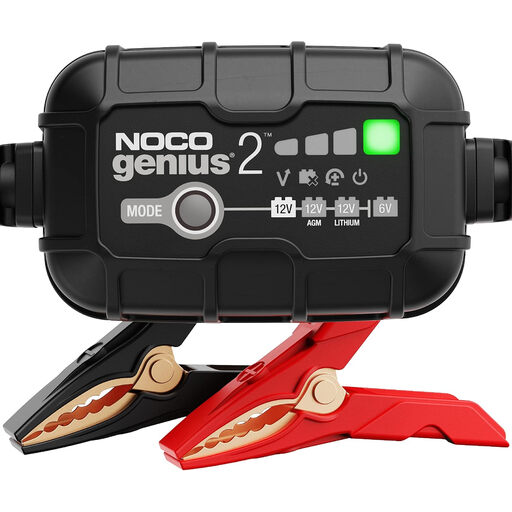
Why this device is a great fit: Ideal for car and motorcycle owners looking for a reliable maintenance charger for long-term care or for charging smaller batteries. Its compact design makes it easy to store.
It bypasses the compatibility trap with clear modes for 6V and 12V batteries, including Lead-Acid, AGM, and Lithium (LiFePO4). You simply select the correct type, and the device does the rest.
Features an integrated temperature sensor to optimize charging and a recovery mode for deeply discharged batteries (down to 1V).
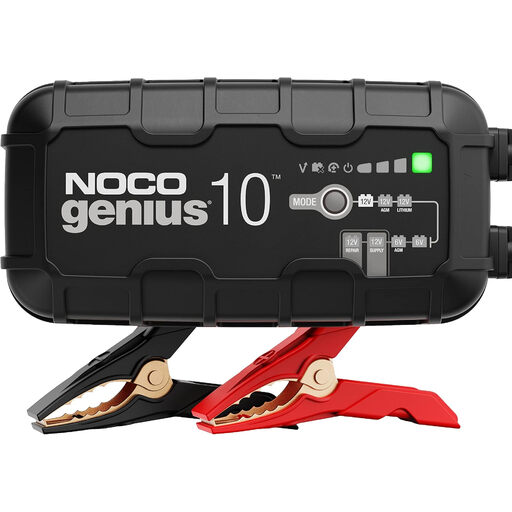
Why this device is a great fit: For owners of SUVs, vans, or vehicles with large batteries (up to 230 Ah) who need faster charging and advanced maintenance features. Also a solid choice for workshops.
This device delivers a constant 10A charging current, making it significantly more powerful than simple trickle chargers. It avoids the weak performance trap and efficiently charges large batteries.
Automatic desulfation and repair mode to restore battery performance. The integrated thermal sensor adjusts the charging cycle to the ambient temperature.
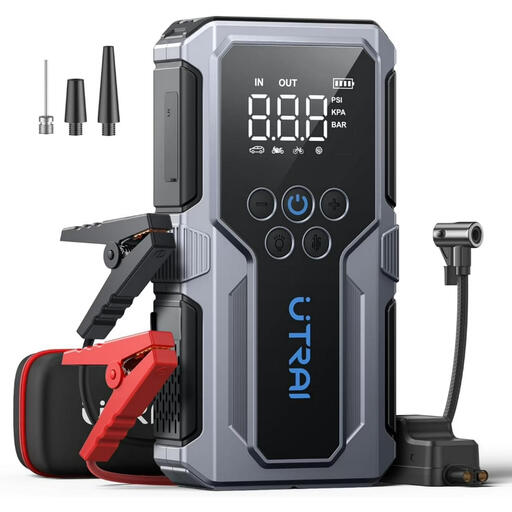
Why this device is a great fit: For anyone who wants a multi-functional emergency tool for the glove compartment. It combines a powerful **jump starter** with a digital tire compressor and a power bank.
This device avoids the weak multi-tool trap with clearly defined specs: 3000A peak current for engines up to 8.5L gasoline and a 150 PSI compressor with digital pressure preset and auto shut-off.
The large LCD screen clearly displays battery status and tire pressure. Ten built-in protection mechanisms, including reverse polarity protection with a visual signal, ensure safe use.
We have compiled a complete, up-to-date list of products that fully meet these strict selection criteria and safety regulations.
1. How long does it take to fully charge a car battery? The charging time depends on the battery's capacity (in Ah) and the charger's current (in A). You can get a rough estimate by dividing the battery capacity by the charging current and adding about 10-20% for charging loss. For example, a 60 Ah battery with a 6 A charger will take approximately 11-12 hours.
2. Can I leave a charger permanently connected to the battery? Yes, if it is a modern, smart trickle charger. These devices monitor the state of charge and automatically switch to a maintenance mode to prevent overcharging. This is ideal for winterizing vehicles. It is not recommended for simple, older chargers without this feature.
3. What is the difference between a battery charger and a jump starter? A car battery charger is designed to slowly and gently recharge a dead or weak battery over several hours. In contrast, a jump starter power bank (or jump starter) delivers a very high current for a few seconds to start the engine directly when the battery is too weak to do so. It doesn't charge the battery; it just bypasses it for the starting process.