
Lieferung heute & morgen

Qualitätsgarantie

Willkommens-Angebote freischalten: KOSTENLOSE Lieferung | Bis zu 80 % RABATT | Kostenlose 30-Tage-JoyPlus-Testphase
App herunterladen
We've all been there: you want to quickly cover some leftovers, but the cling film tears unevenly, sticks to itself instantly, or you can't find the start of the roll. A good clear film is an essential tool in any kitchen, but the differences in handling and quality can be significant. This article serves as a guide, introducing various models to help you choose the right film for keeping your food fresh. We'll focus on functional features like dispensing systems, material properties, and the right roll size for your needs.
To make the right decision, a few practical criteria are crucial. These features determine how efficiently and easily you can keep food fresh.
User-friendliness is one of the most important features. A cling film with a dispenser and a clean-cutting edge can save a lot of frustration. Some packaging offers integrated cutting systems or special holders that simplify unrolling and tearing off the film. Systems with an automatic start-finder, where the end of the film remains accessible after tearing, are particularly practical. This prevents the time-consuming search for the start of the roll.
The primary job of cling film is to create an airtight seal, protecting food from drying out and absorbing foreign odours. A high-quality self-adhering film clings tightly to the edges of bowls and containers made of glass, ceramic, or metal. Most modern films are made from food-safe polyethylene (food-grade PE film). This material is odourless and tasteless and is designed for contact with food. Pay attention to the manufacturer's specifications regarding material composition and food safety.
Cling films are available in various lengths, from compact 20-metre rolls for occasional use to large rolls of 75 metres or more. For single-person households or sporadic use, a smaller roll is often sufficient. Families, hobby chefs, or small catering businesses that regularly cover food, on the other hand, benefit from larger rolls that offer better value for money per metre.
Based on the criteria mentioned, we have compiled a selection of products that are suitable for different applications due to their specific properties.
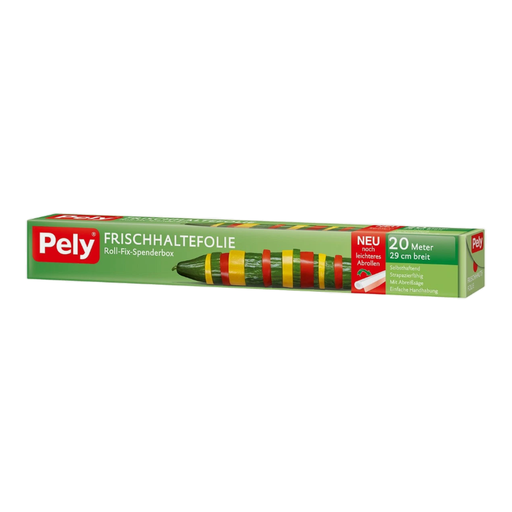
Why it stands out: The key feature of the Pely Cling Film is its patented Roll-Fix system. After each tear, the start of the film is automatically held in a ready-to-grip position. This completely eliminates the search for the end of the film.
Advantages:
Who it's for: Ideal for households that value maximum convenience and no longer want to deal with tangled or hard-to-find film ends.
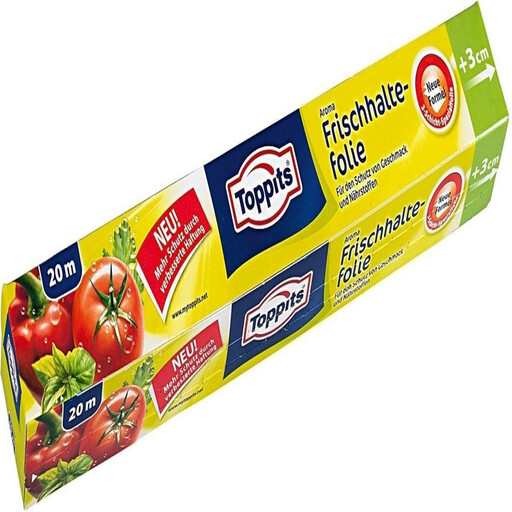
Why it stands out: The Toppits Cling Film is an established product known for its 3-layer special film. According to the manufacturer, this structure provides exceptional tear resistance and cling strength. The well-designed packaging supports easy application.
Advantages:
Who it's for: Users looking for a reliable and tear-resistant clear film from a well-known brand for daily kitchen use.
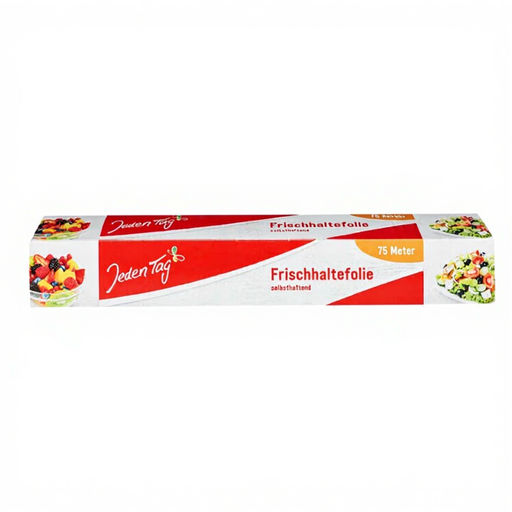
Why it stands out: This product is distinguished by its generous length of 75 metres. It is designed as a value pack and offers high yield for regular use.
Advantages:
Who it's for: Budget-conscious consumers, large families, or high-volume users who need a simple and economical solution for keeping food fresh.
If the products presented here don't exactly meet your requirements, or if you'd like to compare other sizes and designs, you can find a wider selection in our range.
Discover more products in our transparent paper category to find the perfect solution for your kitchen.
1. What is cling film typically made of? Most cling films available today are made of polyethylene (PE). This material is considered food-safe, is odourless and tasteless, and contains no plasticisers. In the past, PVC was sometimes used, but PE has established itself as the standard material for food-grade PE film.
2. How can I prevent cling film from sticking to itself? A proven tip is to store the film roll in the refrigerator. The cold reduces the film's static charge and adhesiveness, making it easier to unroll. Additionally, packaging with a good dispensing and cutting system, like a cling film with a dispenser, helps to minimise sticking.