
Lieferung heute & morgen

Qualitätsgarantie

Willkommens-Angebote freischalten: KOSTENLOSE Lieferung | Bis zu 80 % RABATT | Kostenlose 30-Tage-JoyPlus-Testphase
App herunterladen
Bean-to-cup coffee machines, espresso machines and portafilter machines require different care products. If you choose based only on pack size or a striking advertising claim, you can easily end up buying a cleaner that is unsuitable for your machine. Problems are particularly often caused by three common misconceptions:
When caring for a bean-to-cup coffee machine, two tasks should be considered separately.
Cleaning tablets for bean-to-cup coffee machines remove coffee oil, coffee fat and fine residue from the brewing unit, pipes and internal components. They are particularly relevant if the machine offers a tablet cleaning programme. A coffee-oil remover is not a substitute for a descaler.
Descalers for coffee machines dissolve limescale and mineral deposits in the water circuit. These can build up more frequently when using hard tap water. The display, user manual or selected water-hardness setting will usually provide guidance. For portafilter and espresso machines, liquid solutions or powders may be suitable, provided the manufacturer specifies them for the relevant model.
A practical rule of thumb is: removing coffee fat = cleaning, removing limescale = descaling. Combination packs can be useful if both care steps are needed regularly. However, they do not replace using each product correctly.
Check the model range first. Cleaning tablets for Siemens EQ, for example, are designed for machines in the EQ family and certain built-in bean-to-cup machines. According to the product information, the Siemens TZ80001A is intended for Siemens EQ300, EQ500, EQ6 plus, EQ700, EQ9 plus, EQ900 and EQ900 plus, as well as compatible built-in machines.
For De'Longhi, Philips, Saeco, Nivona, Gaggia and Sage, always follow the information on the product label and in the user manual. “Compatible with Siemens, De'Longhi, Philips, Saeco, Nivona and Sage” should not be considered sufficient on its own. Check whether the product is expressly approved for your type of machine – bean-to-cup, portafilter, capsule or espresso machine.
Tablets can be dosed individually and are often suitable for automatic programmes. Depending on the bottle size, liquid descalers can be measured out in different quantities. When choosing a descaler for espresso machines, details such as the active ingredient, required volume of water and number of applications are more important than general claims such as “powerful” or “fast”.
The product details include:
Cleaning chemicals must not be mixed with one another. Follow the safety instructions on the label and, where the product carries the relevant warnings, use protective gloves and eye protection. After descaling, you must carry out the rinsing process specified by the manufacturer.
Odourless and tasteless products may be useful for people who want to minimise additional smells in the water circuit. The Siemens TZ80001A is described as chlorine-free and fragrance-free. By contrast, the Nivona NIRT 701 cleaning tablet is marketed with a coffee fragrance and antibacterial properties. Such claims describe product features and do not constitute a medical or therapeutic promise.
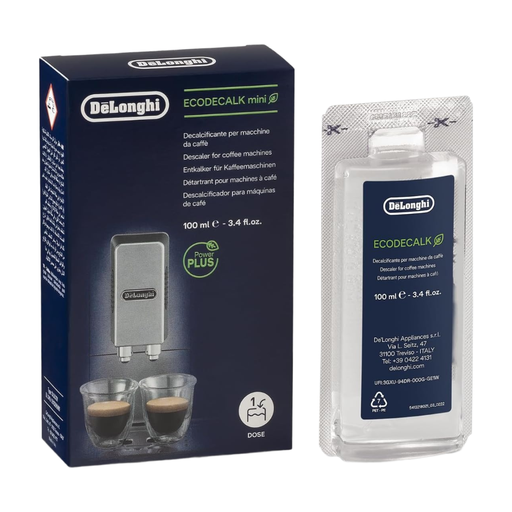
Why this product suits this profile: The 100 ml bottle is portioned for one complete descaling cycle, making it ideal for anyone who prefers simple use without lengthy dosage calculations.
The specified single dose reduces the risk of using too much or too little liquid. The machine’s user manual remains the definitive guide.
Liquid formula, 100 ml contents and, according to the product information, suitable for various coffee and espresso machines.
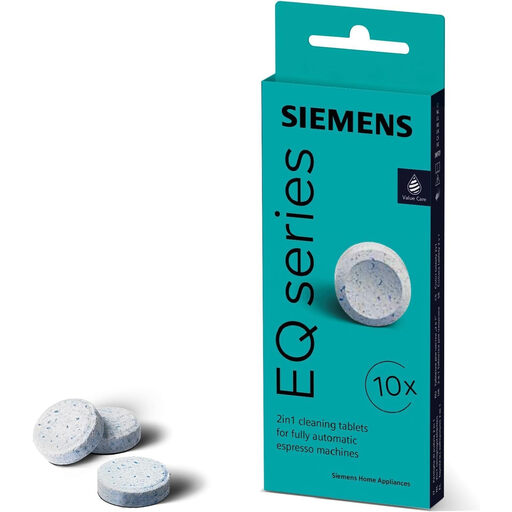
Why this product suits this profile: Owners of compatible EQ bean-to-cup machines receive a product identified as original accessories for the intended cleaning cycle.
The specific EQ compatibility list prevents a cleaning tablet from being used without checking the model first.
10 tablets, a fragrance-free and chlorine-free product specification, and designed for automatic Siemens cleaning programmes.
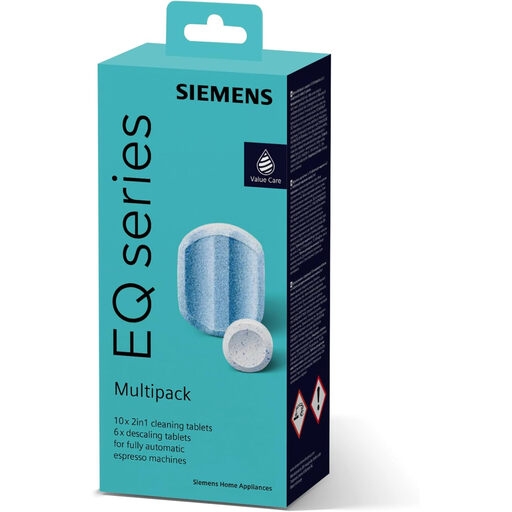
Why this product suits this profile: The set combines 10 cleaning tablets with 6 descaling tablets and is aimed at users who want to cover both care steps with one pack.
The separate tablet types make it clear that cleaning and descaling are different applications.
16 pieces in total, a fragrance-free product specification and stated compatibility with several Siemens EQ and built-in machines.
For more brands and specialist machines, you can also find the Gaggia descaler, Saeco CA6704/99 coffee-oil remover, Philips CA6700/22, Sage descaler and durgol Swiss Espresso. Before buying, always check the dosage and approval for your model.
We have put together a complete, regularly updated list of products that fully meet these strict selection criteria and the safety regulations applicable in the EU.
The cleaning interval depends on usage, the oil content of the beans and the machine model. Start the cleaning programme as soon as the machine prompts you to do so. Descaling also depends on the water hardness. Hard water may require a shorter interval. The information in the manual takes priority.
No. Both products should be used separately and only in the programme intended for them. Cleaning tablets are designed for coffee oil and organic residue, while descalers are for limescale deposits. The prescribed rinsing process must be carried out after each application.
Original cleaning products are not generally required for every machine. However, they provide clearly stated model compatibility. With alternatives, the active ingredient, dosage, material compatibility and usage instructions must be suitable for the machine. An unchecked tablet or incorrectly dosed descaler can result in residue or inadequate care.