
Lieferung heute & morgen

Qualitätsgarantie

Willkommens-Angebote freischalten: KOSTENLOSE Lieferung | Bis zu 80 % RABATT | Kostenlose 30-Tage-JoyPlus-Testphase
App herunterladen
Limescale deposits can affect water flow, heating time and the taste of your coffee. However, when buying a coffee machine descaler, you should not focus solely on terms such as “powerful”, “universal” or “particularly gentle”. What really matters is compatibility with your machine, the dosage and your specific care requirements.
Owners of bean-to-cup machines, espresso machines and filter coffee machines often face three typical purchasing challenges:
With a bean-to-cup machine, you should first identify the exact model. Relevant examples include Siemens EQ ranges, JURA bean-to-cup machines, De’Longhi coffee machines, Philips espresso machines and Sage appliances.
A descaler for bean-to-cup machines is often available as a tablet, powder or liquid. However, the format alone says little about whether it is suitable. Check the following:
An original descaler from the relevant brand offers clear compatibility. A universal coffee machine descaler may be worth considering if the manufacturer permits its use and the dosage is suitable for your machine.
The pack size should not be considered in isolation. What matters is how many complete descaling cycles it can provide. A 100 ml bottle may be intended for one application, while a 500 ml bottle at the same dosage may be sufficient for several cycles.
You should also consider the water hardness in your area and how frequently you use the machine. Hard water may require more frequent descaling. However, the machine manufacturer’s instructions remain the decisive factor. If a warning message appears, you should not unnecessarily postpone the descaling programme.
Descaling a bean-to-cup machine and cleaning the brewing unit are two different tasks:
With a multipack, you should therefore check whether it contains both types of care product. This can simplify maintenance if your machine has separate cleaning and descaling programmes.
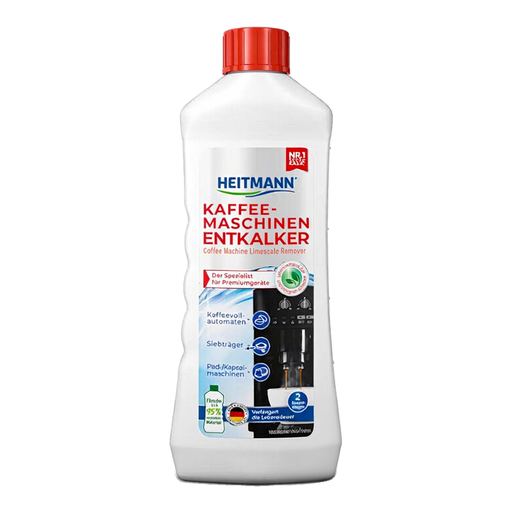
Why this product suits this profile: The liquid formula is easy to measure accurately. According to the product information, 50 ml is mixed with 500 ml of water and then used to flush two water tanks.
The precise mixing instructions prevent you from having to estimate the ratio yourself. Nevertheless, check your machine’s instructions before use.
250 ml contents; ingredients according to the product information: citric acid, lactic acid and corrosion inhibitor.
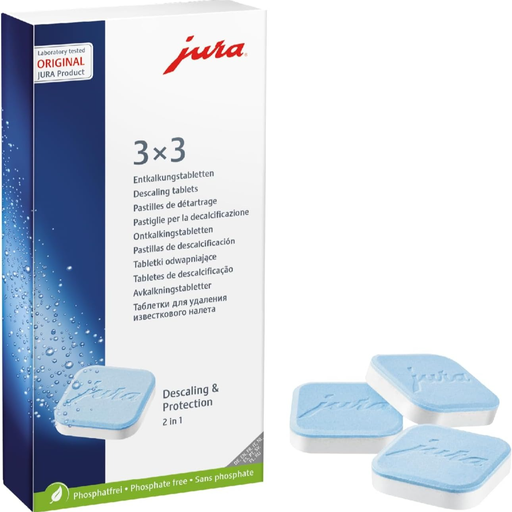
Why this product suits this profile: According to the product information, these tablets are intended for JURA bean-to-cup machines and are phosphate-free. The format suits users who prefer brand-specific care with clearly defined individual portions.
The clear association with JURA reduces the risk of using an unsuitable bathroom or kitchen cleaner. Dosage and programme sequence must follow the instruction manual.
9 tablets; two-phase descaling instructions and phosphate-free formula according to the product description.
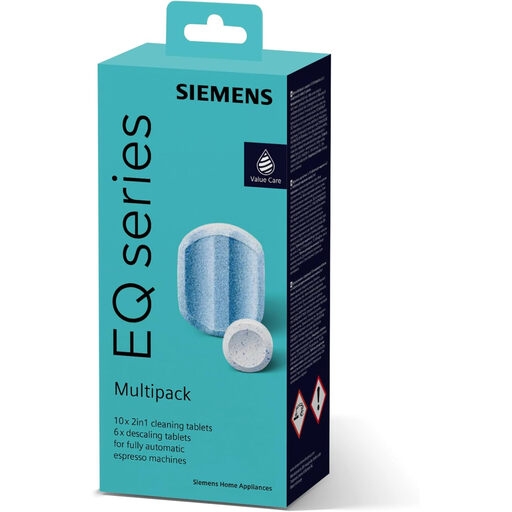
Why this product suits this profile: This set combines care products for Siemens EQ bean-to-cup machines and built-in appliances. It is aimed at households that want to keep cleaning and descaling products separate while storing them in one pack.
The separate types of tablets help prevent descaling from being confused with the removal of coffee oils. Check compatibility with your EQ model before buying.
10 cleaning tablets and 6 descaling tablets; fragrance-free and intended for several Siemens EQ ranges according to the product information.
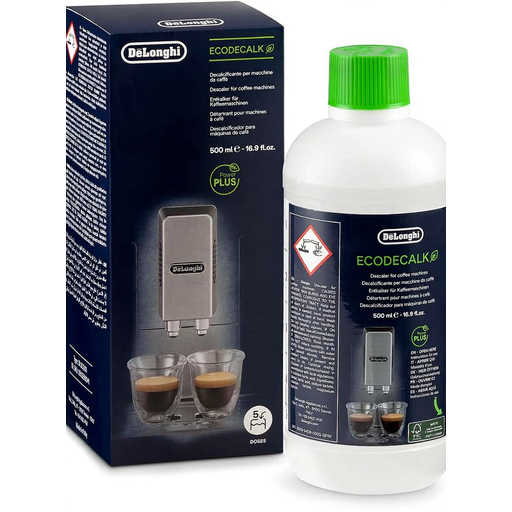
Why this product suits this profile: According to the product information, the 500 ml bottle is suitable for up to five applications when 100 ml is used per cycle. This makes it a good match for regularly used De’Longhi coffee machines.
The clearly marked 100 ml dose makes it easier to plan the quantity required. Use the product only as instructed for your appliance, then rinse thoroughly.
500 ml contents; 100 ml per application according to the product information; intended for De’Longhi coffee machines.
When handling concentrated liquids or powders, wear suitable protective gloves and avoid contact with skin and eyes. Descaler must not be swallowed and must not be mixed with bleach, ammonia or other cleaning products.
We have put together a complete, regularly updated list of products that fully meet these strict selection criteria and the safety regulations applicable in the EU.
This depends on the water hardness, how often you use the machine and its programme settings. Hard water or daily use may require a shorter interval. Follow the machine’s display and the information in the instruction manual rather than applying a fixed schedule.
No. These products are formulated for surfaces and sanitary installations. They may contain fragrances or surfactants and are not intended to come into contact with a coffee machine’s water system. Only use a descaler specifically indicated for coffee or espresso machines.
In most cases, yes, for bean-to-cup machines, as descaler and cleaning tablets perform different tasks. Descaler treats mineral deposits, while cleaning tablets primarily dissolve coffee oils and residue. Check which care programmes your appliance supports and how often they should be run.