
当日/次日达

品质保障

开启新人专享福利: 全场免邮 | 低至 2 折 | 免费试用 30 天 JoyPlus 会员
下载 Joybuy
As a Joybuy Product Recommendation Officer, I analyze market information to provide you with objective and practical purchasing advice. This guide will help you understand the critical features of a high-performance 3D printer and avoid common buying mistakes, especially if you're considering the Creality K1C 3D Printer.
Many users upgrading from an entry-level model invest in a machine that looks impressive on paper but fails to deliver in practice. Watch out for these three common problems:
To avoid these pitfalls, you should check three core technical parameters before buying. These determine whether a printer is truly suitable for demanding tasks like a 3D printer for prototyping.
For printing with abrasive filaments like carbon fiber 3D printer filament, a standard brass nozzle is unsuitable as it wears out quickly. A crucial component is a nozzle with a hardened steel tip. Combined with a direct drive extruder that feeds the filament directly and with a strong grip, the risk of clogging is minimized. Equally important is a hotend temperature of at least 300°C and an enclosed build chamber. The chamber ensures a stable ambient temperature, which is essential for processing materials like ABS, ASA, or PA-CF that are prone to warping.
A fast 3D printer is defined not just by its maximum speed in mm/s, but more importantly by its acceleration (measured in mm/s?). A CoreXY 3D printer like the K1C uses a belt system where the motors for the X and Y axes are stationary. This significantly reduces the moving mass of the printhead, enabling extremely high acceleration values (e.g., 20,000 mm/s?). It is this high acceleration that allows the printer to actually reach its top speed on complex geometries without losing quality. Additional features like dynamic balancing of the printhead help to further reduce vibrations.
Modern printers should simplify the entire workflow. An integrated 3D printer with an AI camera is more than just a gimmick here. It enables automatic error detection (spaghetti detection) and reliable remote monitoring. Features like one-touch fully automatic leveling eliminate one of the most common sources of error. A Klipper-based operating system (like Creality OS) also offers a modern user interface and seamless network integration for remote control and management of multiple printers. If you're looking to buy the Creality K1C, these are the features that make a difference in daily use.
Here are some product recommendations tailored to the specific needs of tech enthusiasts and professional users.
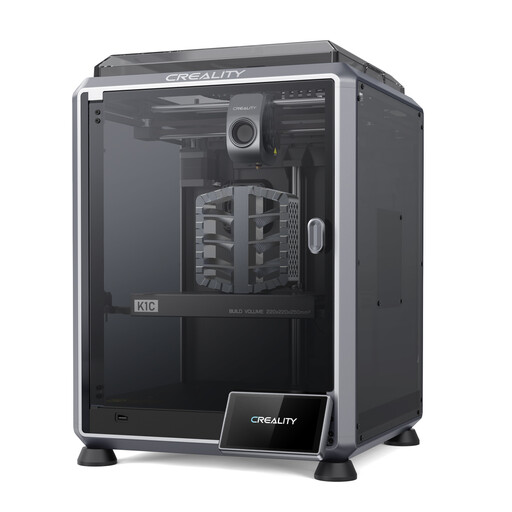
Why This Fits Their Persona: Ideal for engineers and prosumers who need to reliably produce functional prototypes and small-batch parts from engineering materials like carbon fiber composites. The combination of speed, material compatibility, and smart monitoring features maximizes productivity.
The tri-metal nozzle and clog-free extruder are designed for abrasive filaments. The CoreXY system delivers true high speed without quality loss. The AI camera and automatic calibration provide reliable "out-of-the-box" functionality.
Prints high-performance materials (PLA-CF, PA-CF, PET-CF) out of the box. The integrated AI camera enables active monitoring and error detection.
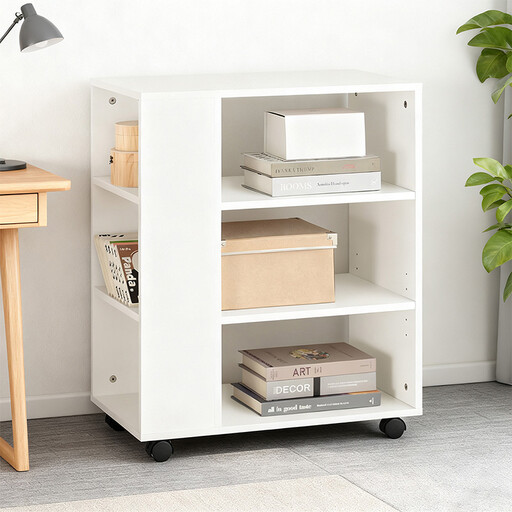
Why This Fits Their Persona: Perfect for users integrating their 3D printer into an existing office or a compact workshop. This cabinet provides a stable, mobile base for the printer, as well as storage for filaments, tools, and accessories.
Addresses the often-overlooked pitfall of a disorganized workspace. A high-performance printer needs a stable surface. This cabinet prevents instability and keeps essential materials within reach, optimizing the workflow.
High load capacity (up to 60 kg) for heavy equipment. The casters with locking brakes offer flexibility and stability. Adjustable shelves allow for customized organization.
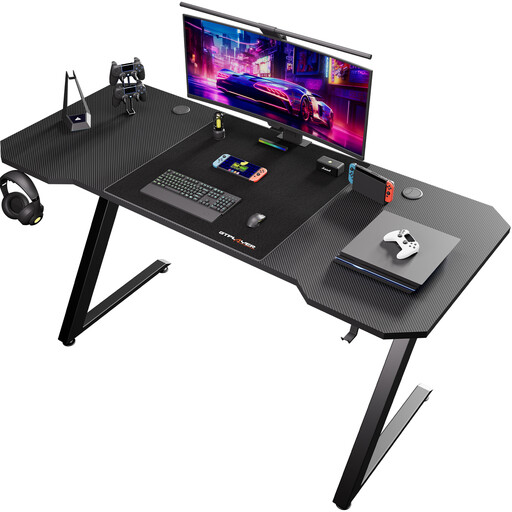
Why This Fits Their Persona: For hobbyists and prosumers who need a dedicated, robust workstation for the entire 3D printing workflow—from design on the PC to operating the printer. The large, stable surface provides space for the printer, monitor, and tools.
Counteracts the problem of an unstable or undersized desk, which can transfer vibrations to the printer and ruin prints. The sturdy metal frame provides the necessary stability that is crucial for a high-speed 3D printer.
Large and stable work surface (120 x 60 cm) with a robust construction that minimizes vibrations. The carbon fiber surface is durable and a great thematic fit.
A stable workspace is the foundation for successful 3D prints. We have compiled a list of products that meet strict criteria for stability and functionality.
The Creality K1C features a silent mode. According to Creality, the noise level can be reduced to ≤45 dB, which is comparable to the volume in a quiet library. This allows for operation in office environments or at home without significant disturbance.
Thanks to its 300°C all-metal hotend with a hardened steel tip and the enclosed build chamber, the K1C is designed to process standard filaments (PLA, PETG, TPU) as well as engineering materials. These include carbon fiber composites like PLA-CF, PA-CF, and PET-CF, as well as high-temperature resistant filaments like ASA.
Although the K1C offers advanced features for professional users, its easy setup with one-click auto-calibration and an intuitive user interface also make it accessible to ambitious beginners. However, its primary strengths lie in high-speed printing and processing engineering materials, which are typically more relevant for users with prior 3D printing experience.