
Lieferung heute & morgen

Qualitätsgarantie

Willkommens-Angebote freischalten: KOSTENLOSE Lieferung | Bis zu 80 % RABATT | Kostenlose 30-Tage-JoyPlus-Testphase
App herunterladen
Whether you are working with fabric, cardboard, leather, plastic, PVC pipe or wooden trim, cutting tools for DIY and crafting need to match the material, cutting method and frequency of use. Scissors that cut paper cleanly are not automatically suitable for carpet or plastic pipes. Electric models also differ in battery life, blade shape and safety features.
The term “multi-purpose” does not mean that a tool is equally suitable for every material. Electric scissors or cordless scissors can save time when cutting cardboard, felt or leather, but are not designed for metal pipes or very hard wooden trim. For PVC, PPR or PE, a PVC pipe cutter with a suitable opening width is more practical.
Blade shape, guidance and material thickness are also crucial. A rotary cutter, for example, is suitable for long cuts in fabric, while fabric scissors are used for precise contours and multiple layers. For mitre cuts, a clearly marked angle scale and a stable workpiece support are also important.
The stated runtime depends on the material, pressure applied and cutting length. So do not just check the battery voltage. Also look at charging method, charging time, replacement battery and USB-C compatibility. For a device with a permanently installed battery, it should also be clear how charging works and whether replacement blades are available.
First, identify the material you will use most frequently:
The product information regarding material suitability does not replace your own assessment of the specific material thickness. Never cut materials that the manufacturer does not specify.
For frequent use, it is worth checking for SK5 steel, carbon steel or stainless steel, as well as whether the blades can be replaced. Replaceable blades can extend the tool’s service life, but they also involve additional costs. Check how many replacement blades are included and whether further blades can be purchased easily.
With scissors, the grind, screw connection and handle geometry affect control. Dressmaking scissors with a 21 cm blade length are suitable for larger areas of fabric, while short craft scissors offer children easier, more manageable handling.
For skirting boards, cable trunking or vinyl profiles, an adjustable cutting angle is useful. Models with markings between 45 and 135 degrees can cover different mitre cuts. Check that the scale is easy to read and that a stop can hold the desired angle securely in position.
All sharp tools should have a safety lock, non-slip handle and protected storage. Electric cutting machines also require protection against accidental activation. Children’s scissors with plastic blades and rounded tips are intended exclusively for suitable craft materials and should be used under supervision.
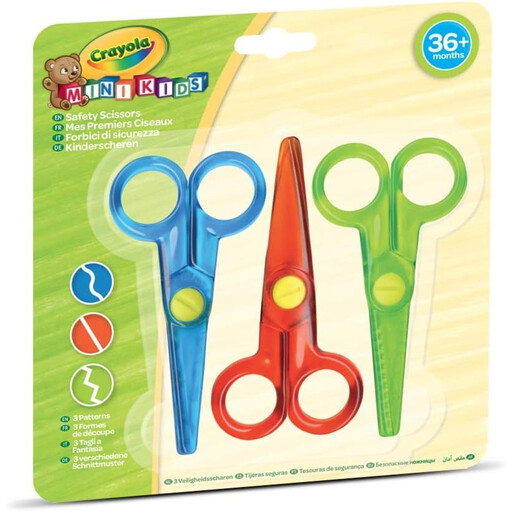
Why this product suits this profile: This set is designed for children aged three and over who are learning to cut paper and suitable craft materials for the first time.
The material limitations are clearly stated; the scissors are not intended for fabric, hair or hard materials.
Three pairs of scissors with plastic blades, rounded tips and handles for small hands; use under supervision.
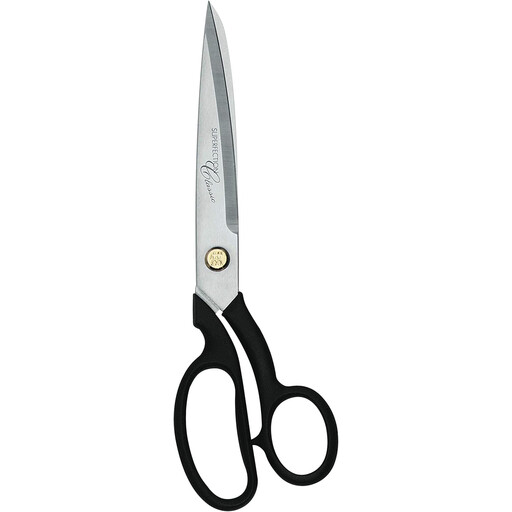
Why this product suits this profile: These 21 cm fabric scissors are designed for precise cuts in fabric, multiple layers, wool, paper and cardboard.
The product description specifies the material, blade length and handle design, rather than simply promising general multi-purpose use.
Stainless steel blades, ergonomically shaped glass-fibre-reinforced plastic handles and an adjustable precision screw.
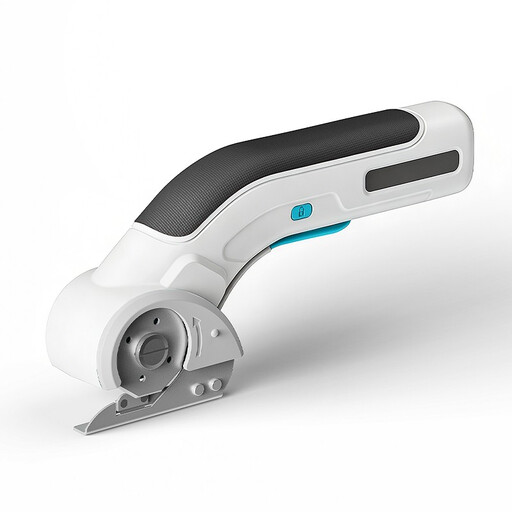
Why this product suits this profile: This model is designed for repeated cuts in felt, carpet, leather, cardboard and plastic, and operates cordless.
The battery, charging method, weight and noise level are stated clearly; the material limitations still need to be observed.
4.2-volt lithium battery, USB-C charging, around 11,000 revolutions per minute according to the product information, and tool-free blade replacement.
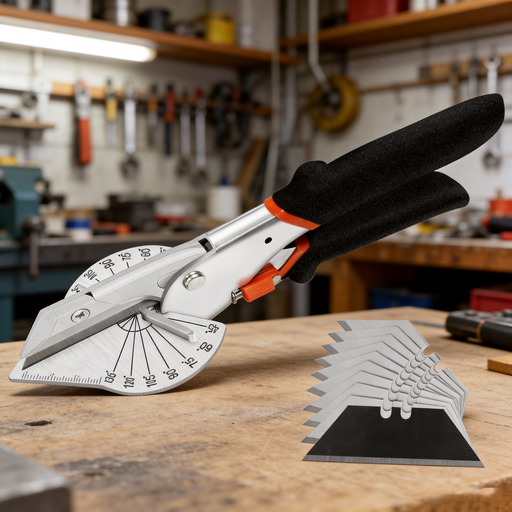
Why this product suits this profile: Adjustable angles are available for soft wooden trim, plastic profiles, PVC, rubber seals and decorative mouldings.
The scale covers 45 to 135 degrees and a safety lock is provided; hard or unsuitable materials remain excluded.
Aluminium-alloy handle with non-slip PPC covering, SK5 blades and ten replacement blades included.
We have put together a complete, regularly updated list of products that fully meet these strict selection criteria and the safety regulations applicable in the EU.
Clean the blades after use with a dry or slightly damp cloth and remove any material residue. Store cutting tools in a dry place. With electric models, switch off the device and disconnect it from the charger before cleaning or changing the blades. After every use, the safety lock should be returned to the engaged position.
Before buying, also check whether replacement blades are included. The GARTOL Multi Angle Miter Shears Cutter, for example, is listed as including two SK5 replacement blades. According to the product description, the DURATECH PVC Pipe Cutter is designed for plastic pipes up to 42 mm, but not for metal pipes. These limitations are more important when choosing a tool than general advertising claims.
For fabric and multiple layers, fabric scissors with a long, precisely ground blade are a sensible choice. Dressmaking scissors should be used exclusively for textile materials so that the blade does not lose its sharpness when cutting hard cardboard or plastic. For long, straight cuts, a rotary cutter with a suitable cutting mat can be an alternative.
Electric scissors or cordless scissors are particularly useful for making many repeated cuts in specified materials such as cardboard, felt, carpet, leather or plastic. For a few short cuts, manual scissors are often simpler, quieter and independent of the battery charge. Before buying, check the runtime, charging time, weight and blade replacement process.
Children’s scissors should be suitable for the child’s age, hand size and intended material. Rounded tips, plastic blades and a clear age recommendation can reduce the risk, but they do not replace adult supervision. According to the product information, the Crayola scissors mentioned are not intended for children under three.