
Lieferung heute & morgen

Qualitätsgarantie

Willkommens-Angebote freischalten: KOSTENLOSE Lieferung | Bis zu 80 % RABATT | Kostenlose 30-Tage-JoyPlus-Testphase
App herunterladen
A digital torque wrench can make work on bolted connections easier to manage: the target value is shown on a display, and a signal indicates when the specified torque has been reached. However, electronics do not automatically prevent incorrect use. If you focus only on “high accuracy” or a long list of accessories, you may end up buying a tool that is unsuitable for your intended application.
A 1/2-inch torque wrench with a range of, for example, 17 to 340 Nm is designed for larger fasteners on cars or machinery. For sensitive bicycle components, this range is usually far too high. If a tool is regularly used close to its lower limit, the readings are often less practical and fine adjustment can be more difficult.
For bicycle work, a 1/4-inch torque wrench or a small torque screwdriver with a range of around 2 to 30 Nm is often more suitable. A 3/8-inch torque wrench, on the other hand, covers medium-duty applications on motorcycles and vehicles.
Vibration, an audible signal or an LED display simply indicates that the set target value has been reached. It does not mean that every value is suitable for the component. Before tightening, always check the torque specified by the vehicle, bicycle or component manufacturer.
The specification is particularly important for carbon components, brake callipers, stems and lightweight parts. A torque wrench with a display is a measuring and assembly tool, but it is not a substitute for the relevant manufacturer’s technical specifications.
A comprehensive torque wrench set is not automatically more versatile. What matters is having the right bits, sockets, adapters and a suitable drive. It should also be clear whether the accessories are actually included in the delivery or are merely shown in the product images.
The measurement range must match the work you intend to carry out. For a bicycle torque wrench, low settings and fine increments are important. A motorcycle torque wrench often needs to cover medium ranges, while a car torque wrench generally requires a larger drive and higher values for wheel and suspension work.
The Movecrab models listed below state an accuracy of ±2 % clockwise. This information comes from the respective product description and should not be treated as equivalent to an independent calibration certificate. For frequent professional use, observe calibration intervals, test records and the manufacturer’s specifications.
Adapters can extend the range of applications. However, they do not change the permitted measurement range of the torque wrench. A 1/4-inch adapter does not turn a small tool into a suitable high-torque tool.
An electronic torque wrench with a display can show values in several units. The Movecrab models mentioned list Nm, in.lb, ft.lb and kgf.cm. This can be helpful when technical data sheets use different units.
A torque wrench with a signal should respond as clearly as possible. Vibration, sound and light are practical in workshops, but battery status, display visibility and the control layout should be considered before buying. With mechanical models, feedback is usually provided by a click. After use, an adjustable mechanical wrench should be unloaded and stored in accordance with the manufacturer’s instructions.
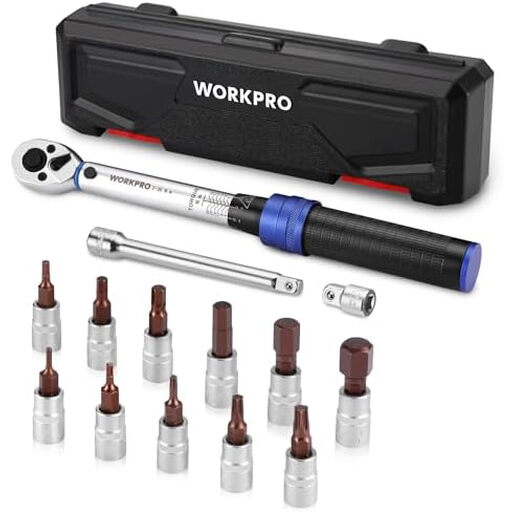
Why this product suits this profile: The range of 2 to 26 Nm and the 1/4-inch drive are suitable for many bicycle, motorcycle and DIY tasks. Bits, an extension and adapters are already included in the listing.
The clearly defined measurement range helps prevent a large vehicle tool from being chosen for small bicycle bolts. The stated accuracy is up to ±3 %.
72-tooth ratchet, adjustment in both directions, 14 accessories and a 102-mm extension.
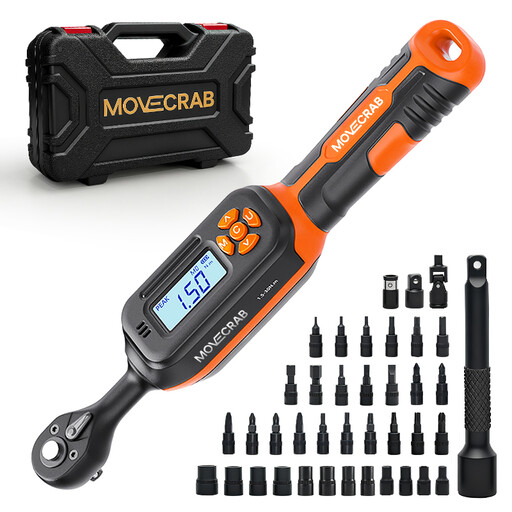
Why this product suits this profile: This set combines a low to medium measurement range with a display, pre-set values and various bits and sockets for bicycle and repair work.
The application range is clearly specified as 1.5 to 30 Nm. This makes it easier to check whether your component specifications fall within the range.
Stated accuracy of ±2 %, 72-tooth ratchet, ten memory settings plus Track and Peak modes.
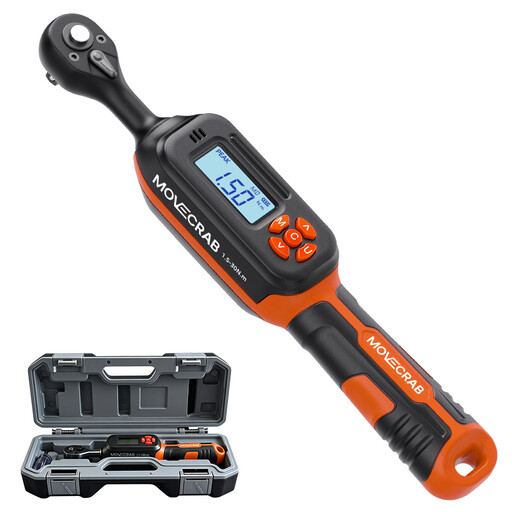
Why this product suits this profile: The medium measurement range is suitable for users who switch between bicycle, motorcycle and selected vehicle work and need a 3/8-inch drive.
The 3/8-inch drive and specified range make the choice more transparent than a blanket claim that it is suitable for all vehicle types.
Stated ±2 % accuracy, LED display, plus audible, visual and vibrating signals.
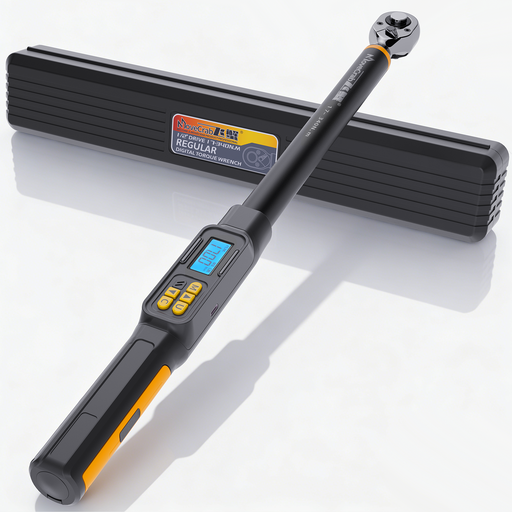
Why this product suits this profile: The high measurement range is intended for larger fasteners. Before buying, check whether your sockets and vehicle specifications actually require this range.
The clear 1/2-inch drive designation and specified measurement range help prevent a small bicycle tool from being used for high torque levels.
Stated ±2 % accuracy, four selectable units and triple feedback via vibration, sound and LED.
We have put together a complete, regularly updated list of products that fully meet these strict selection criteria and the safety regulations applicable in the EU.
For safety-critical work on brakes, wheels, steering or suspension, also follow the vehicle manufacturer’s fitting instructions. Unsafe or damaged components should be inspected by a suitably qualified specialist workshop.
First, select the appropriate unit. Then set the target value using the buttons or a saved preset. Afterwards, check the display, drive direction and socket once more. Move the tool with steady force until the specified signal sounds, lights up or vibrates.
Its service life depends on use, storage, battery condition and overloading. Moisture, impacts, incorrect cleaning and using the tool as a lever or striking tool can impair its function. For regular workshop use, the manufacturer’s maintenance and calibration instructions are the most important reference.
A digital model usually offers a direct readout, several units and additional alert functions. A mechanical model works without a battery and is often simpler in design. The key factors are the measurement range, readability, preferred signal type, accessories and frequency of use—not the design alone.