
Lieferung heute & morgen

Qualitätsgarantie

Willkommens-Angebote freischalten: KOSTENLOSE Lieferung | Bis zu 80 % RABATT | Kostenlose 30-Tage-JoyPlus-Testphase
App herunterladen
A digital torque wrench displays the applied torque value and, depending on the model, provides a warning via LED, audible signal or vibration. This makes it suitable for screw connections where the vehicle, bicycle or component manufacturer’s specified torque must be followed. However, not every tool is suitable for every application.
Typical unsuitable purchases result from three factors:
The working range should be as close as possible to the values you actually need. For a bicycle torque wrench, low ranges are often relevant, such as 0.6–12 Nm, 1–20 Nm or 2–20 Nm. These values may be needed for components such as stems, seat posts, handlebar clamps or crank bolts. The torque specification provided by the relevant manufacturer is always the decisive factor.
Motorcycles and cars generally require higher values. A motorcycle torque wrench with a range of 4.2–85 Nm or 6.8–135 Nm is designed for different tasks from a model intended for delicate bicycle components. Wheel bolts and larger vehicle connections often require ranges of up to 220 Nm or 340 Nm.
Important: a tool should not be operated permanently at its upper limit. According to the product information for the MoveCrab models, exceeding 120% of the maximum torque can damage the device or affect its accuracy.
The drive size must match the sockets you already have:
A torque wrench set can be useful if you need several drive sizes or bits. Alternatively, a torque adapter can extend an existing ratchet or socket set. You should check that the adapter, sockets and square drive fit together securely.
An electronic torque wrench with an LED display allows you to read the measured value directly. A torque wrench with audible signal and vibration also provides tactile and audible feedback when the preset value is reached. This can be practical in poorly lit areas or a noisy workshop.
With a bidirectional torque wrench, check whether the accuracy is specified separately for tightening clockwise and anticlockwise. For the digital MoveCrab products below, the stated values are ±2% clockwise and, for the adapter, ±2.5% anticlockwise, depending on the model. These figures come from the respective product information and should not be applied generally to other models.
A mechanical torque wrench usually works with a scale and an audible click. It does not require a battery and is less dependent on electronic components. However, it does not offer a display, stored values or multiple types of alarm. If you frequently change settings, a digital wrench may be more convenient.
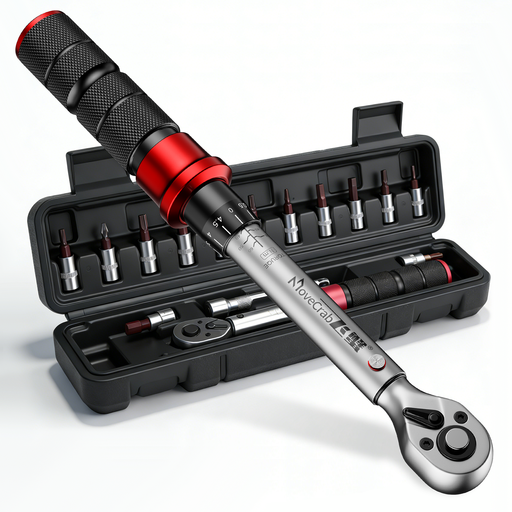
Why this product suits this profile: The mechanical set covers 2–20 Nm and includes several bits for typical bicycle maintenance tasks.
The clearly defined range helps prevent you from choosing a wrench that is too powerful for sensitive bicycle components.
1/4-inch drive, 72-tooth ratchet, bidirectional measurement and 11 supplied bits.
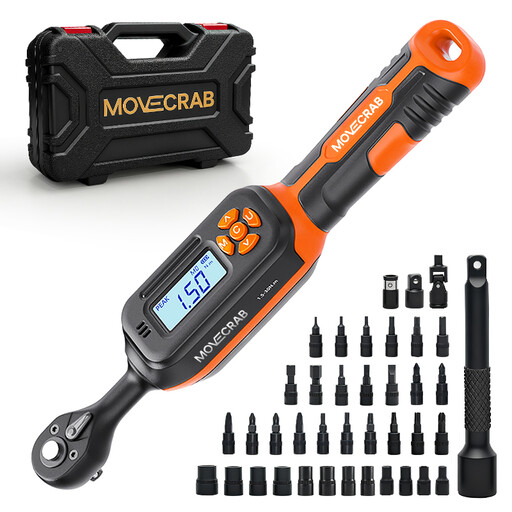
Why this product suits this profile: The digital display and comprehensive contents make frequent repair and assembly tasks easier.
Multiple units, Preset, Track and Peak modes make the advertised functions straightforward to verify.
According to MoveCrab’s product information: ±2% accuracy, 10 preset values, 500 stored measurements and 23 bits.
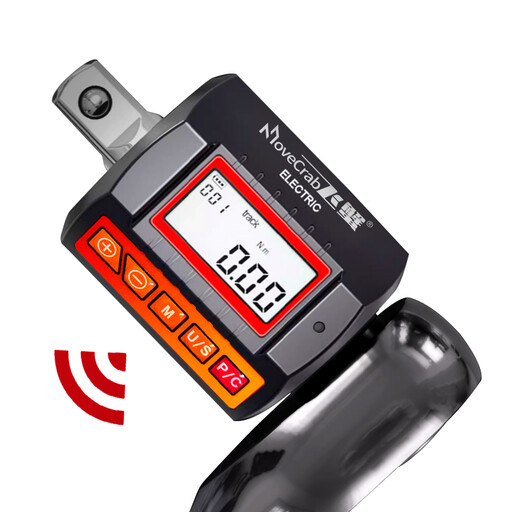
Why this product suits this profile: The adapter extends existing tools and is designed for bicycle, motorcycle and car work with different socket sizes.
The supplied 3/8- and 1/4-inch adapters reduce the risk of having to purchase an unsuitable square drive separately.
According to MoveCrab’s product information: 4.05–135 Nm, Real-Time, Peak and Preset modes, plus storage for 1,000 values.
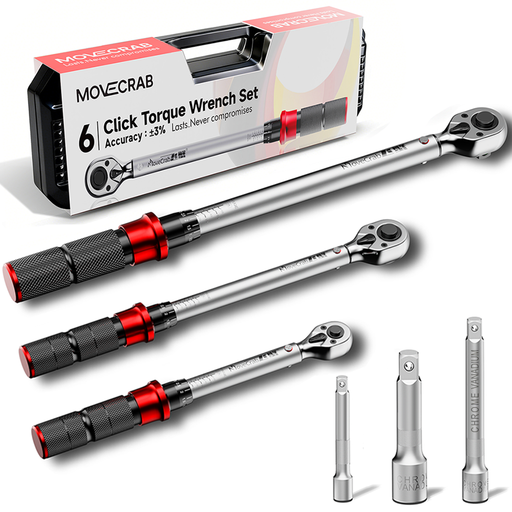
Why this product suits this profile: Three wrench ranges and extensions appeal to users who regularly work on cars, motorcycles or machinery.
The 1/4-, 3/8- and 1/2-inch extensions are better suited to different socket sizes than a single tool.
According to MoveCrab’s product information: 5–220 Nm, Cr-V steel, three drive sizes and a stated deviation of ±3%.
We have put together a complete, regularly updated list of products that fully meet these strict selection criteria and the safety regulations applicable in the EU.
Before tightening, take the target value from the assembly instructions and fit the correct socket fully into place. Apply force evenly through the handle. With a digital model, the combination of the display and warning system indicates when the preset value has been reached. A mechanical wrench typically signals this with a clicking sound.
For consistently reliable performance:
Low measuring ranges such as 0.6–12 Nm, 1–20 Nm or 2–20 Nm are often suitable for bicycles. The key consideration is that the range covers the torque specifications of the installed components. A 1/4-inch drive is often suitable for small bits and sockets in this type of application.
Service life depends on workload, storage conditions, battery condition and care. Moisture, high temperatures, dirt and overloading can affect performance. If the wrench is used regularly in a workshop or industrial setting, you should also check whether calibration is required in line with your internal quality requirements.
Besides the purchase price, the main ongoing cost is usually batteries. Models with automatic shut-off can reduce energy consumption during breaks. Before buying, you should also check whether batteries, sockets, adapters and a storage case are already included in the delivery.