
Lieferung heute & morgen

Qualitätsgarantie

Willkommens-Angebote freischalten: KOSTENLOSE Lieferung | Bis zu 80 % RABATT | Kostenlose 30-Tage-JoyPlus-Testphase
App herunterladen
A digital torque wrench is designed to tighten threaded connections in a controlled and traceable way. In practice, however, the digital display alone does not determine whether a tool is suitable. The measuring range, drive size and signal type must match the job at hand. Anyone who focuses only on impressive figures such as “±2% accuracy” or an extensive accessory list could end up buying a tool that is unsuitable for their threaded connections.
A wrench with a range of up to 340 Nm is useful for wheel bolts or larger assemblies. However, such a range may be too broad for delicate bicycle components. What matters is whether the required tightening torque falls within the appropriate section of the measuring range. For lower torque settings, a 1/4-inch digital torque wrench or models starting at around 0.6 or 1 Nm are often worth considering.
The accuracy may apply to tightening in a clockwise direction. With bidirectional use, different specifications may apply when loosening or tightening anticlockwise. Figures such as “±2% accuracy” should therefore always be considered alongside the measuring direction, measuring range and manufacturer’s documentation. For safety-critical work, a traceable calibration procedure is also important.
A torque wrench set with adapters and sockets can be practical. However, adapters do not change the measuring range or turn a 1/4-inch model into a suitable 1/2-inch tool for high torque settings. Before buying, check the sockets and bits you already have, as well as the available working space.
First, categorise the jobs you plan to carry out by torque:
The values specified by the vehicle or component manufacturer always take priority. A torque wrench must not be loaded beyond its stated maximum value.
The drive size determines which sockets can be used directly:
A 1/4-inch digital torque wrench is not automatically more precise than a 1/2-inch digital torque wrench. The tool size must suit the task, socket and available working space.
An LED display makes readings easier to see, but it does not replace correct setup. A torque wrench with an audible signal may be sufficient in a quiet environment. In a noisy workshop, a torque wrench with a vibration alarm is also useful. Models with audible, visual and vibration signals provide several alerts when the target value is reached.
A torque wrench with torque memory is suitable for users who want to check readings afterwards. You should check how many data sets can be stored and whether the tool offers a Track mode showing the real-time value or a Peak mode showing the highest value.
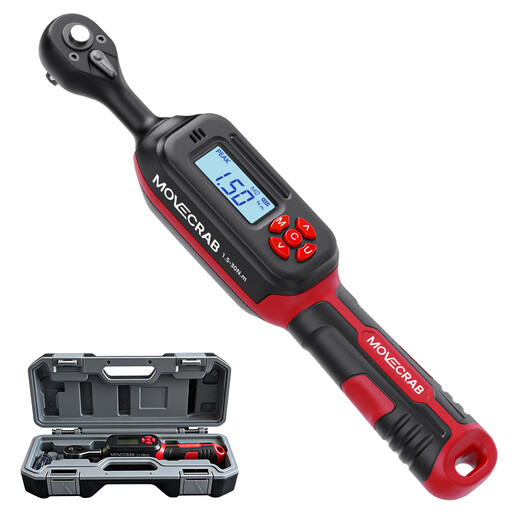
Why this product suits this profile: The low range is suitable for small fasteners, such as those found on bicycles, and for delicate repair work. The digital display supports the selection of different units.
The limited measuring range helps prevent users from choosing a large wrench for very low torque settings. According to MoveCrab’s product information, vibration, audible and LED signals are also included.
0.6–12 Nm, bidirectional ratchet and four selectable units according to the product description.
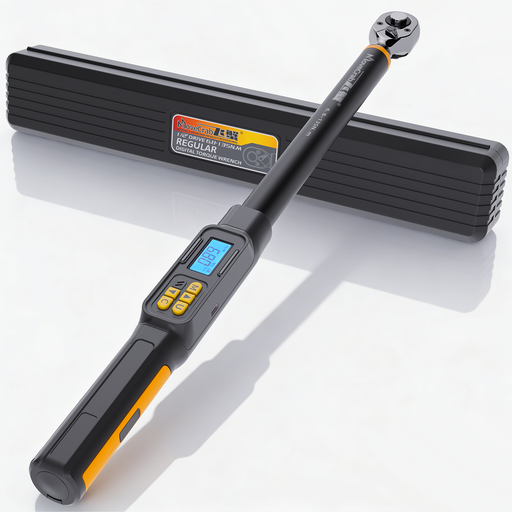
Why this product suits this profile: The 1/2-inch drive is aimed at users who want to control medium torque settings on cars, motorcycles or larger assemblies.
The specifications list the measuring range, direction and alarm types separately. This makes it possible to check before buying whether the tool is genuinely suitable for the intended job.
6.8–135 Nm, LED display plus vibration, audible and visual signals according to MoveCrab’s product information.
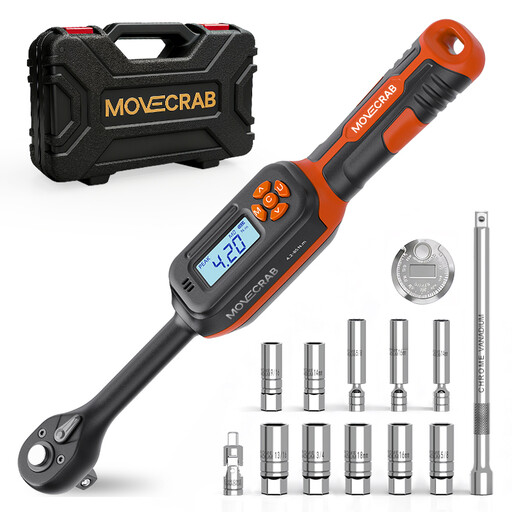
Why this product suits this profile: This 14-piece set combines a 3/8-inch digital torque wrench with magnetic spark plug sockets, an extension bar and a universal joint for regular vehicle and motorcycle maintenance.
The contents are listed clearly. Buyers can therefore check in advance whether the sockets and extension bar are needed for the planned maintenance work.
4.2–85 Nm, ten preset modes and storage for up to 500 readings according to MoveCrab’s product description.
Before tightening, set the target value in the unit specified by the vehicle or component manufacturer. The socket must be fully seated on the square drive. Apply force evenly to the handle and keep the wrench as close as possible to the intended grip position.
An electronic torque wrench requires particular care:
Similar basic rules apply to a mechanical torque wrench set. After use, the setting should be returned to the specified minimum value on many models. This protects the spring mechanism and helps maintain consistent performance.
We have put together a complete, regularly updated list of products that fully meet these strict selection criteria and the safety regulations applicable in the EU.
First, select the appropriate unit, then set the target value and, if applicable, choose Track or Peak mode. Before use, check the battery, zero setting and socket. The exact operating sequence may vary from model to model, so follow the instructions supplied with the tool.
Service life depends on usage, storage, moisture and maintenance. Overloading, impacts and incorrect cleaning can affect the measuring function. For workshop or industrial use, documented calibration intervals and protected transport are particularly important.
Depending on the model, a digital tool offers a display, several alarm types, presets and measurement memory. A mechanical wrench does not require a battery and may be sufficient for occasional jobs. The right choice therefore depends on the level of documentation required, the working environment, measuring range and sockets available.