
Lieferung heute & morgen

Qualitätsgarantie

Willkommens-Angebote freischalten: KOSTENLOSE Lieferung | Bis zu 80 % RABATT | Kostenlose 30-Tage-JoyPlus-Testphase
App herunterladen
When tightening bolts and nuts, applying the correct torque is crucial. Too little torque can cause connections to loosen, while too much can damage components or even cause them to break. A torque wrench is therefore an indispensable precision tool. However, the market is flooded with models whose promises often don't match reality. Before making a purchase, you should be aware of the common pitfalls that frequently lead to disappointment and unnecessary expense.
Common Mistakes When Buying a Torque Wrench:
To ensure your tool is precise and durable, you should check three core parameters. These objective criteria will help you evaluate a model's performance, regardless of marketing claims.
Accuracy is the most important criterion for a torque wrench. It is specified as a percentage deviation from the set value. The ISO 6789 standard requires a maximum tolerance of ±4% for many professional tools. High-quality models, especially a digital torque wrench, often offer even greater accuracy of ±2% or better. An electronic torque wrench has the advantage of a clear digital display and often provides additional signals (vibration, LED light) that minimise human error in reading the scale or perceiving the click.
The required torque range depends directly on the application. Analyse the main tasks you will be performing:
A torque adapter can be a flexible solution to use an existing ratchet for precise torque applications without having to buy multiple specialised wrenches.
Pay attention to the material specifications. Hardened chrome vanadium steel (Cr-V) is a proven material for durability and corrosion resistance. For the ratchet, the number of teeth is an indicator of how finely it operates—a 72-tooth ratchet allows you to work even in tight spaces, as it has a smaller swing arc.
Based on these objective criteria, we have identified a few products that are a suitable solution for specific user profiles.
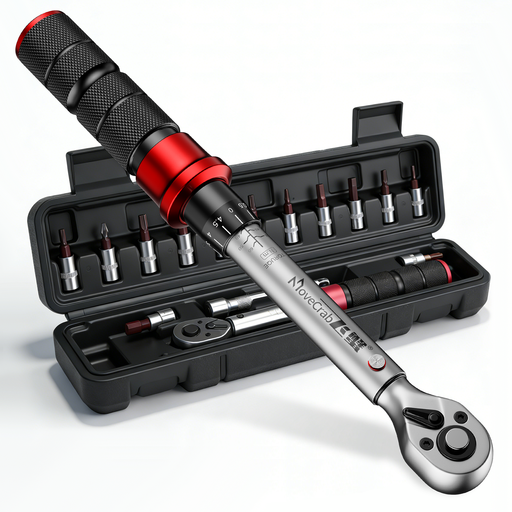
Why This Fits Their Persona: Ideal for cycling enthusiasts working on modern bikes with carbon components. The low torque range is precisely tailored to the requirements of stems, seat posts, and other delicate parts.
This set avoids the pitfall of an unsuitable torque range, as it is specifically designed for delicate jobs with its 2–20 Nm range. It's not an all-rounder, but a specialist.
A complete tool set with 11 common bits. The 72-tooth ratchet head and chrome vanadium steel construction indicate a solid mechanical foundation.
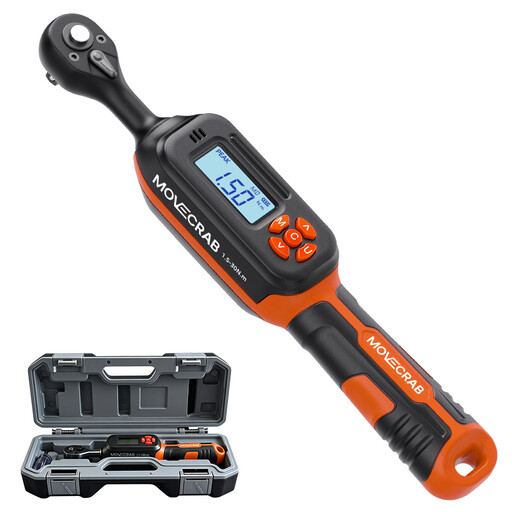
Why This Fits Their Persona: For users who need higher precision and a broader range of applications for work on motorcycles, cars, and around the house. The digital display makes precise setting and control easy.
This model addresses the inaccuracy of mechanical wrenches. With an accuracy of ±2% and a triple alarm system (vibration, sound, LED), reaching the target torque is signalled unmistakably.
The electronic torque wrench offers modes like Peak and Track (real-time) as well as memory for preset values. The 3/8-inch drive and range up to 85 Nm cover many tasks in an automotive tool set.
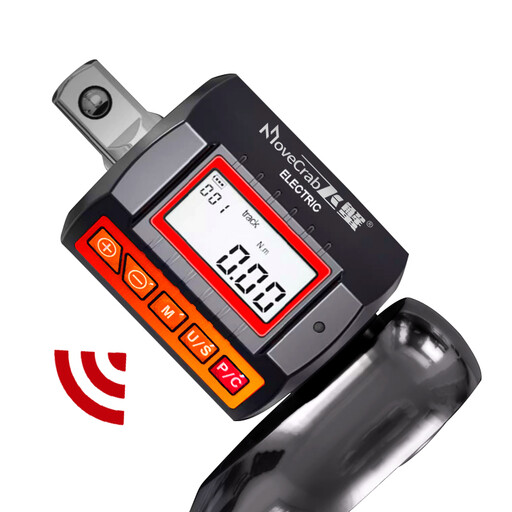
Why This Fits Their Persona: Perfect for anyone who already owns a good ratchet set and wants to cost-effectively upgrade it into a precision torque tool without having to buy multiple new wrenches.
This torque adapter is the solution to the limited-range pitfall. It covers a huge spectrum with its 6–200 Nm range and turns almost any ratchet into a precision tool, thanks to the included 1/4" and 3/8" adapters.
High flexibility and space-saving. It offers digital accuracy (±2%), various units and modes, and a data storage function for up to 1,000 readings.
We have compiled a complete, up-to-date list of products that fully meet these strict selection criteria and applicable safety regulations.
For professional, daily use, annual calibration or calibration after approximately 5,000 load cycles is recommended. For private use, this is necessary less often, provided the tool is handled with care. Always store a mechanical torque wrench in its untensioned state (set to the lowest value) and avoid dropping it, as this can affect the calibration.
It is strongly advised not to use a mechanical click-type torque wrench to loosen stuck bolts. The high and uncontrolled forces can damage the release mechanism and permanently impair the tool's accuracy. Use a standard ratchet or a breaker bar for loosening. While some digital models offer measurement in both directions, they are primarily designed for controlled tightening.
These tools serve different purposes. A cordless impact wrench is a power tool that generates high, sudden bursts of torque to drive or remove bolts very quickly. However, its power is not precisely controllable. A torque wrench, on the other hand, is a precision tool used to tighten a threaded fastener to an exact, defined torque. In practice, the two are often used together: the impact wrench quickly tightens the bolt, and the torque wrench provides the final, precise tightening.