
Lieferung heute & morgen

Qualitätsgarantie

Willkommens-Angebote freischalten: KOSTENLOSE Lieferung | Bis zu 80 % RABATT | Kostenlose 30-Tage-JoyPlus-Testphase
App herunterladen
For many commuters, finding a road-legal 125cc electric scooter is the first step towards greater flexibility and lower costs in urban traffic. However, the market is flooded with tempting offers that don't always deliver on their promises. Before making a decision, it's crucial to understand the common pitfalls that can lead to a poor purchase. This guide will help you correctly interpret technical specifications and find a model that truly fits your daily life.
Manufacturers often advertise with impressive numbers, but the reality is frequently different. Pay close attention to these three points to avoid disappointment:
To find the right e-scooter, focus on the technical fundamentals that are crucial for performance, safety, and everyday practicality.
A road-legal 125cc electric scooter falls into the L3e-A1 vehicle category. This means it has a top speed by design of more than 45 km/h. To ride such an electric 125cc motorcycle, you need either an A1 class motorcycle license (from age 16) or the aforementioned B196 extension for your car license. The requirements for the B196 extension are:
The power of an e-scooter is specified in watts (W) or kilowatts (kW). For the 125cc class, models with a nominal power of around 3,000 W (3 kW) are typical. This power is designed for a top speed of approx. 80 km/h, which is ideal for city and country road traffic. The peak power can be temporarily higher, providing better acceleration, but it is not the decisive value for homologation.
The battery capacity, specified in amp-hours (Ah) and volts (V), is a key determinant of range. A larger battery (e.g., 72V 40Ah) offers more energy reserves. A crucial advantage is a removable battery. This allows you to conveniently charge the battery at home or in the office, without needing a charging point directly at the vehicle. This significantly increases everyday flexibility, especially for residents of apartment buildings.
Instead of making a blanket recommendation, we have identified models tailored to the specific needs of commuters.
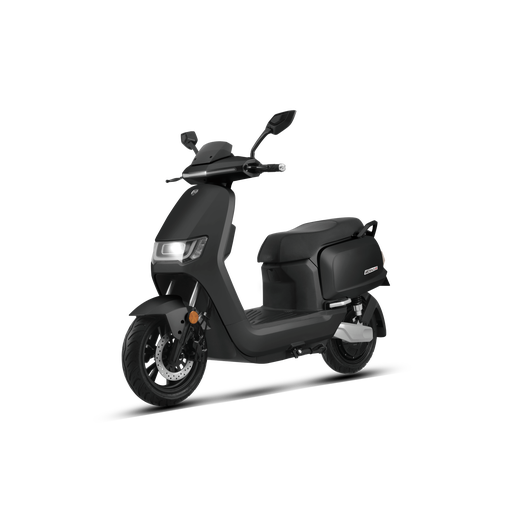
Why This Fits Their Persona: Ideal for riders who value modern technology. With app connectivity for vehicle monitoring, keyless start via fingerprint, and a digital cockpit, the ROBO-S offers a fully connected riding experience.
The smart features here are not gimmicks but are implemented practically. The app allows vehicle sharing with up to 10 users, and the fingerprint sensor stores up to 5 profiles. The range claim is made transparent with clear test conditions (75 kg rider, 40 km/h).
A combination of strong performance (80 km/h, 230 Nm torque), a CBS combined braking system for enhanced safety, and advanced features like electric scooter with app control and fingerprint unlocking.

Why This Fits Their Persona: This rider is looking for a reliable and straightforward vehicle for their daily commute. The focus is on solid performance, good range, and the ability to ride with a passenger, without having to deal with complex technology.
The SUNRA Legend focuses on core functions. It doesn't promise overloaded smart features but delivers a solid foundation: an 80 km/h top speed and a long range of up to 115 km, which provides enough buffer for daily use even under real-world conditions.
Focus on long range and reliability. Designed as a fully-fledged electric scooter for 2 people, it offers a stable ride and low running costs, making it an economical commuter motorcycle.

Why This Fits Their Persona: For commuters whose daily journey extends beyond the typical city route. Range anxiety is the deciding factor here, which is why the largest possible battery and high efficiency are top priorities.
This model counters the range trap with a very large 72V/50Ah lithium-ion battery. The stated range of up to 150 km is transparently linked to a speed of 40 km/h, allowing for a realistic assessment for cross-country rides.
Outstanding battery capacity for maximum range in its class. The battery is also removable, which simplifies charging. An included top case provides practical storage space for longer journeys.
We have compiled a complete, up-to-date list of products that fully meet these strict selection criteria and German safety regulations.
The running costs are significantly lower than those of a petrol scooter. Electricity costs are around 1 to 2 euros per 100 kilometres. Maintenance is minimal, as typical wear-and-tear parts like the exhaust, clutch, or a complex engine drive are absent. Additionally, owners of e-vehicles in Germany can benefit from the GHG quota premium. Insurance costs are comparable to those of a 125cc combustion engine scooter.
If you have held a car license (Class B) for at least five years and are at least 25 years old, you can complete a rider training course at a driving school. This consists of four theoretical and five practical training units, each lasting 90 minutes. Upon completion, you will receive a certificate of participation, which you can use to have the code number 196 added to your license at the licensing authority. An exam is not required.
Yes, most models in the L3e class are approved for two people. Check the technical specifications for "Seats: 2" and the maximum payload in kilograms. A sufficiently long seat and sturdy grab rails for the pillion passenger are also important features for a comfortable electric scooter for 2 people.