
Lieferung heute & morgen

Qualitätsgarantie

Willkommens-Angebote freischalten: KOSTENLOSE Lieferung | Bis zu 80 % RABATT | Kostenlose 30-Tage-JoyPlus-Testphase
App herunterladen
An electric kettle should heat water quickly, be easy to use and perform reliably every day. When choosing one, many shoppers initially focus on wattage, design or a low price. However, the most important differences often only become apparent when it comes to cleaning, temperature control or safety features.
A model with 2200 watts can heat water quickly. However, the actual time also depends on the amount of water added, its starting temperature, the heating technology and the kettle’s design. If you regularly prepare just one cup, you do not necessarily need a model with maximum power. For families or several drinks prepared one after another, a fast 2200-watt kettle can be practical.
A 1.7-litre kettle offers more room for several cups or a larger family. For a two-person household, however, a 1.5-litre kettle may be lighter, more compact and perfectly adequate. The minimum fill level is also important: if this is not reached, the automatic switch-off may not work as intended, depending on the model.
A stainless steel kettle is generally robust, but the outside can become very hot if it does not have a double-wall construction. A glass kettle lets you see the water level, but it requires regular descaling to keep deposits less noticeable and maintain clear visibility. A concealed heating element is easier to clean than an exposed heating coil.
As a general guide:
Power consumption affects the cost of each boiling cycle. A 2200-watt appliance does not automatically use more energy per litre than a less powerful model if it reaches the desired temperature more quickly. The key factors are the amount of water, the temperature and the operating time. Overfilling unnecessarily, on the other hand, increases consumption.
An electric kettle with temperature control is useful for people who prepare different types of drinks. Green tea, coffee, milk and certain infusions are often not made with vigorously boiling water. The appropriate temperature should always be selected based on the instructions for the particular product.
A model described as an electric kettle with a keep-warm function maintains the selected temperature for a specific period. This reduces the need to boil the water again, but it also means the appliance remains switched on for longer. According to the product description, the Midea model offers seven temperature settings between 45 and 100 °C, together with a keep-warm period of up to one hour.
The term health kettle is not a clearly defined technical category. Such appliances often combine temperature programmes, tea infusers or cooking modes. Shoppers should not infer claims about health effects from the product name alone.
An electric kettle with automatic switch-off stops heating, according to the product description, when the boiling point or the selected temperature is reached. An electric kettle with boil-dry protection is designed to stop heating if the container is empty or contains too little water. Neither feature replaces correct operation.
You should also look for:
For a BPA-free kettle, check the specific material details. According to the product description, the Midea model has BPA-free plastic components that do not come into contact with the water. Such information refers to the individual product description and should be checked against the details on the product page.
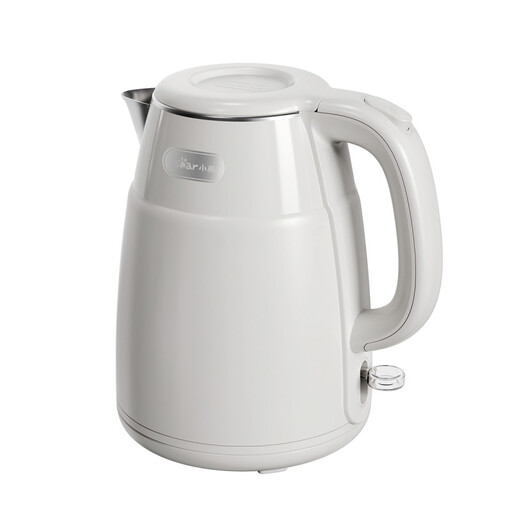
Why this product suits this profile: The 1.5-litre capacity and one-button operation are well suited to everyday drinks in smaller households.
The product description specifies automatic switch-off and boil-dry protection, so key safety features are not promoted through design alone.
Stainless steel interior, 1.5-litre capacity and a stated power rating of 1500 to 1750 watts.
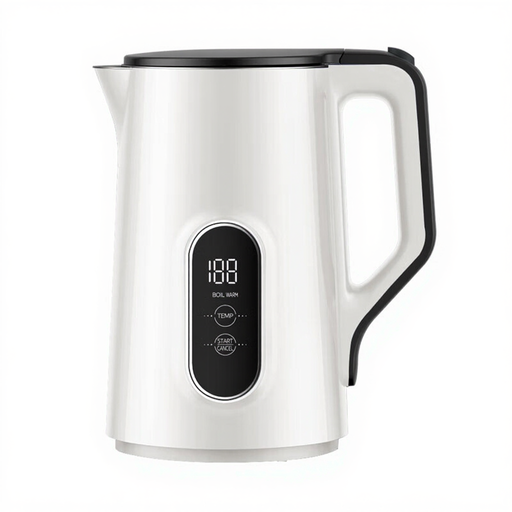
Why this product suits this profile: Ideal for tea and coffee drinkers who want to select different temperatures and read the display directly on the appliance.
The temperature selection from 45 to 100 °C and the digital display make the functionality more tangible than a general claim about versatility.
2200 watts, double-wall construction, 304 stainless steel on water-contact components and a keep-warm function lasting up to one hour, according to the product details.
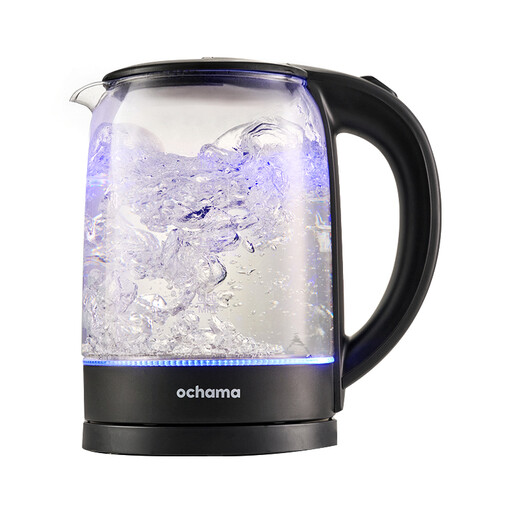
Why this product suits this profile: The larger capacity is designed for preparing several cups of tea, coffee or hot water in one go.
The water level and boiling process remain visible through the transparent borosilicate glass; according to the description, automatic switch-off and boil-dry protection are integrated.
1.7-litre capacity, 2200 watts and blue LED lighting as a clear operating indicator.
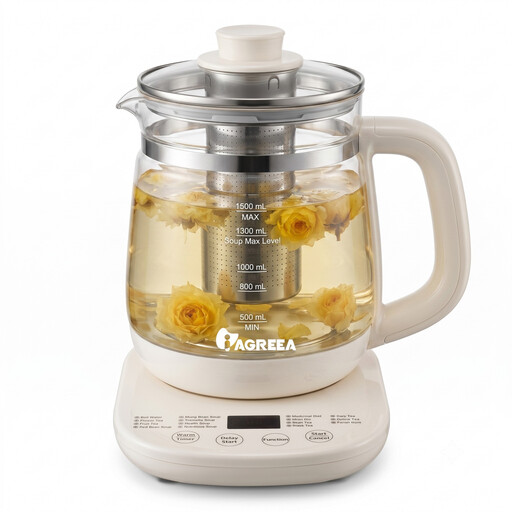
Why this product suits this profile: As a tea maker with an infuser and several programmes, this model is aimed at users who want to prepare infusions or hot mixtures as well as boil water.
The wide opening and removable components make cleaning easier, while the temperature settings and programmes are clearly specified.
Borosilicate glass, 800 watts, 14 pre-set programmes, six keep-warm settings and a removable stainless steel tea infuser, according to the product description.
We have compiled a complete, regularly updated list of products that fully meet these strict selection criteria and the safety regulations applicable in the EU.
Limescale deposits develop depending on the hardness of the local water. Check the manufacturer’s instructions and descale the appliance at the recommended intervals. A removable limescale filter can make maintenance easier, but it does not replace descaling the interior.
A few basic rules apply to everyday use:
Consumption depends on the power rating, the amount of water and the operating time. A 2200-watt model does not automatically use more energy per boiling cycle simply because it has a higher wattage. The best way to save energy is to fill it with only the amount you actually need.
There is no standard lifespan that applies to every model. It depends on the materials, how often the kettle is used, the hardness of the water, cleaning and general care. Regular descaling, protection against boil-dry operation and careful handling of the lid and base can help maintain the kettle’s usability.
This depends on the drink or food and the relevant manufacturer’s instructions. An electric kettle with temperature control allows you to select a more precise temperature than a simple one-button model. For baby food, follow only the instructions provided with the food and by the relevant professional bodies; a kettle’s temperature display is not a substitute for safe preparation guidance.