
Lieferung heute & morgen

Qualitätsgarantie

Willkommens-Angebote freischalten: KOSTENLOSE Lieferung | Bis zu 80 % RABATT | Kostenlose 30-Tage-JoyPlus-Testphase
App herunterladen
An electric kettle is an indispensable appliance in most kitchens. Whether for your morning tea, a quick cup of coffee, or preparing baby formula, it's a daily helper. However, the market is crowded and confusing, and not every model lives up to its promises. Before you make a decision, it's important to know the most common pitfalls that can lead to disappointment and unnecessary expense.
As your Joybuy Product Recommendation Officer, I'm here to help you separate the wheat from the chaff. In this guide, we'll focus on the facts so you can find an appliance that is safe, durable, and perfectly suited to your needs.
Many appliances look good at first glance but reveal their weaknesses only after daily use. Pay special attention to these three points to avoid a bad purchase:
To find the right kettle, you should focus on the essential, objective features. These three parameters are crucial for performance, safety, and longevity.
The choice of material has a direct impact on taste, durability, and safety.
These two values determine how practical the appliance is for your household.
Not every feature is a gimmick. For certain user groups, special features are indispensable.
Here are some recommendations tailored to different needs and households.
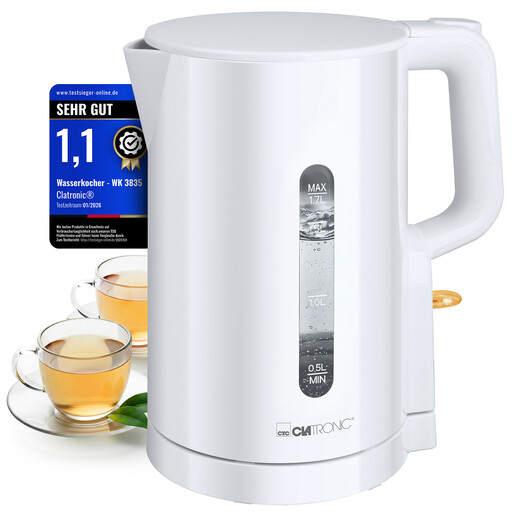
Why it's a great fit: This appliance focuses on the essentials: fast boiling with 2200 watts, a large 1.7-litre capacity, and fundamental safety standards. Ideal for anyone looking for a reliable and straightforward kettle for everyday use.
It avoids the "Feature Overload" trap. Instead of expensive extras, it offers solid basic functions like one-handed operation and a removable limescale filter.
With BPA-free material and 2200-watt power, it offers a coherent overall package at an accessible price.
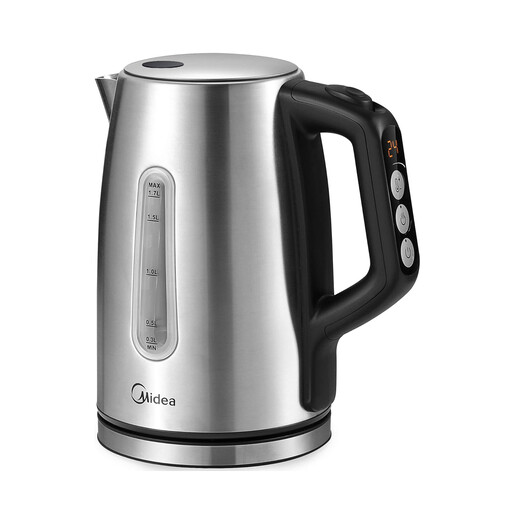
Why it's a great fit: For discerning hot beverage connoisseurs, precise water temperature is crucial. This model offers six exact levels and a keep-warm function, making it a versatile tool for the perfect brew.
Here, the extra features are not a gimmick but the core benefit. The device delivers exactly the control needed for preparing specialities like green tea or baby formula.
Six precise temperature settings and a 60-minute keep-warm function make it a flexible tea kettle.
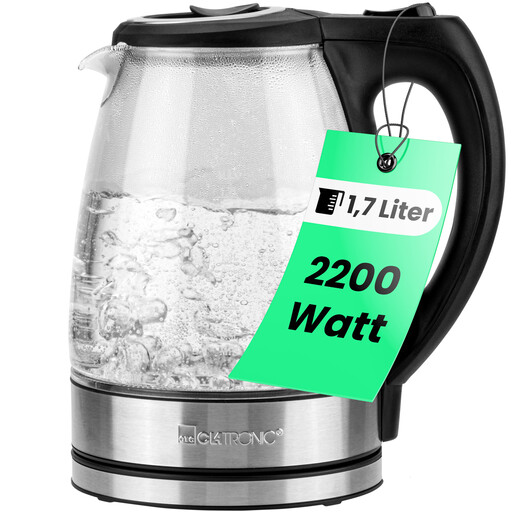
Why it's a great fit: This model combines the aesthetic and health benefits of a glass container with the stability of stainless steel. It is the ideal choice for users who value material purity and want to keep an eye on the boiling process.
It bypasses the "Material Fallacy" by using a water container made of heat-resistant safety glass. This minimises the water's contact with plastic and ensures taste neutrality.
The combination of a glass kettle and stainless steel elements offers a visually appealing and hygienic solution.
We have compiled a complete, up-to-date list of products that meet these strict selection criteria and safety standards.
1. How often should you descale a kettle? The frequency depends on the water hardness in your area. In areas with hard water, descaling every four to eight weeks is recommended. With soft water, every two to three months is usually sufficient. Regular descaling not only ensures better taste but also extends the life of the appliance and saves energy.
2. Is a stainless steel or glass kettle better? Both materials are a good choice to avoid contact with plastic. A stainless steel kettle is generally more robust and resistant to impact. A glass kettle is completely taste-neutral and allows for easy visual inspection of the water level and limescale buildup, but it is more fragile. The decision depends on your personal priorities: durability versus material purity and aesthetics.
3. How much electricity does an electric kettle use? A typical kettle with 2200 watts of power that boils 1.7 litres of water (approx. 3-4 minutes) consumes about 0.11 to 0.15 kWh per use. Although the consumption per use is low, the kettle is one of the more energy-intensive small appliances in the household. The most efficient way to save electricity is to always heat only the amount of water you actually need.