
Lieferung heute & morgen

Qualitätsgarantie

Willkommens-Angebote freischalten: KOSTENLOSE Lieferung | Bis zu 80 % RABATT | Kostenlose 30-Tage-JoyPlus-Testphase
App herunterladen
Felt-tip pens and brush pens differ considerably in their nibs, ink, colour ranges and intended uses. So a large marker set won’t automatically be right for school, children, journalling or calligraphy. If you focus only on the number of colours or eye-catching product photos, you may end up buying duplicates or with pens that bleed through the paper you’re using.
A set of 120 colours sounds impressive. But for fine notes, outlines or hand lettering, it’s important to have a fineliner with a nib of around 0.4 mm. For broad lettering and varied line widths, a flexible brush nib is a better choice. A basic fibre-tip pen with a line width of around 1.0 mm is suitable for colouring and writing, but it’s no substitute for a brush pen.
According to product descriptions, washable felt-tip pens can be removed from many textiles and from skin. That doesn’t mean every surface will be left completely stain-free. Metallic markers and pigmented artist pens in particular can leave permanent marks on absorbent paper, wood or fabric. For children, use a washable covering and suitable clothing.
Water-based ink can show through thin school or printer paper. For watercolour effects, colour blending or brush pens, heavier drawing, watercolour or mixed-media paper is usually a better choice. Before colouring a large area, test the pen on the reverse or on a separate sheet.
The nib determines which techniques you can use:
Always consider the stated line width alongside the shape of the nib. A flexible brush nib responds to pressure, so it doesn’t produce just one fixed line width.
Water-based ink is common in many school and hobby pens. Depending on the paper, it may fade, bleed or blend with water. Product descriptions should also distinguish between ‘washable’, ‘water-soluble’, ‘water-resistant’ and ‘permanent’.
Pigmented artist pens, such as the Faber-Castell Pitt Artist Pen, may contain water-resistant or permanent drawing ink, depending on the version. The Earth Tones model is described as containing water-resistant, permanent drawing ink. By contrast, the Faber-Castell Pitt Artist Pen Brush in the 12-piece set with blue lettering on the colour selection is described as having water-based, non-water-resistant ink. These differences matter if you’re looking to archive your work, layer colours or expose it to moisture.
Follow the age guidance for products with small caps or replacement nibs. Many sets are not suitable for children under three, as caps and small parts could be swallowed. A ventilated safety cap, as specified for some children’s pens, is no substitute for adult supervision.
Replace caps fully after use. Brush pens and pigmented pens are often stored horizontally to help the ink distribute evenly. A case or box makes it easier to organise your colours and helps prevent individual pens from getting lost.
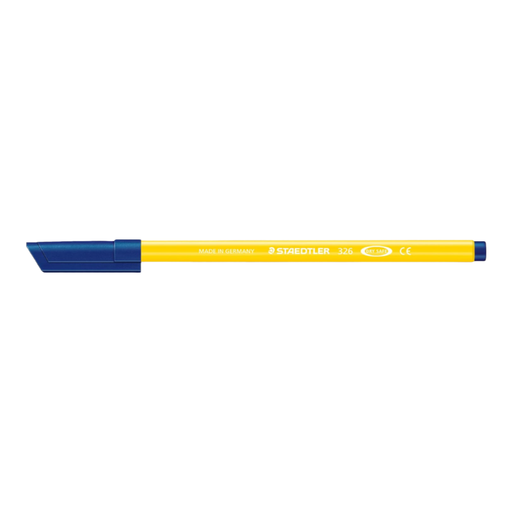
Why this product suits this user: With ten colours and a line width of around 1.0 mm, this set covers everyday tasks such as writing, drawing and colouring, without requiring you to invest in a large collection straight away.
The clearly stated number of pens and simple fibre nib help you avoid buying an oversized brush pen set for everyday tasks.
Water-based ink described as washable, with ten shades in a cardboard box.
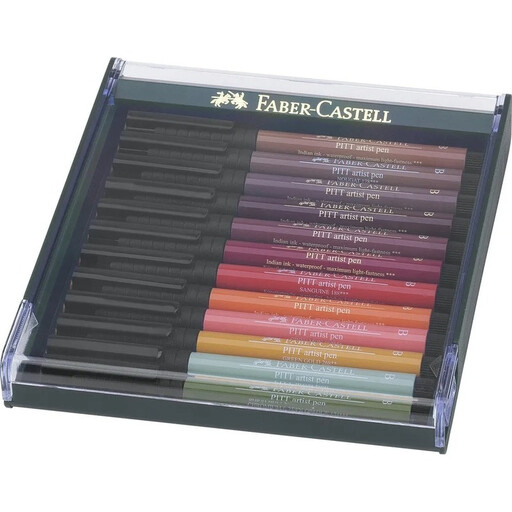
Why this product suits this user: The flexible brush nibs on these twelve artist pens are designed for sketching, hand lettering, bullet journalling and illustrations in Earth Tones.
The product description explicitly states that the ink is water-resistant and permanent, making it easier to distinguish these pens from water-soluble fibre-tip pens.
A flexible, shape-retaining brush nib, plus odourless, acid-free and pH-neutral drawing ink, according to the product description.
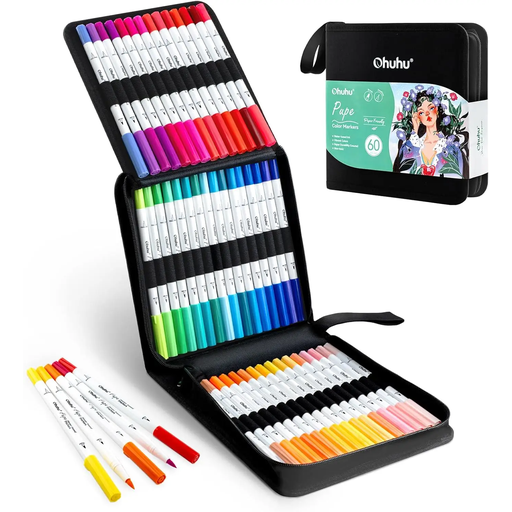
Why this product suits this user: The set combines a 0.4 mm fineliner with a 1 to 5 mm brush nib, making it a good choice if you switch between detail work, colouring, lettering and journalling.
The two nibs on each pen mean you won’t need to buy a separate fineliner set for outlines and small labels.
59 colours plus a colourless blender, colour coding and a storage box; certified to ASTM D-4236, according to the product description.
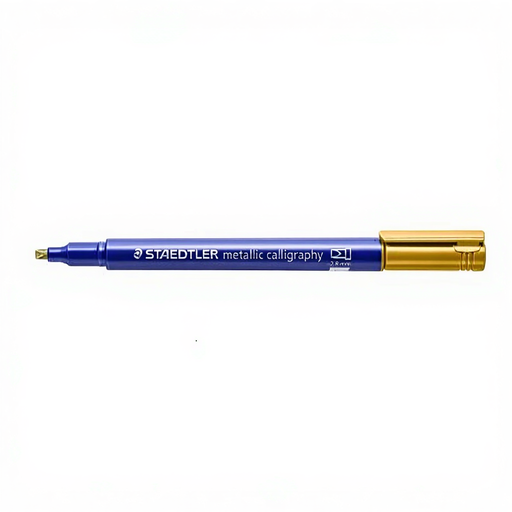
Why this product suits this user: The chisel calligraphy nib and gold metallic ink are designed for cards, scrapbooking and decorative writing on light and dark paper.
Its stated suitability for light and dark paper makes it a distinct choice from ordinary coloured pens. Test it first on absorbent materials.
Metallic, water-based ink and a stated line width of around 2.8 mm, with no need to shake or pump.
We’ve put together a complete, regularly updated list of products that meet these strict selection criteria and the safety regulations in force across the EU.
For children, sets with water-based, washable ink, an easy-to-grip barrel and a rounded nib are a practical choice. The STAEDTLER Noris Junior is described as having a broad, break-resistant fibre nib, a line width of around 2 mm or more, and a ventilated safety cap. According to the product information, the set isn’t suitable for children under three.
Close the caps fully as soon as you’ve finished using the pens. Many pens can be stored horizontally, and this position is often specifically recommended for pigmented inks. Keep them away from direct sunlight and excessive heat. Even a pen with ‘Dry Safe’ technology may lose performance at the nib if it’s left uncapped for several days.
Smooth, heavier paper is fine for detailed notes. For colour blending and water-soluble effects, choose watercolour or mixed-media paper with a higher paper weight. Before buying a large marker set, check whether the ink shows through. Testing on a spare sheet can stop bleeding ink from spoiling an entire lettering or journalling project.