
Lieferung heute & morgen

Qualitätsgarantie

Willkommens-Angebote freischalten: KOSTENLOSE Lieferung | Bis zu 80 % RABATT | Kostenlose 30-Tage-JoyPlus-Testphase
App herunterladen
Fine brushes for acrylic painting need to do more than just have a narrow tip. When working on miniatures, outlines, model-making projects or small areas, fibre control, shape retention and the right brush size determine whether you get a clean result. However, many buyers focus mainly on the number of brushes included or on marketing terms like “professional”. This can lead to poor purchasing decisions.
A large artist brush set may look appealing at first glance. But if it contains mostly similar sizes or shapes, the fine detail brushes you actually need are often limited. For precision work, a few thoughtfully combined shapes are frequently more practical than a cluttered collection.
Acrylic paint dries relatively quickly. With brushes that are too thin or lack stability, paint can gather at the tip and make control more difficult. For lines, small areas and transitions, it’s not just the fineness that matters, but also the resilience of the synthetic fibres.
A slippery or poorly balanced handle makes longer detail work more challenging. Similarly, a loose ferrule can cause fibres to fall out or the brush tip to become misshapen. So look for a coated wooden handle and a corrosion-resistant ferrule if you plan to use an acrylic brush set regularly.
Synthetic paint brushes are suitable for many water-based paints, including acrylic, watercolour and gouache. They are generally shape-retentive and easy to reshape after rinsing. Natural hair can hold more liquid depending on the type, but it isn’t essential for the uses described here.
For a versatile brush set for detail painting, these shapes are particularly useful:
A 3-piece brush set with round, flat and filbert brushes therefore covers several stages of work without including unnecessary variations.
Size markings are not consistent across all manufacturers. A higher number can indicate a wider or longer tip depending on the brand. What really matters is the actual combination of shape and intended use.
For brushes for miniature painting and small model-making areas, short, controlled movements are important. For colour gradients or a thin primer coat, however, the brush should be able to hold a little more paint. A well-balanced set should therefore not consist solely of ultra-fine tips.
A nickel-plated metal ferrule can protect the connection between handle and filament against corrosion. A smooth, coated wooden handle feels comfortable in the hand during longer sessions and is easy to clean.
After use, you should:
Solvents are only necessary if the paint you are using specifically requires them. For water-based acrylic, watercolour and gouache paints, prompt cleaning with water is usually sufficient. The actual lifespan depends on the paint type, your cleaning routine and how intensively you use the brushes.
The following recommendations match products to specific uses. The key factors are the stated materials, brush types and what is included in the set.
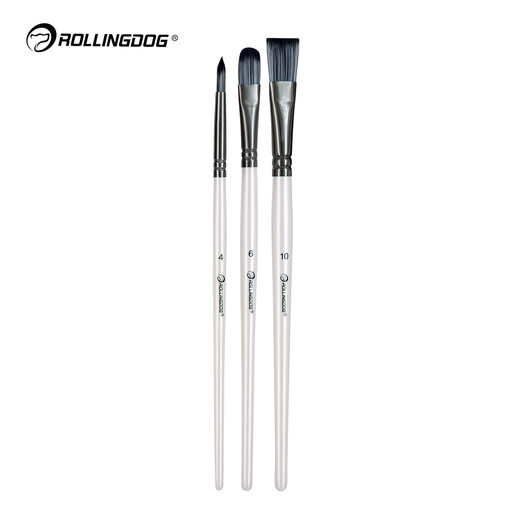
Why this product fits the profile: The set focuses on three clearly distinct brush types and is suitable for initial work with acrylic, watercolour and gouache paints on canvas, paper or other surfaces.
The contents are clearly stated: one round brush #4, one filbert brush #6 and one flat brush #10. This makes it easier to assess the value before buying compared to a simple quantity listing.
Synthetic filaments, nickel-plated ferrules and coated wooden handles; three shapes for details, blending and broader paint application.
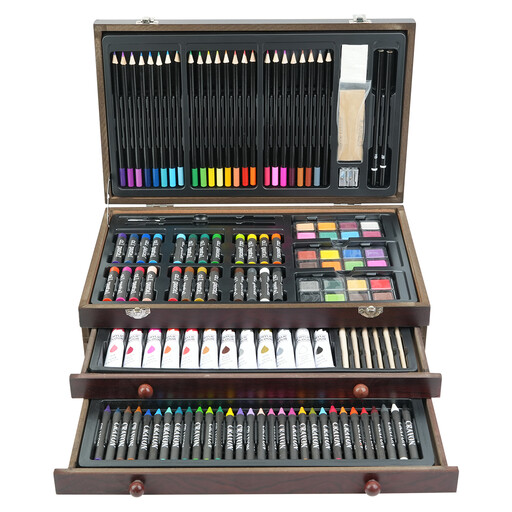
Why this product fits the profile: The extensive contents will appeal to users who want various brush sizes and shapes on hand for different projects.
The set size is transparently stated as 175 pieces. Buyers should still check which sizes and shapes are actually included before ordering, and whether a storage box is desired.
175-piece brush set with wooden gift box; suitable for a wide range of painting and craft projects.
Why this product fits the profile: Model makers and hobby painters can use the three defined shapes specifically for fine lines, small colour areas and controlled transitions.
The combination of round, flat and filbert brushes reduces reliance on a single all-purpose brush, which can quickly reach its limits for different tasks.
Designed for acrylic, watercolour and gouache paints; synthetic fibres and three different brush profiles.
We have compiled a complete, regularly updated list of products that fully meet these strict selection criteria and the safety regulations in force in the EU.
For fine lines and small accents, a round brush with a narrow tip is usually appropriate. However, the exact size depends on the manufacturer and the viscosity of the acrylic paint. For slightly larger areas, a small flat or filbert brush may be more practical.
Acrylic brushes should be rinsed with water immediately after use. Dried paint can permanently stiffen the fibres. Also clean the area near the ferrule, then gently reshape the tip and store the brush dry.
It is not possible to give a fixed lifespan. Frequent use, dried acrylic paint, prolonged soaking and heavy pressure all shorten the life of a brush. With gentle cleaning and correct storage, synthetic paint brushes can be used for many projects.