
Lieferung heute & morgen

Qualitätsgarantie

Willkommens-Angebote freischalten: KOSTENLOSE Lieferung | Bis zu 80 % RABATT | Kostenlose 30-Tage-JoyPlus-Testphase
App herunterladen
An acrylic marker set can be used for a wide range of projects on paper, wood, glass and ceramic, as well as for DIY crafts. Product descriptions often promise lots of colours, waterproof ink and two nibs. In practice, however, the number of markers alone doesn’t determine whether a set is right for you. Buy without checking the details and you could end up with a set that has unsuitable ink, nibs that dry out quickly or the wrong line width.
A large drawing marker set may look appealing at first. What matters, though, is whether the shades suit your project. For manga and comic illustrations, for example, graduated skin tones, greys and shading colours are useful. For painting stones or ceramic, bold, opaque colours may be more important.
So check:
The terms waterproof markers and “acrylic paint” aren’t always used consistently. Water-based ink may become more water-resistant once dry on certain materials, but smooth glass or plastic may still need special preparation. Also, “waterproof” doesn’t mean scratch-resistant, dishwasher-safe or suitable for permanent outdoor use.
So check the product details for the specific surface you plan to use it on. For drinking vessels, crockery or textiles, also look for guidance on use, sealing and cleaning.
A double-ended acrylic marker saves space and can be used for both large areas and fine outlines. However, the nibs should be clearly described. A broad 7 mm nib is suitable for filling in areas, while a 1–3 mm nib is more practical for lines, lettering and details. With cheaper markers or nibs that aren’t clearly specified, the actual line width may differ significantly from what you expect.
Quick-drying markers are less likely to smudge when layering colours or drawing outlines. However, a short drying time can also mean the nib dries out more quickly during longer sessions. Water-based acrylic pens are pleasant to use for many craft projects and can sometimes be easier to clean. Alcohol-based art markers are better suited to creating smooth colour gradients on specialist marker paper, but may bleed through the paper more.
For children, schools and simple DIY projects, also check the manufacturer’s information on odour, ingredients and recommended age. It isn’t possible to make a general statement about safety without checking the specific product.
These combinations work well for a range of uses:
For acrylic markers used on wood, glass and ceramic, an opaque nib is particularly useful. On paper, however, check whether the ink bleeds through. Using suitable marker paper or a protective sheet can help prevent wasted materials.
Not every painting marker set is designed for every material. Before using it on a large area, it’s a good idea to test it on an inconspicuous spot.
For items that come into contact with food, only use products whose manufacturer explicitly states that they’re suitable for this purpose.
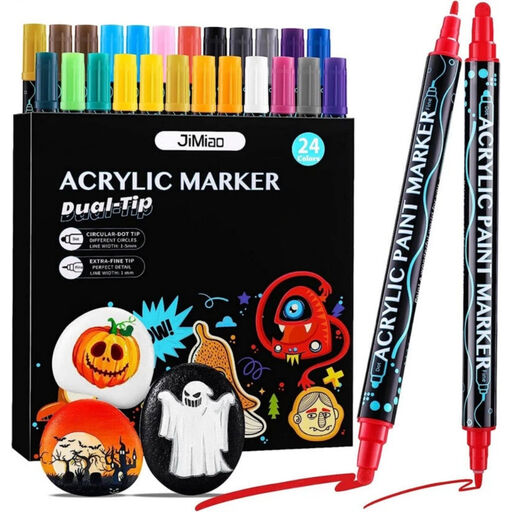
Why this product suits this profile: This 24-colour set is a manageable starting point for decorating cards, stones, wood, glass, ceramic and paper. The double-ended design covers both fine details and larger areas of colour.
The smaller colour selection is easier to browse. The product description specifically lists several suitable surfaces, as well as a fine and a broad nib.
24 colours, a dual-tip design and quick-drying, water-based acrylic paint, according to the product description.
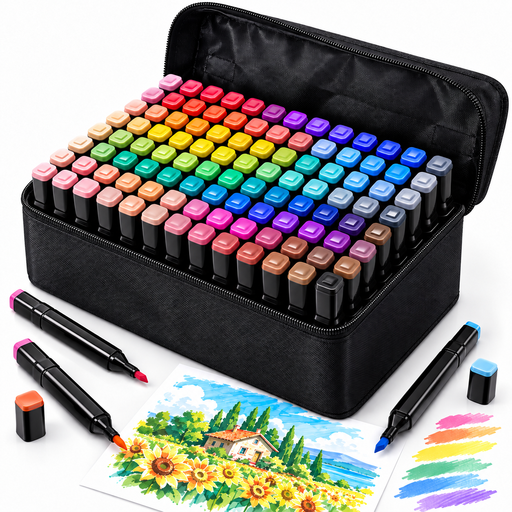
Why this product suits this profile: These 80 acrylic pens are aimed at anyone looking for a wide choice of colours and opaque results for crafts, illustrations and decorative projects.
The product description specifies a fine 3 mm nib and a broad 7 mm nib, as well as opaque acrylic paint for light and dark surfaces.
80 colours, a double-ended design and, according to the product details, waterproof, leak-proof and quick-drying ink.
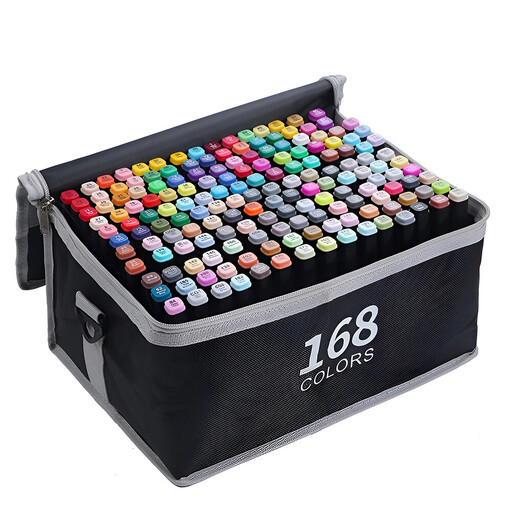
Why this product suits this profile: Illustrators, students and avid artists get a wide selection for design, sketching, manga, comics and colour gradients.
The nibs are specified in more detail as 1 mm, 2 mm and 6 mm. This makes it easier to choose between fine lines, variable edge work and larger areas.
168 colours, fine-liner and highlighter functions, plus a storage bag according to the product description.
We’ve put together a complete, regularly updated list of products that meet these strict selection criteria and fully comply with the safety regulations in force in the EU.
How long acrylic pens last depends largely on how you handle them. Replace each cap as soon as you’ve finished using a marker, and store the pens horizontally where possible, unless the manufacturer recommends another position. Direct sunlight, excessive heat and frost can affect the ink and nibs.
For clean results, you should:
Many sets list glass and ceramic as suitable surfaces. However, adhesion depends on how the surface is cleaned, its texture and the ink formula. It’s a good idea to test the markers before decorating the whole item. Only assume they’re permanently dishwasher-safe or scratch-resistant if this is explicitly stated.
There’s no single answer. Frequent use, leaving caps off for too long, pressing on the nib and incorrect storage can all shorten a marker’s lifespan. Replacing the caps carefully and using the markers on suitable materials can help them last longer.
A small set is suitable for beginners and clearly defined projects. A large set offers more shades for illustrations, design and regular drawing, but costs more and needs more storage space. What matters is the colours, nibs and surfaces you need—not just the number of pens in the set.