
Lieferung heute & morgen

Qualitätsgarantie

Willkommens-Angebote freischalten: KOSTENLOSE Lieferung | Bis zu 80 % RABATT | Kostenlose 30-Tage-JoyPlus-Testphase
App herunterladen
Food storage containers are designed to keep food safe in the fridge, freezer or on the go. In practice, however, many containers do not suit everyday needs: the lid does not close reliably when holding liquids, the container takes up too much space or, contrary to expectations, it is not suitable for use in the microwave.
This buying guide from the Joybuy Product Recommendation Officer explains what households, families, professionals, students and meal-prep users should look for when choosing food storage containers. The focus is on clear criteria such as material, capacity, seal, temperature range and cleaning.
A seal that offers a high level of leak protection is useful when transporting soups, sauces or dressings. However, a completely closed lid can create pressure when food is heated. Many microwave-safe food storage containers may therefore only be used without the lid or with the closure opened.
Before buying, check the manufacturer’s information:
Several food storage boxes can make organising your fridge easier, but they need to fit the available internal dimensions. Particularly tall containers can block fridge compartments, while boxes that cannot be stacked waste valuable shelf space. You should therefore check the length, width and height, as well as the shape of the compartments you already have.
Rectangular, stackable storage containers are often easier to arrange in drawers and on fridge shelves. Smaller food storage containers can be more practical for sauces, fruit or individual pre-prepared portions.
BPA-free plastic containers are not automatically suitable for every temperature or application. Plastic containers can become misshapen through intense heat, harsh cleaning products or sudden changes in temperature. Glass is odour-neutral and transparent, but can be damaged by impacts or thermal shock.
The deciding factor is therefore not just the material, but the specific approval and usage guidance for each product.
Glass food storage containers are often ideal for people who want to prevent odours from transferring and see the contents at a glance. Some models made from borosilicate glass are approved for use in the oven and microwave. The lid generally needs to be removed first.
Polypropylene, or PP for short, is lightweight and is often used for leak-proof food storage containers. When choosing plastic, look for information such as BPA-free, food-safe and the permitted temperature range.
Stainless steel is robust and does not retain much odour. However, a stainless-steel container is not suitable for microwave use. If you choose a set with glass lids, the lids should also be handled carefully.
Several components work together when storing liquids:
A four-sided closure can press the seal evenly against the rim. Even so, you should not overfill the container and should check before transporting it that all the clips are fully engaged. Damaged seals or cracks can compromise leak protection.
A combination of different sizes works well for everyday use:
For freezer use, freezer-safe food storage containers with sufficient space between the food and the lid are a sensible choice, as liquids can expand when frozen.
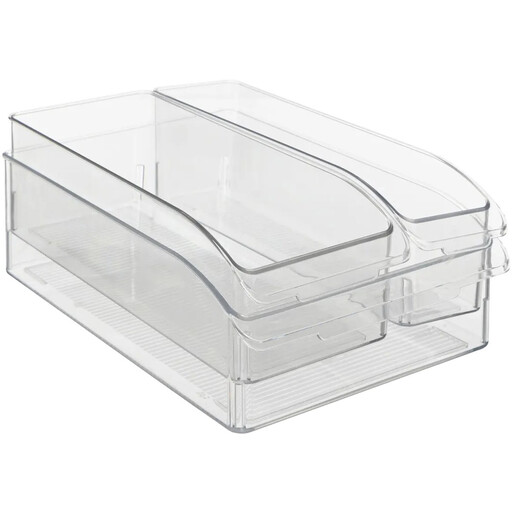
Why this product suits this profile: Three transparent PET containers with handles help keep the fridge organised and are suitable for dry or packaged food.
The dimensions of 30.5 × 21 × 9 cm are specified. As the boxes are not stackable, you should measure the intended space beforehand.
Transparent PET, pull-out handles, 3 containers in the set and BPA-free according to the product information.
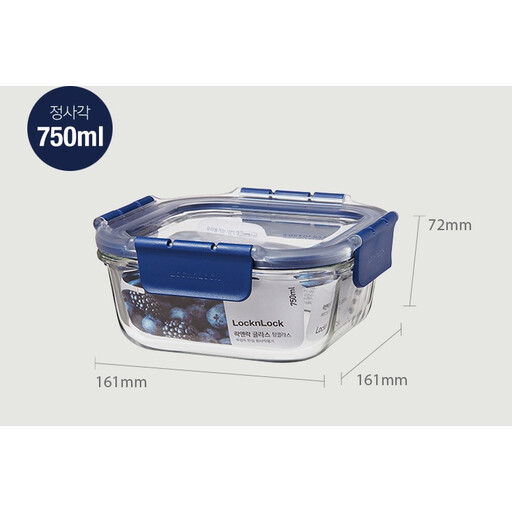
Why this product suits this profile: The borosilicate glass container is designed for use in the fridge and freezer and, without the lid, in the oven, microwave and air fryer.
The usage restriction is clear: the lid must be removed before heating. Sudden changes in temperature should also be avoided.
Four-sided closure, silicone seal, capacity of approximately 750 ml and a temperature rating for the glass container of up to 400 °C according to the product information.
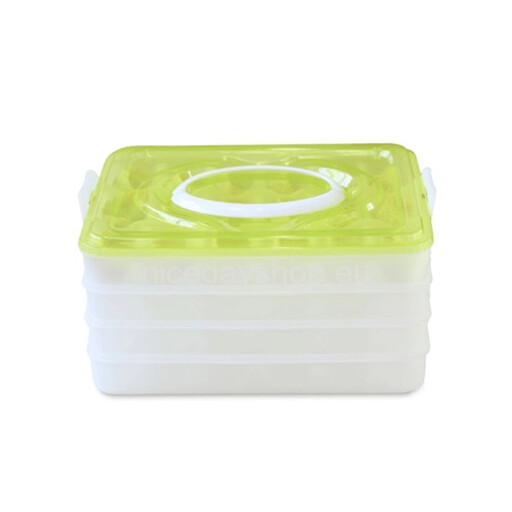
Why this product suits this profile: The multi-tier design is intended for frozen dumplings, wontons and other portioned foods in the fridge or freezer.
The four tiers reduce the need to remove individual portions. According to the product information, it is not suitable for use in the microwave or oven.
Four tiers for organised storage and access to individual quantities without having to remove the entire supply.
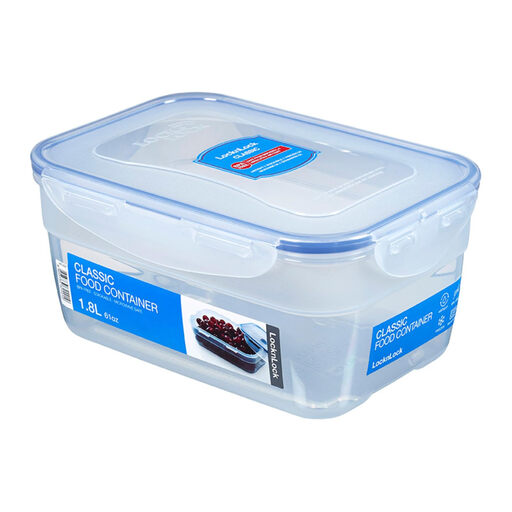
Why this product suits this profile: Three identical PP containers make it easier to prepare several meals and transport food.
The four-sided locking system with silicone seal is designed to provide an airtight, leak-proof closure. For microwave use, the lid must be removed or opened.
Capacity of 1.8 l each, a stackable and nestable design, plus freezer- and dishwasher-safe approval according to the product information.
We have put together a complete, regularly updated list of products that fully meet these strict selection criteria and the safety regulations applicable in the EU.
To keep food storage containers in good condition for as long as possible, follow these guidelines:
This depends on the individual model. According to the product information, many PP and glass containers are microwave-safe, but only without the lid or with the closure open. Oven suitability must be considered separately.
There is no fixed lifespan that applies to every container. It depends on the material, how the container is used and cleaned, and how often it is exposed to changes in temperature. Replace a container if it develops cracks or warping, or if the seal no longer closes securely.
Glass is transparent, odour-resistant and, for suitable models, able to withstand high temperatures. Plastic is generally lighter and convenient for transport and meal prep. The right choice depends on weight, heating function, risk of breakage and where you intend to store it.