
Lieferung heute & morgen

Qualitätsgarantie

Willkommens-Angebote freischalten: KOSTENLOSE Lieferung | Bis zu 80 % RABATT | Kostenlose 30-Tage-JoyPlus-Testphase
App herunterladen
If you want to store, freeze and reheat leftovers, soups or pre-prepared meals all in the same container, you’re probably looking for heat-resistant glass food storage containers. But not every vessel with a glass base is automatically suitable for the oven, microwave or freezer. What really matters is the material, the lid construction and the specific manufacturer’s instructions.
A glass storage container with a lid may be suitable for the oven, while the plastic lid cannot be heated. With several LocknLock models, the lid must be completely removed before use in the oven, microwave or air fryer, according to the product specifications.
If you overlook this limitation, you risk damaging the lid or ruining the seal. So pay close attention to the exact wording: “oven-safe without lid” is not the same as a container whose entire set can be heated.
A closure may reduce the ingress of air, but it can still leak when it comes to liquid foods. For soups, sauces and dressings, a continuous silicone sealing ring and a multi-sided locking mechanism are particularly important.
A leak-proof glass container should also be able to be closed correctly without the seal shifting. Removable seals make cleaning easier, but they must then sit fully back in their groove.
A capacity of two litres is practical for family portions and batch cooking, but it can take up a lot of space in small fridge compartments. For office portions and meal prep, glass meal prep containers between around 500 and 900 millilitres are often more manageable.
As well as the volume, check the length, width and height. A stackable shape can save more space than a round vessel with the same capacity.
Borosilicate glass is used in many heat-resistant storage containers. According to the product specifications for the respective LocknLock models, some containers are intended for the oven at up to 400 °C without the lid. However, that doesn’t mean every temperature change is problem-free.
Avoid going directly from extreme cold to intense heat. A frozen glass container should not be placed immediately into a preheated oven unless the instruction manual expressly allows it. Likewise, hot glass should not come into direct contact with cold water or a cold surface.
For storing liquid foods, glass storage containers with a lid that feature a continuous silicone ring and several locking clips are ideal. An airtight glass container can therefore keep odours and liquids better contained.
Look out for:
For individual side dishes, breakfast or smaller portions, 380 to 630 millilitres may be enough. 750 to 890 millilitres are often suitable for lunchboxes and pre-prepared main courses. For family meals or larger quantities, rectangular models with two litres make sense.
Stackable glass containers with straight sides generally make better use of fridge and cupboard space. With square containers, also check whether the base area fits your shelves and lunchboxes.
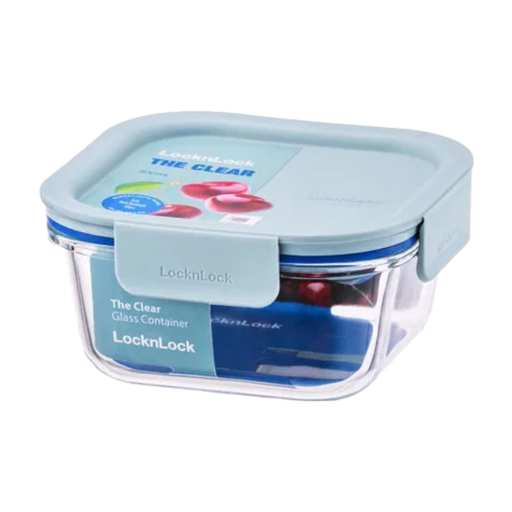
Why this product fits the profile: The compact format is ideal for single portions, side dishes and smaller meal prep quantities. According to the product specifications, the container is suitable for the fridge, freezer, microwave, oven and dishwasher.
The product specifications explicitly mention an airtight silicone seal and the instruction to remove the lid before heating.
500 ml capacity, square shape, silicone seal and suitability for the freezer and dishwasher according to the product description.
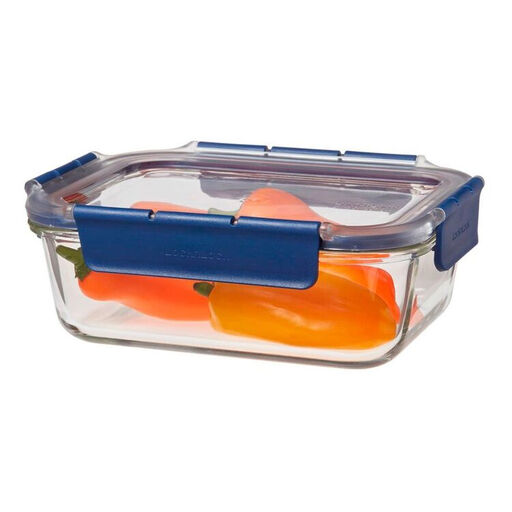
Why this product fits the profile: The rectangular 1-litre container is designed for larger single portions, office lunches and pre-prepared meals. According to the product specifications, the container is made from borosilicate glass and the lid from Tritan.
The specifications clearly distinguish between the glass container and the lid: oven and microwave use is without the lid; freezer suitability is stated as down to -20 °C.
Four-sided closure, silicone seal, stackable lid and up to 400 °C for the glass container without the lid according to the product description.
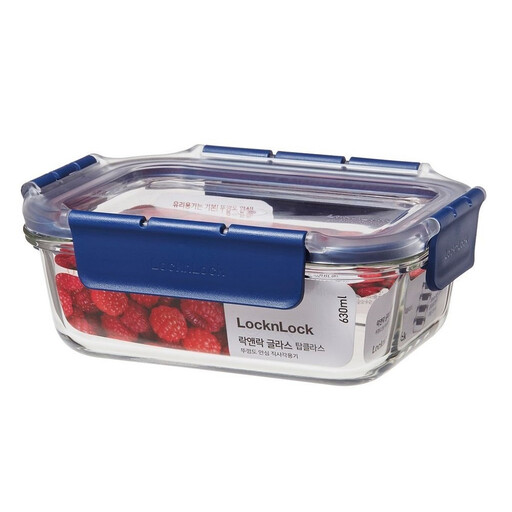
Why this product fits the profile: For users who regularly bake, reheat, freeze and use an air fryer, this format offers several designated areas of use.
The product specifications list separate guidelines for the oven, microwave and air fryer: the lid and clip must be removed before heating.
630 ml, removable clip, stackable design and suitability for the air fryer, freezer and dishwasher according to the product specifications.
We’ve put together a complete, regularly updated list of products that fully meet these strict selection criteria and the safety regulations in force in the EU.
That depends on the lid material and design. With many glass storage containers, the lid must be completely removed. Models with a steam vent may allow different use. The manufacturer’s instructions for your specific product are always the deciding factor.
The lifespan depends on drops, temperature changes, cleaning and the condition of the seal. Borosilicate glass is designed for high temperatures, but it can be damaged by hard knocks. Containers with cracks or chips should not be used further.
Some models are suitable down to around -20 °C according to the product specifications. Leave enough room for the contents to expand and avoid then going directly into a hot oven. The specific temperature limit should be checked before purchase.