
Lieferung heute & morgen

Qualitätsgarantie

Willkommens-Angebote freischalten: KOSTENLOSE Lieferung | Bis zu 80 % RABATT | Kostenlose 30-Tage-JoyPlus-Testphase
App herunterladen
By Joybuy Product Recommendation Officer, August 29, 2026
The selection of salt on supermarket shelves can be overwhelming. From Alpine salt to sea salt, fine or coarse—choosing a product as fundamental as iodized salt seems more complicated than necessary. Many consumers end up choosing products that are unsuitable for their daily needs, or whose prices are unjustifiably inflated by marketing buzzwords. Before you restock your pantry, you should be aware of the most common pitfalls.
A widespread mistake is assuming that all salt is the same. People buy expensive fleur de sel for boiling pasta when a simple iodized table salt would have sufficed. Another pitfall is buying salt without added iodine, assuming that "all-natural" is always the better choice. However, in an iodine-deficient region like Germany, this can make it difficult to meet daily requirements. Finally, the grain size is often ignored, which leads to coarse salt causing uneven seasoning in recipes that call for fine table salt.
To make an informed decision based on facts rather than marketing hype, you should check three core parameters. These will help you find the right salt for cooking and seasoning for your household.
The main difference between regular table salt and iodized salt is the addition of iodate. Iodine is a trace element required for the normal production of thyroid hormones and normal thyroid function. Since the soil in Germany and large parts of Europe is considered iodine-deficient, the use of table salt with iodine is recommended by nutrition societies to support intake. Look for "with iodine" or "iodized" on the packaging.
The origin of the salt influences its purity and composition.
For daily use, evaporated salt is a very reliable choice due to its high purity and neutral properties.
The grain size is crucial for its application.
To keep the salt free-flowing, anti-caking agents such as sodium ferrocyanide (E 535) are often added in small amounts. These are approved for table salt in the EU and prevent the salt from clumping due to moisture.
Based on these objective criteria, we have compiled a selection of products suitable for different needs and households in Germany.
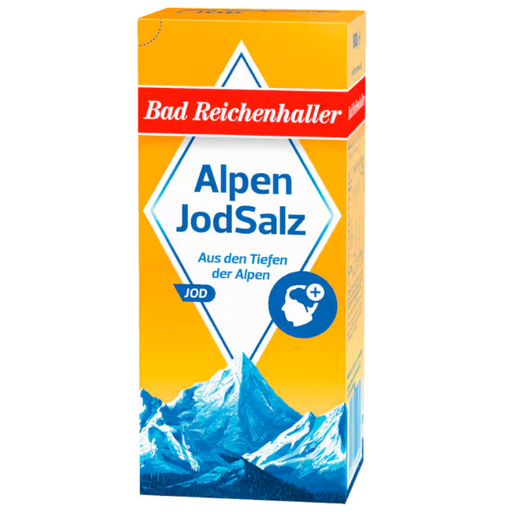
Why This Fits Their Persona: Ideal for daily use in the family kitchen. This salt meets all the basic requirements: it's fine-grained, free-flowing, and provides the essential iodine supplement for a balanced diet in Germany.
You are not paying for a superfluous "gourmet" label, but instead receive a high-purity evaporated salt specifically designed for everyday cooking that also ensures your iodine supply.
Pure Alpine salt from natural brine; fine grain for universal use; contains iodine to support thyroid function.
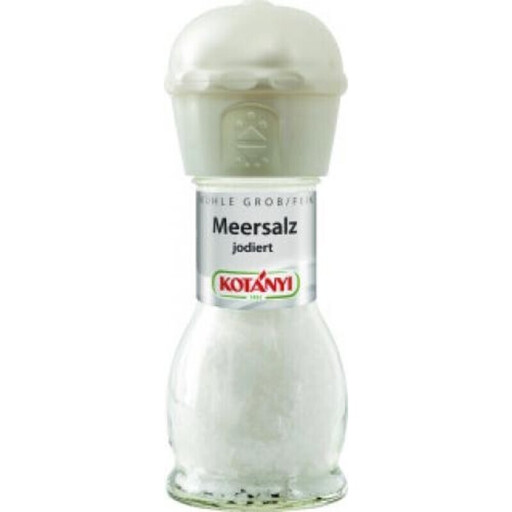
Why This Fits Their Persona: For home cooks who appreciate the taste and texture of freshly ground salt but don't want to miss out on the added iodine. The mill is practical and looks great on the dining table.
This product combines the desire for "natural" sea salt with the nutritionally sensible addition of iodine. You don't have to compromise between a great flavour experience and proper nutrition.
Combination of sea salt and iodine; integrated ceramic grinder for fresh seasoning; practical and reusable glass mill.
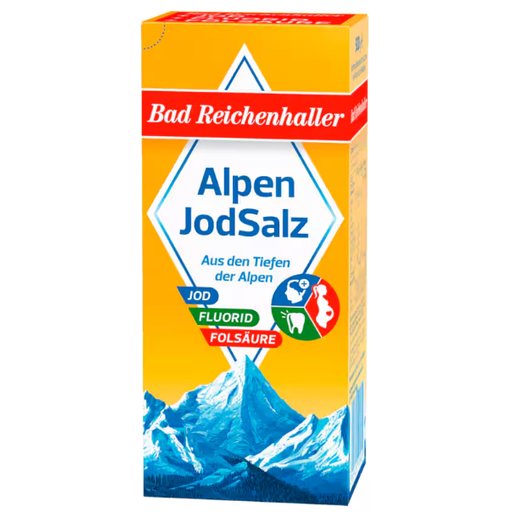
Why This Fits Their Persona: Perfect for individuals who want to supplement their diet with additional nutrients. This salt provides not only iodine but also fluoride, which contributes to the maintenance of tooth mineralization, and folic acid.
Instead of buying multiple separate supplements, you integrate the nutrients directly into your daily seasoning. The composition is clearly declared and designed for practical benefit.
Triple fortification: iodine, fluoride, and folic acid; based on pure Alpine salt; an easy way to support the intake of these nutrients.
The only difference is the addition of iodine (in the form of potassium iodate or sodium iodate) to iodized salt. Regular table salt is pure sodium chloride, possibly with an anti-caking agent. Iodization serves to improve the iodine supply of the population. There is no perceptible difference in taste.
Salt is hygroscopic, meaning it attracts moisture from the air. To prevent clumping, you should always store it in a tightly sealed container in a cool, dry place. A salt shaker with a lid or a well-sealed storage jar is ideal. Do not add rice grains to the shaker, as this is a myth and can be unhygienic.
For the vast majority of the population in Germany, using iodized salt is a sensible measure. However, individuals with certain thyroid conditions, such as hyperthyroidism or Graves' disease, should consult their doctor before using iodized salt or other iodine-rich foods.