
Lieferung heute & morgen

Qualitätsgarantie

Willkommens-Angebote freischalten: KOSTENLOSE Lieferung | Bis zu 80 % RABATT | Kostenlose 30-Tage-JoyPlus-Testphase
App herunterladen
Choosing the right LED ceiling light can completely transform a room. However, the market is filled with models whose technical specifications and marketing promises often create more confusion than clarity. The wrong choice leads not only to unsuitable lighting but also to unnecessary expenses. This guide will help you avoid common pitfalls and make an informed decision.
Many buyers focus solely on design or price, overlooking crucial functional aspects. This often leads to disappointment after installation.
To avoid these mistakes, you should check three core features before buying. These define the functionality and longevity of your new ceiling light.
The light color, measured in Kelvin (K), significantly determines a room's atmosphere. A modern dimmable LED ceiling light that offers adjustable color temperature is a flexible solution for multi-functional spaces.
Brightness is measured in lumens (lm). For general illumination in a living room, plan for about 100–150 lm per square meter.
Modern ceiling lights offer far more than just a wall switch. The type of control significantly impacts everyday convenience.
The design should be not only aesthetically pleasing but also functional. A flat and round form factor is unobtrusive and suitable for rooms with low ceilings.
Here are some recommendations tailored to different user profiles and their specific requirements.
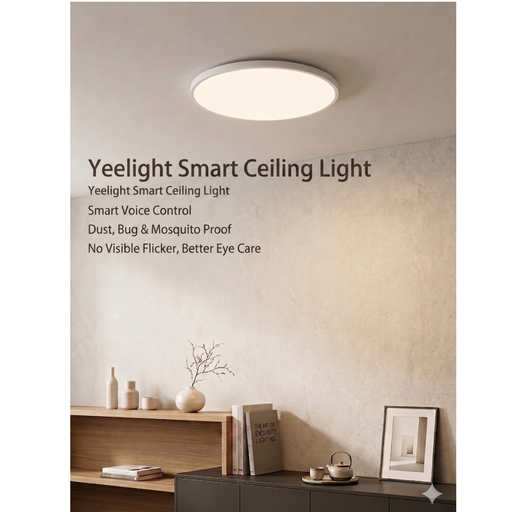
Why This Fits Their Persona: Ideal for users who want to seamlessly integrate their lighting into an existing smart home system. Control via app or voice with Alexa and Google Home offers maximum convenience.
Solves the problem of fixed light color and brightness with stepless dimming and adjustable color temperature. It adapts to any situation, from focused work to relaxing evenings.
Broad compatibility with common AIoT platforms. The moonlight mode with extremely low brightness is ideal for nighttime. The sealed design protects against dust and insects.
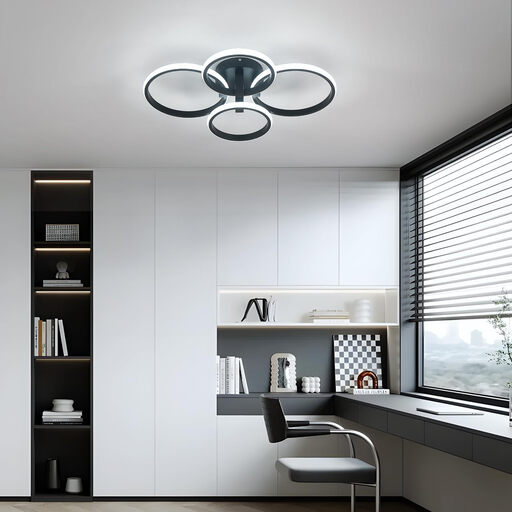
Why This Fits Their Persona: For anyone who wants a modern ceiling light that makes a visual statement. The four-ring design is an eye-catcher in any contemporary living room.
Avoids the pitfall of inferior materials with a high-quality aluminium base featuring a heat-resistant and rust-proof finish. This ensures long-term durability and an appealing look.
The high output of 48W provides bright illumination even in larger rooms (15–20 m?). The 6500K cool white light is ideal for areas that require clear and activating lighting.
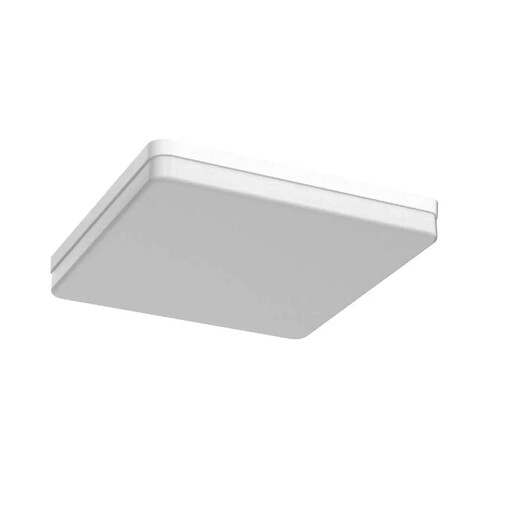
Why This Fits Their Persona: Perfect for users seeking unobtrusive yet powerful lighting for a kitchen, hallway, or bathroom. The minimalist, low-profile design blends seamlessly into any ceiling.
Offers a balanced, neutral white light color at 4500 K, which is ideal for functional spaces and avoids the trap of an unsuitable color temperature. The low-profile design simplifies installation.
Extremely slim profile (approx. 3.5 cm) for a discreet look. High energy efficiency and a long lifespan of about 30,000 hours reduce operating costs and maintenance.
We have compiled a complete, up-to-date list of products that fully meet these strict selection criteria and all relevant safety regulations.
1. How long does an LED ceiling light last? The lifespan of an LED ceiling light is specified in operating hours and typically ranges from 20,000 to 50,000 hours. With an average use of four hours per day, this corresponds to a lifespan of about 13 to 34 years. Unlike traditional incandescent bulbs, LEDs do not suddenly fail at the end of their life; they gradually lose brightness.
2. What does color temperature in Kelvin (K) mean? Color temperature describes the color of the white light a lamp emits. Low Kelvin values produce a warm, yellowish light that is perceived as cosy (e.g., 2700 K). High Kelvin values represent a cool, bluish light that resembles daylight and promotes concentration (e.g., 6500 K). Neutral white (approx. 4000 K) falls in between and is a good all-rounder.
3. Can I dim any LED ceiling light? No, an LED light must be explicitly marked as "dimmable." Attempting to use a non-dimmable light with a dimmer switch can lead to flickering, buzzing, or damage to the electronics. Check the product description to see if the light is dimmable and what method is used (e.g., via an external dimmer, a remote control, or an app).