
Lieferung heute & morgen

Qualitätsgarantie

Willkommens-Angebote freischalten: KOSTENLOSE Lieferung | Bis zu 80 % RABATT | Kostenlose 30-Tage-JoyPlus-Testphase
App herunterladen
A new light should suit the room, provide enough brightness and work reliably day to day. However, when choosing LED lamps for living rooms, it is not just design and price that can lead to a poor purchase. Technical specifications are often presented in abbreviated form, or important details only become apparent after buying.
Wattage describes energy consumption, not brightness directly. For comparisons, luminous flux in lumens is the key factor. An LED lamp rated at 10 watts can appear noticeably brighter or dimmer depending on its design. Always check how many lumens are specified and whether this is sufficient for the size of your room.
Warm white lighting of around 2,700 to 3,300 Kelvin is often used to create a pleasant atmosphere in living rooms and bedrooms. Cooler light from around 4,000 Kelvin appears more functional and may be suitable for work areas or a high level of general illumination. A specification of 6,500 Kelvin indicates a very cool white, which will not automatically suit every modern living-room lighting scheme.
Depending on the model, a smart LED floor lamp requires Wi-Fi, Bluetooth, an app or a compatible voice assistant. Before buying, check whether the light works with your network and with services such as Alexa or Google Assistant. If you live in rented accommodation, it is also important to consider whether permanent wall or ceiling installation is required.
Start by comparing the luminous flux in lumens. For a floor or table lamp used as additional lighting, lower values are often sufficient depending on how it will be used than for a central LED ceiling light. A 36-watt ceiling light specified as producing 4,000 lumens should be assessed differently from a decorative RGB LED lamp that provides less functional room lighting.
For running costs, power consumption in watts is relevant. The simple calculation is:
Watts ÷ 1,000 × operating hours × electricity price = electricity costs
The energy efficiency class on the EU energy label provides a standardised guide. However, it should be considered alongside lumens and power consumption. For example, the Dewenwils Edishine LED floor lamp is listed with energy efficiency class F.
A dimmable LED lamp should explicitly state that it has a dimming function. Not every LED light is compatible with an external wall dimmer. Some models are operated using a foot switch, remote control or app.
Also check whether the dimming is stepped or stepless, and whether a memory function is available. On suitable models, this saves the last setting used. Warm white light can be a good choice for living rooms and bedrooms, while a home office or gaming area may benefit from adjustable scenes.
A slim LED floor lamp takes up little space, but it should stand on a stable, level surface. Check the height, base diameter and cable routing. For wall lights, the installation method, connection options and drilling distances are important. An LED wall light can provide accent lighting, but it will not automatically replace the room’s main light.
With integrated LED modules, the light source is often not replaceable by the user. This means that if a fault occurs, the entire light may need to be replaced. This feature should be taken into account when making your purchase decision.
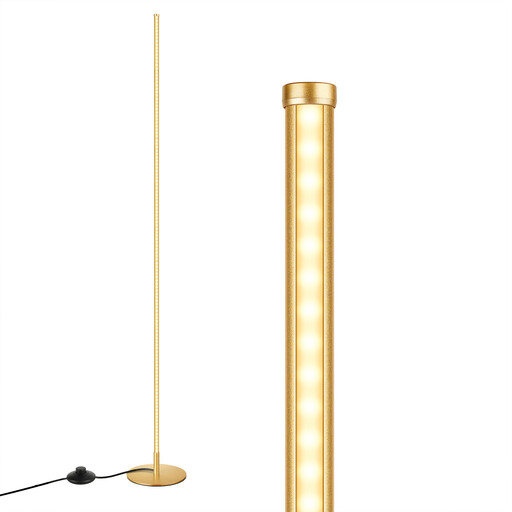
Why this product suits the profile: This 146 cm-tall light is designed for living rooms, bedrooms and home offices, and can be operated with a foot switch.
The specified colour temperature of 3,000 Kelvin and stepless dimming make it easier to choose between brighter and softer light.
Metal construction, weighted base, height-adjustable design and memory function according to the product specifications.
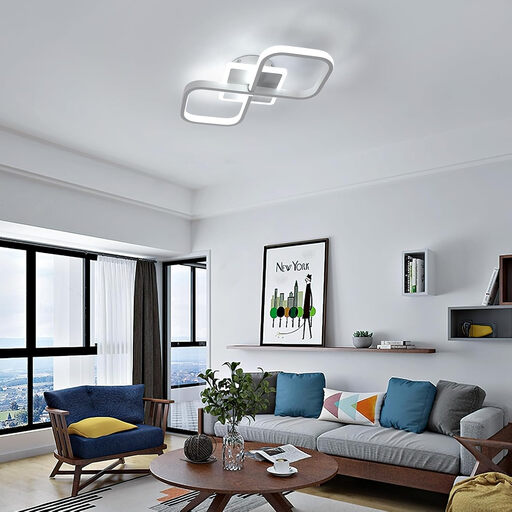
Why this product suits the profile: As a central light, this geometric model is ideal for rooms where even general illumination is required.
The product specifications state 4,000 lumens and 6,500 Kelvin. This makes it possible to assess its very bright, cool-white light before installation.
36 watts, acrylic shade and integrated LED technology; the stated lifespan is 50,000 hours.
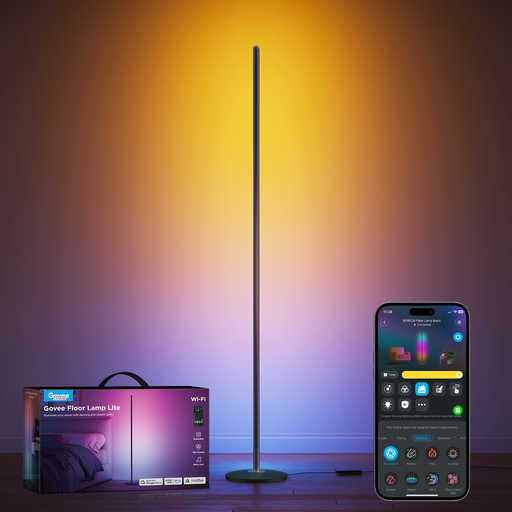
Why this product suits the profile: This smart LED floor lamp is aimed at users who want app, Wi-Fi and voice control for their living room, gaming area or home cinema.
Compatibility with Alexa and Google Assistant, along with control via app, Wi-Fi and Bluetooth, is explicitly stated.
24 watts, 1,000 lumens, 16 million colours, 58 scene modes and music synchronisation according to the product description.
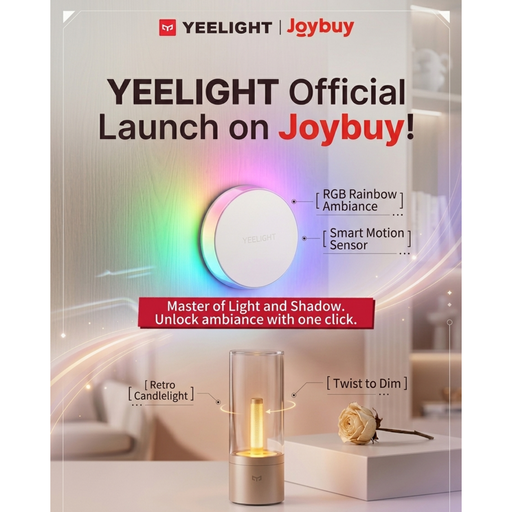
Why this product suits the profile: This compact magnetic ambient light with a USB-C connection can be used flexibly in the living room, bedroom or gaming area.
Battery and USB-C operation reduces dependence on permanent installation or a permanently installed power connection.
RGB lighting, 11 preset effects, magnetic mount, motion sensor and rechargeable battery according to the product description.
We have put together a complete, regularly updated list of products that fully meet these strict selection criteria and the safety regulations applicable in the EU.
This depends on the room size, ceiling height, wall colours and intended use. A central LED ceiling light should provide more luminous flux than a decorative LED wall light. For reading or working, an additional directional light is useful. The key is to compare the manufacturer’s lumen specification with the exact location where the light will be placed.
Lifespan is specified in operating hours. With integrated LED modules, this figure is a product specification rather than a guarantee of the actual service life under all conditions. Heat, frequent switching, the power supply and the operating environment can all affect lifespan. Also check whether the LED module can be replaced.
Not necessarily. Running costs mainly depend on wattage, brightness and how long the lamp is used each day. A smart lamp may consume a small amount of electricity in standby mode. By using schedules, dimming or automatic switch-off, you can manage operating time more precisely. A lamp with a motion sensor is particularly useful for hallways, storage rooms or ancillary areas, while manual or smart control is usually sufficient in the living room.