
Lieferung heute & morgen

Qualitätsgarantie

Willkommens-Angebote freischalten: KOSTENLOSE Lieferung | Bis zu 80 % RABATT | Kostenlose 30-Tage-JoyPlus-Testphase
App herunterladen
A marker set can save you a lot of time when drawing, colouring or lettering. At the same time, pens differ significantly in terms of ink, nibs, paper compatibility and storage. A large colour selection alone doesn't tell you much about how practical they actually are.
Typical buying problems come down to three points:
Water-based markers are often suitable for journaling, school, sketches and working on paper. Depending on the formula, they can be blended with water and are often low-odour or odourless. However, that doesn't mean every paper is suitable for watercolour effects. Thin notebook paper can buckle or let the colour show through to the other side.
With alcohol-based markers, the ink usually dries quickly. This makes layering and blending easier, but requires good ventilation. These types of markers can also permanently stain surfaces. For illustrations, you should therefore use marker paper or smooth, sufficiently thick paper.
Safety information should be clearly visible in the product description. Terms like "non-toxic" are manufacturer claims and don't replace independent verification. The Ohuhu Dual Tip Brush Pens Set with 60 pens, for example, states an ASTM D-4236 certification. The Ohuhu Skin Tone Coloring Pens Set with 36 colours describes the ink as non-toxic, but the available information doesn't mention an independent certification such as EN 71 or ASTM D-4236.
The nib determines whether a pen is better suited for drawing lines, filling areas or hand lettering:
A dual-tip marker combines two uses in one pen. Pay attention to the exact size specification: a brush nib of 1 to 6 mm offers more flexibility than a narrower version, but also requires controlled pressure.
Colour numbers, colour charts and colour-coded caps make selection easier. A personal swatch card is particularly useful because the ink can look different on paper than it does on the cap.
For longevity, these points are especially important:
With children, the age recommendations and warning notices must be observed. Pen caps are considered small parts and can pose a choking hazard for children under three years old.
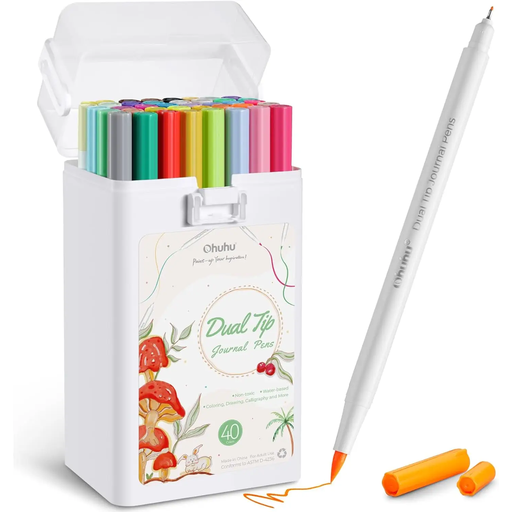
Why this product suits the profile: This set combines 40 colours with a 0.4 mm fine tip and a 1–5 mm brush tip. That makes it suitable for first projects in journaling, drawing and calligraphy.
The two clearly specified nibs make the intended use clear. A colour swatch card helps you assess the actual ink colour on your own paper.
Water-based, low-odour ink according to the product information; 40 numbered colours and a portable storage box.
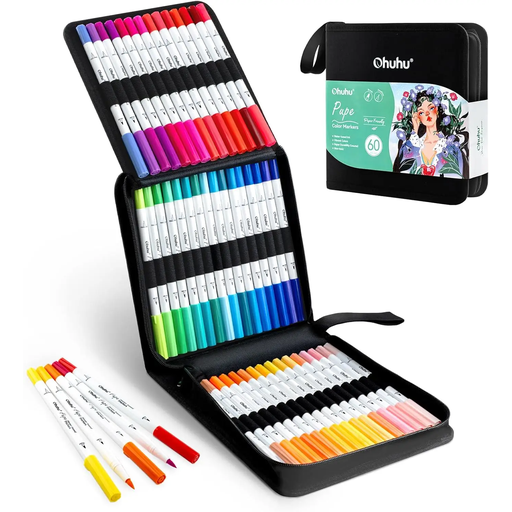
Why this product suits the profile: This set contains 59 colours and a colourless blender, plus a 0.4 mm fine tip and a 1–5 mm brush tip. It's aimed at users who switch between lettering, illustration and journaling.
The ASTM D-4236 certification is explicitly stated in the product data. Additionally, the ink is described as paper-friendly, acid-free and water-based.
60 pens including storage box; according to the product information, replacement nibs are not included with this set, so caring for the existing nibs remains important.
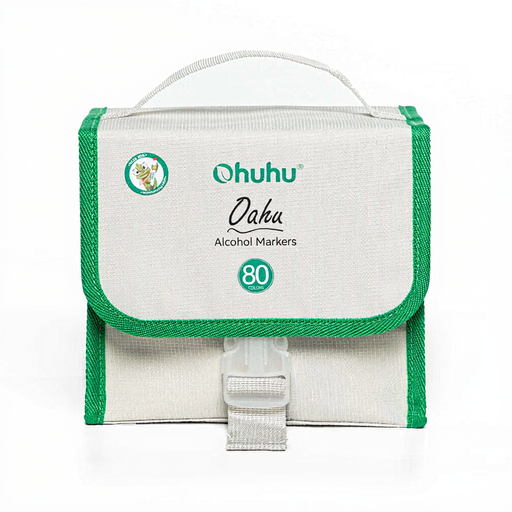
Why this product suits the profile: The alcohol-based ink, a broad chisel nib and a fine nib are designed for illustrations, sketches and colour-intensive areas.
The ink base is clearly stated as alcohol-based. This allows you to plan a suitable workspace with ventilation and appropriate paper before purchasing.
80 colours plus colourless blender; nylon carry case and colour-coded caps make transport and sorting easier.
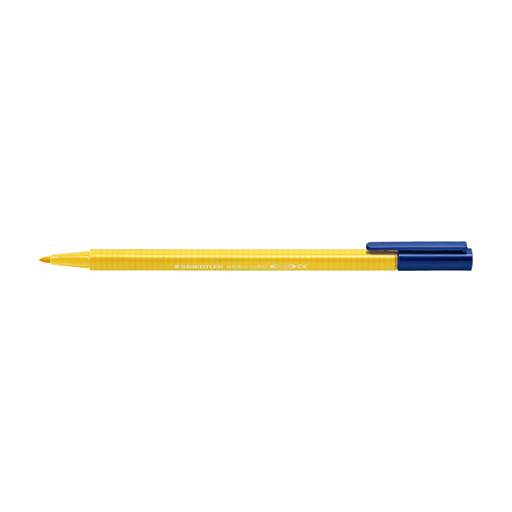
Why this product suits the profile: This single drawing pen is suitable for uniform lines in school, mind maps, colouring pages and bullet journaling.
The line width of approximately 1 mm and the water-based, washable ink are clearly stated. This prevents confusion with permanent markers.
Triangular barrel; Dry-Safe feature according to the product information and ventilated cap to ISO 11540.
We've put together a complete, regularly updated list of products that fully meet these strict selection criteria and the safety regulations in force in the EU.
Depending on the project, a single marker set can't cover all tasks. Calligraphy pens and brush pens are suitable for lettering, while fine drawing pens and fineliners refine outlines. For dark paper, opaque gel pens in white, gold or silver are a good choice. Coloured pencils can be used additionally for dry shading; watercolour pencils are an option if you want colour transitions with water.
For presentations and labelling on different materials, special markers like the STAEDTLER Lumocolor Permanent Duo are designed for the job. The permanent ink is not the same as a washable journaling pen. So check the surface and the desired erasability before use.
For getting started, water-based markers with a manageable colour selection and a clear nib combination are practical. A dual-tip marker with a fineliner and brush tip covers several techniques without having to buy multiple pen types straight away.
The lifespan depends on use, capping and storage. Frequent work on rough paper puts more strain on the nib. Firmly closed caps, horizontal storage and protection from heat can slow down drying out and wear. With sets that include replacement nibs, the useful life of individual pens can be extended.
In addition to the purchase price, replacement nibs, refill ink, paper and possibly a blender count towards the ongoing costs. Water-based markers often require suitable, thicker paper for clean results. Alcohol markers, with their permanent ink, can require more consumables if mistakes can't be corrected. So don't just check the number of colours, but also accessories, refill options and the intended surface.