
Lieferung heute & morgen

Qualitätsgarantie

Willkommens-Angebote freischalten: KOSTENLOSE Lieferung | Bis zu 80 % RABATT | Kostenlose 30-Tage-JoyPlus-Testphase
App herunterladen
A mini dishwasher can save plenty of space in a small flat, student accommodation or motorhome. However, compact dimensions alone say little about how practical a model is for everyday use. The key factors are water supply, capacity, noise level, energy consumption and the actual installation dimensions.
Many buyers initially focus on a short programme duration or particularly low consumption figures. Important details can easily be overlooked: Will the countertop dishwasher fit beneath the wall unit? Is a water connection required? Is the interior large enough for plates with a wide diameter? And how will the dishes be dried after washing?
Some appliances look particularly small in photos, but only have room for a few plates, cups and pieces of cutlery. So do not just check the width, height and depth. Also consider:
A model with 4 place settings may be sufficient for singles or couples. Families who regularly cook will often need a larger compact dishwasher or a standard appliance with 12 to 14 place settings.
A dishwasher without a fixed water connection needs either an integrated tank or manual water filling. Other countertop dishwashers may be described as portable, but still need to be connected to the tap via an inlet hose.
Check the exact specification:
A dishwasher with a quick programme is useful for lightly soiled dishes. However, the shorter cycle may involve compromises in terms of temperature, load capacity or drying. Check whether the appliance features automatic door opening, hot-air drying, condensation drying or a separate Extra Dry function.
Measure the available space with the door open. You should also allow room for the inlet and drain hoses, as well as an easily accessible, earthed socket. A countertop dishwasher with a tank is not automatically suitable for every worktop: you need to take into account the weight of the appliance when full and the load-bearing capacity of the worktop.
A freestanding dishwasher measuring 60 cm in width, on the other hand, needs a suitable position on the floor. A fully integrated dishwasher also requires the correct installation dimensions and a matching furniture door.
The “place settings” figure is intended as a point of comparison. In practice, usable capacity depends on the basket design. Height-adjustable upper baskets, foldable plate racks and a cutlery drawer provide greater flexibility.
As a guide:
The EU energy label shows consumption per 100 standard cycles. A lower figure can reduce running costs if the appliance is used frequently. For a meaningful comparison, you should also look at water consumption per cycle and programme duration.
Noise levels are measured in decibels. Appliances rated at 44 to 48 dB may be suitable for open-plan kitchens, although the perceived noise level also depends on room acoustics, positioning and the load. A quiet dishwasher should be placed on a stable, level surface.
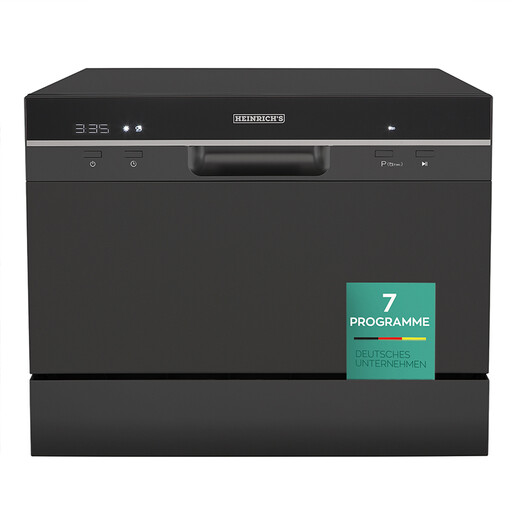
Why this product matches the profile: This compact appliance offers 6 place settings, 7 programmes and a stated noise level of 47 dB. It is therefore suitable for smaller households with regular but manageable washing-up needs.
The product specifications mention both a water connection and a salt compartment. This makes it easier to assess installation and maintenance requirements before buying.
6.5 litres of water per wash cycle according to the product description, 7 programmes and a stated energy efficiency class D.
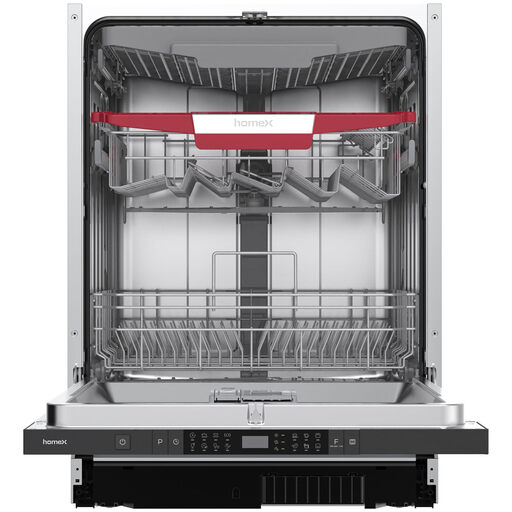
Why this product matches the profile: This integrated appliance is designed for 14 place settings and offers 8 programmes. It is aimed at families who want to clean a large amount of crockery in a single cycle.
The technical specifications list the installation dimensions, water inlet pressure and hose lengths. AquaStop and overflow protection are also specified as safety features.
14 place settings, 44 dB, energy efficiency class C, a cutlery drawer and automatic door opening according to the product data.

Why this product matches the profile: This portable dishwasher has an integrated 5-litre water tank and, according to the product description, can alternatively be connected to a tap. This makes it an interesting option for rented flats, holiday accommodation and motorhomes.
The two water supply options are clearly specified. This allows you to decide in advance whether manual filling or a direct connection is better suited to the available space.
5+1 programmes, 4 place settings, a 5-litre tank and automatic drying and ventilation functions according to the supplier’s information.
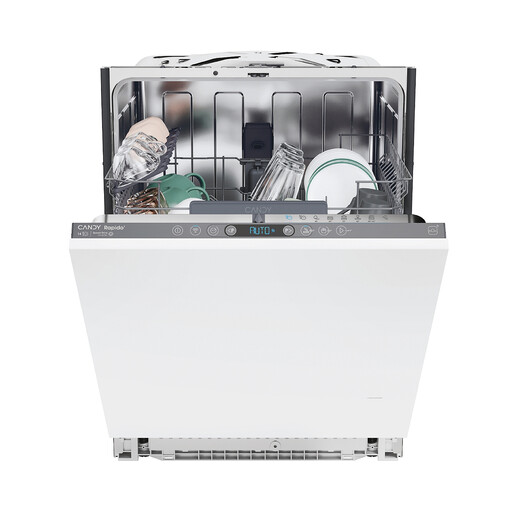
Why this product matches the profile: This appliance combines 14 place settings with 8 programmes and a stated noise level of 46 dB. It is suitable for households that need plenty of capacity and a choice of programmes.
The specifications distinguish between quick programmes and regular cycles. This means buyers can use the short cycle specifically for lightly soiled dishes.
Energy efficiency class C, 14 place settings, 8 programmes and a stated 39-minute quick option.
We have put together a complete, regularly updated list of products that fully meet these strict selection criteria and the safety regulations applicable in the EU.
Yes, provided the appliance has an integrated water tank. The tank is filled manually, while the wastewater is directed through a hose into a suitable basin or drain. For regular use, a direct connection is usually more convenient.
That depends on the model. Compact appliances often have room for around 3 to 6 place settings. You should also check the maximum plate size and basket height, as these measurements are crucial for pots, bowls and larger plates.
There is no universal answer. The decisive factors are water consumption, electricity consumption, programme selection, load size and local energy prices. Use the consumption figures on the energy label and operate the appliance with a full load whenever possible.