
Lieferung heute & morgen

Qualitätsgarantie

Willkommens-Angebote freischalten: KOSTENLOSE Lieferung | Bis zu 80 % RABATT | Kostenlose 30-Tage-JoyPlus-Testphase
App herunterladen
A motion-sensor night light can automatically illuminate hallways, staircases, bedrooms, children’s rooms, cabinets, or entrances. However, its practical value depends heavily on the sensor, installation method, and intended location. Not every light marketed as a “sensor light” is suitable for every situation.
A PIR sensor detects movement and switches the light on for a specific period. A twilight sensor, by contrast, measures ambient brightness. A motion-sensor LED night light without twilight detection may therefore also activate during the day whenever movement is detected.
For a hallway night light or a night light in the bedroom, combining motion and twilight sensors is often more practical. With a motion-sensor cabinet light, the twilight function is less important because the cabinet is dark when opened anyway.
A light with a high lumen output can feel uncomfortably bright in a small hallway or beside the bed. Depending on the installation location, lower brightness is often sufficient for orientation lighting. An outdoor wall light for an entrance, on the other hand, requires considerably more light to make paths and steps clearly visible.
Also pay attention to the light colour: 2700 to 3000 Kelvin produces warm white light, while 4000 Kelvin appears more neutral. Warm white is often perceived as less intrusive in bedrooms and children’s rooms. Neutral white light can be more practical in garages, entrances, or work areas.
A cordless night light can be installed flexibly, but it requires either batteries or regular recharging. Check whether batteries are included, which battery type is required, and whether a USB charging cable is supplied.
The mounting surface is also important. Self-adhesive backs are suitable for smooth, clean surfaces. On rough plaster or damp outdoor surfaces, screw mounting may be more reliable. In rented properties, the light should ideally be mounted without causing permanent damage to the wall.
Sensor range is usually specified in metres. A range of around three to four metres is often sufficient for a hallway. For staircases or longer passageways, you should also consider the detection angle. A narrow angle may cause the light to respond only at the last moment.
Also check how long the light remains on after the last detected movement. A short shut-off time saves energy and is sufficient for a quick trip to the bathroom. For staircases, entrances, or retrieving items from a cabinet, a longer run-on time may be more convenient.
Light output is measured in lumens (lm). Wattage, by contrast, primarily describes energy consumption. With LED lights, the lumen rating is therefore a more meaningful indication of brightness than the wattage.
Compact lights with low output are sufficient for small areas. A slim design can be particularly useful beneath wall cabinets or inside shelving. According to the product specifications, the VARTA Motion Sensor Slim Light measures 24 × 4 × 1.66 cm, allowing it to be installed in narrow spaces.
For a battery-powered motion-sensor light, pay attention to the specified batteries. According to the product data, the VARTA model uses alkaline batteries; batteries are not included. Automatic shut-off after a short period of inactivity reduces the time the light remains on.
A rechargeable night light eliminates the need for regular battery changes, but it must be charged via USB. The following formula provides a rough estimate of energy consumption:
Watts × operating hours ÷ 1,000 = kilowatt-hours
A 4-watt light that operates for one hour every day uses approximately 1.46 kWh per year mathematically. Actual consumption depends on sensor behaviour and usage.
An indoor light cannot automatically be used outdoors. For patios, balconies, gardens, or entrances, a specified protection rating such as IP44 is relevant. IP44 means protection against solid foreign objects of 1 millimetre or larger, as well as water splashed from all directions. This does not mean the light can be exposed to direct water jets, flooding, or unprotected installation in particularly exposed locations.
For an outdoor light with motion sensor, you should also follow the installation instructions and use suitable screws while observing electrical safety requirements. Permanently connected lights must be installed by a suitably qualified person.
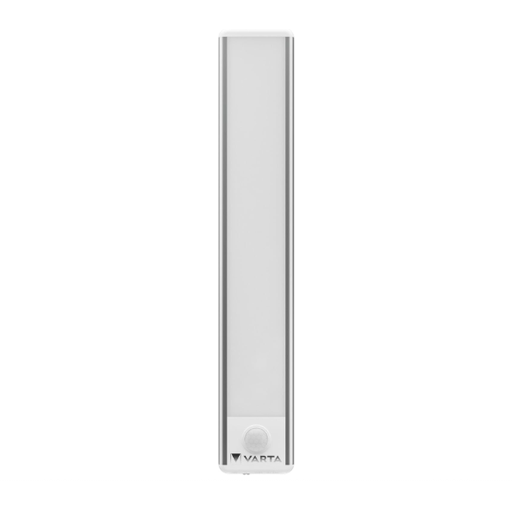
Why it suits this profile: Its slim, battery-powered design is suitable for hallways, staircases, cabinets, and other confined spaces without a power outlet.
The product data explicitly specifies automatic shut-off and two mounting options: adhesive mounting or screws.
Compact dimensions of 24 × 4 × 1.66 cm; battery operation without a power cable.
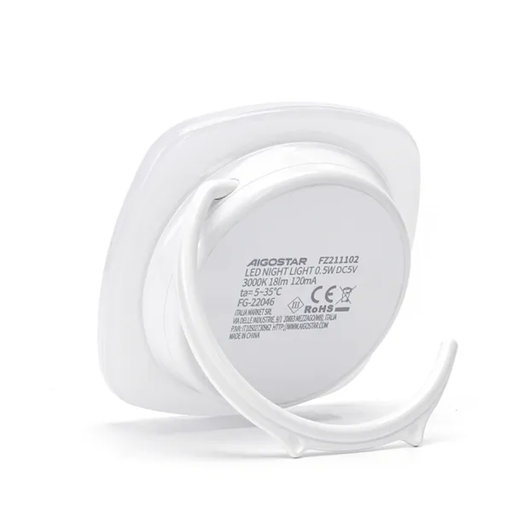
Why it suits this profile: USB charging is practical for tenants, cabinet lighting, and under-cabinet areas where no fixed connection is available.
The specifications list the battery, USB charging, sensor range, and light output rather than relying solely on vague convenience claims.
500 mAh battery, up to 6 hours of light according to the product specifications, 18 lm, and 3000 K.
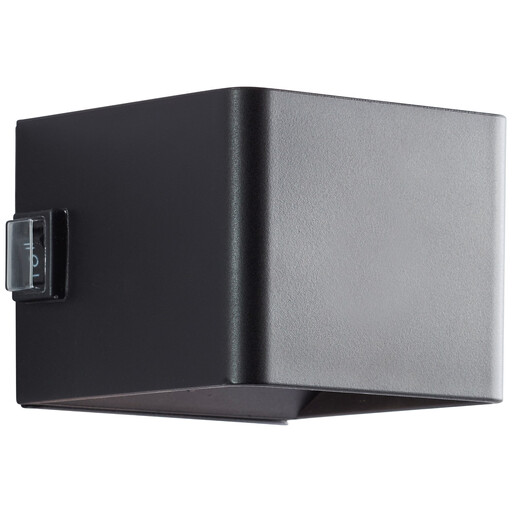
Why it suits this profile: The portable wall light can be used for entrances, patios, and garden paths when there is no power outlet nearby.
The IP44 protection rating is clearly specified. Nevertheless, the light should not be submerged or exposed to direct high-pressure water.
300 lm, 3000 K, integrated battery, USB cable, magnetic mounting, and switch.
For an indoor LED motion-sensor light, the installation height should match the sensor range. Position the light so that people cross the detection area from the side or front. Detection may be restricted if the light is installed directly behind doors, curtains, or furniture edges.
If you are looking for a night light for a children’s room or bedroom, choose a low light output, a warm white colour temperature, and a short shut-off time. On staircases, even illumination is more important than an especially decorative housing. Inside cabinets, slim dimensions and simple mounting are the key considerations.
For permanent outdoor installations, models such as the LUTEC 20W LED Security Light with Sensor or the Pheashine U-shaped Outdoor Wall Light with Light and Motion Sensor may be suitable. Before buying, carefully check the specifications for connection, installation, protection rating, and any required electrical work.
Our category features an regularly updated selection of motion-sensor lights for entrances, paths, and outdoor areas. Before buying, always check the technical specifications, protection rating, and installation instructions.
Clean the mounting surface before applying a self-adhesive backing. Aim the sensor towards the area where movement is expected. For screw mounting, make sure the surface, wall plugs, and screws are suitable for the wall. Outdoor lights must be installed according to the manufacturer’s instructions and protected from unsuitable moisture.
The LED’s service life depends on the model, operating duration, heat generation, and environment. For battery-powered lights, battery changes or charging cycles are also relevant. Automatic shut-off reduces daily operating time, but it does not replace checking the battery, rechargeable cell, and housing.
In many applications, a sensor light can limit operation to the time it is actually needed. Consumption nevertheless depends on wattage, activation intervals, and daily usage. You should therefore compare the power rating in watts rather than relying solely on marketing claims such as “energy-efficient”.