
Lieferung heute & morgen

Qualitätsgarantie

Willkommens-Angebote freischalten: KOSTENLOSE Lieferung | Bis zu 80 % RABATT | Kostenlose 30-Tage-JoyPlus-Testphase
App herunterladen
As a renter or homeowner, you often face the challenge of installing effective privacy and sun protection without damaging window frames or walls. A no-drill roller blind is a go-to solution for this. However, the market can be confusing, and not every product delivers on its promise. Before you make a decision, it's crucial to understand the most common pitfalls that can lead to frustration and unnecessary expense.
This guide will help you identify the essential features and make an informed choice that meets your needs for both function and ease of installation.
Many buyers focus solely on colour and price, overlooking crucial technical details. These oversights often lead to the same recurring problems:
To avoid the problems mentioned above, you should carefully check three technical aspects. These determine the precision fit, functionality, and longevity of your new roller blind.
The most common method is the clamp-fit blind, where adjustable brackets are simply clamped onto the window sash. This method is tool-free and can be removed without leaving any residue.
Choose the fabric based on the desired level of light and privacy for the specific room.
This is the most critical step for achieving gap-free coverage.
Here are some product recommendations tailored to specific use cases and user profiles.
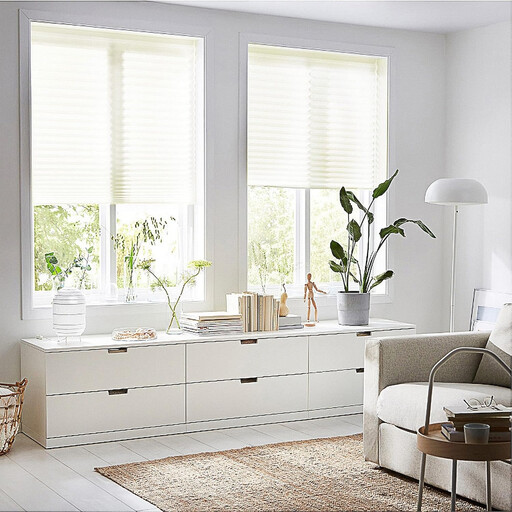
Why This Fits Their Persona: Ideal for renters looking for a straightforward and flexible solution for standard windows in living or work areas. The pleated blind offers good privacy without completely darkening the room.
The system offers both clamp brackets and an adhesive option. If the clamp brackets don't fit the window frame perfectly, the adhesive mount serves as a reliable alternative, avoiding the problem of unstable fixtures.
Flexible no-drill installation (clamp or stick). Infinitely adjustable by sliding the handle for custom positioning.
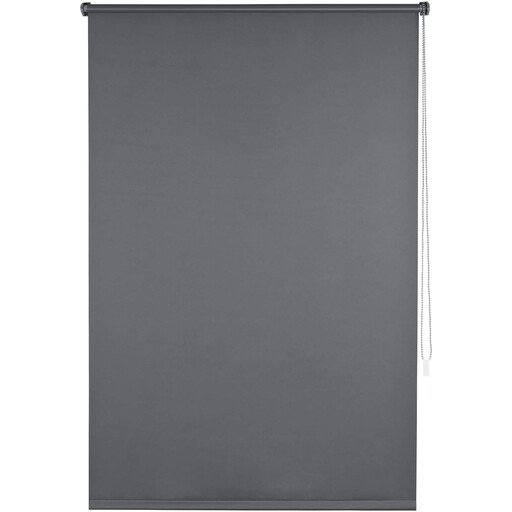
Why This Fits Their Persona: Perfect for shift workers, families with young children, or home cinema enthusiasts who need near-total room darkening. The thermal function is an added benefit.
This blind avoids the trap of inadequate fabric quality. According to the manufacturer, the special aluminium coating on the back blocks almost 100% of light, providing a true blackout function.
Effective blackout and thermal insulation thanks to the aluminium coating. Installation is possible either with clamp-fit brackets or with screws (for homeowners).
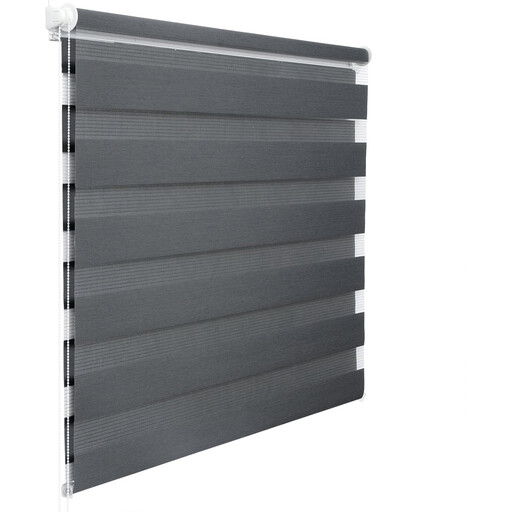
Why This Fits Their Persona: For users who want a modern look and maximum control over light and privacy. Ideal for living rooms, offices, or kitchens where lighting conditions vary throughout the day.
This blind solves the problem of rigid light control. Instead of just being "open" or "closed," the alternating fabric panels allow for seamless adjustment from full transparency to complete privacy.
Infinitely variable light control via the chain pull. According to the manufacturer, the fabric is robust, dimensionally stable, and also suitable for humid environments.
We have compiled a complete, up-to-date list of products that fully meet these strict selection criteria and relevant safety standards.
Measure the width of the glass pane itself. Add approximately 4 cm to this measurement to get the optimal order width. This ensures the fabric overlaps the pane on both sides, preventing light gaps. Then, check that the total width of the blind determined this way will not interfere with the window handle. For the height, measure the height of the entire window sash.
The lifespan of clamp-fit brackets depends heavily on the material quality. Models from brand-name manufacturers often use more durable, UV-resistant plastic that can last for several years. Cheap, brittle brackets can break after just a few months or one hot summer. It is advisable to pay attention to product descriptions that specify the bracket material.
Most clamp-fit systems are designed for modern uPVC (plastic) windows. Installation on wooden windows can be problematic, as the frame profiles are often thicker, more rounded, or irregular, which can compromise the secure hold of the clamp brackets. There is also a risk of damaging the paint on the wooden frame. For wooden windows, screw-in systems or pleated blinds with special adhesive plates are often the safer choice.