
Lieferung heute & morgen

Qualitätsgarantie

Willkommens-Angebote freischalten: KOSTENLOSE Lieferung | Bis zu 80 % RABATT | Kostenlose 30-Tage-JoyPlus-Testphase
App herunterladen
By a Joybuy Product Recommendation Officer, July 29, 2026
A nutrition scale with an app promises to simplify tracking calories and macronutrients. However, the market is filled with devices whose advertised features often fail to deliver in practice. Before you make a purchase, it's crucial to understand the common pitfalls that can lead to frustration and inaccurate results.
This guide focuses on the objective criteria that define a reliable smart kitchen scale, helping you find a model that truly supports your dietary goals.
Many models entice users with extensive features but fall short on basic requirements. Pay close attention to these three weaknesses:
To avoid these problems, you should base your choice on a few core technical parameters. These determine the device's reliability and practical utility in daily use.
The deciding factor for a precise food scale with nutritional analysis is the database. Check if the manufacturer uses verified, official sources (e.g., national food databases) and how many entries are available for your specific region. A good app should also allow you to create custom foods and complete meals with individual nutritional values. This is essential if you want to use a scale for tracking macros for home-cooked meals.
A stable connection is paramount. Models with Bluetooth 5.0 or higher generally offer a more reliable and energy-efficient pairing than older versions. The app itself should be intuitive and provide a clear overview of your daily, weekly, and monthly intake of calories, protein, carbohydrates, and fat. A kitchen scale with a calorie display directly on the device can be an added benefit, allowing for a quick check even without your smartphone.
A reliable digital diet scale should measure in 1-gram increments and be accurate even at a low minimum weight (typically 3-5 grams). The maximum capacity for most models is 5 kg, which is sufficient for home use. Look for an easy-to-clean surface made of tempered glass or stainless steel and a stable, non-slip base. A tare function, which allows you to zero out the weight of containers, is a standard and indispensable feature.
Based on these objective criteria, we have selected a few products for different user groups.

Why This Fits Their Persona: Ideal for users who want detailed and immediate nutritional analysis. The combination of app synchronization and direct feedback on the scale's color display enables seamless tracking without constantly reaching for a smartphone.
According to the manufacturer, the scale accesses a database with over 1.3 million entries from 17 national food banks, bypassing the problem of inaccurate data. Bluetooth 5.4 ensures a stable connection.
The large VA color display shows nutritional information directly. On-device goal management with progress bars motivates users to stick to their dietary targets.

Why This Fits Their Persona: A solid choice for anyone wanting to master the basics of portion control without investing in a smart scale. It provides precise measurements as a foundation for manual logging in any nutrition app.
As a classic digital scale, it deliberately avoids the common pitfalls of smart devices like app issues, connectivity errors, or hidden costs. It focuses on one reliable function: weighing.
The stainless steel weighing surface is durable and easy to clean. The single-button operation for power and tare is straightforward and self-explanatory.
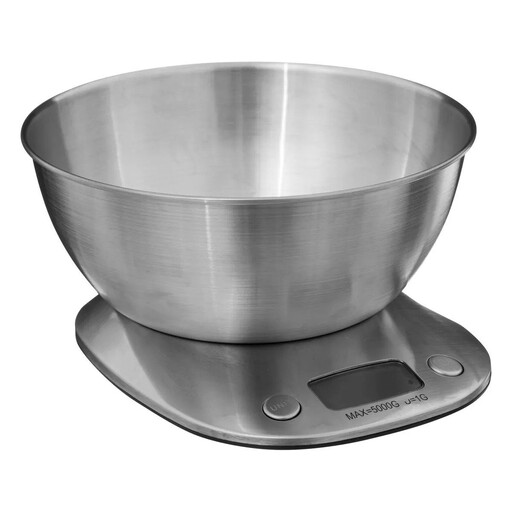
Why This Fits Their Persona: Perfect for people who frequently bake or cook from recipes and need to weigh many loose ingredients like flour, sugar, or liquids. The included bowl simplifies the process and keeps the workspace clean.
This model prioritizes practical utility over smart technology. The detachable, dishwasher-safe bowl solves a common kitchen problem instead of creating new technical hurdles.
The combination of a scale and a matching stainless steel bowl is an all-in-one solution. The tare function makes it easy to weigh multiple ingredients in the same bowl.
We have compiled a complete, up-to-date list of products that fully meet these strict selection criteria and relevant safety regulations.
The accuracy is twofold. The weighing accuracy of most digital scales is high, typically with a deviation of +/- 1 gram. However, the nutritional accuracy depends entirely on the quality of the connected app's database. A scale with access to verified, country-specific databases will provide significantly more reliable results than one based on unverified, user-generated data.
It varies by manufacturer. Many basic apps are free, but some providers restrict key features (e.g., unlimited recipe saving, detailed analytics) and offer them only as part of a paid subscription. It's advisable to check the app description or the manufacturer's website before purchasing to avoid unexpected recurring costs.
Yes, most high-quality nutrition scale apps offer this feature. It is crucial for accurate tracking, as databases cannot contain every specific product or homemade meal. The ability to create custom entries with the corresponding nutritional information per 100 grams and combine them into recipes is a hallmark of a flexible and practical smart kitchen scale.