
Lieferung heute & morgen

Qualitätsgarantie

Willkommens-Angebote freischalten: KOSTENLOSE Lieferung | Bis zu 80 % RABATT | Kostenlose 30-Tage-JoyPlus-Testphase
App herunterladen
Outdoor LED net lights can illuminate hedges, fences, balconies and façades evenly, without the hassle of positioning individual strings of lights. However, product photos and general marketing claims don’t always help you choose the right option. Three issues are often behind later disappointment: a net that’s too small, an unsuitable power supply or unclear information about weather resistance.
This buying guide explains what individuals, families, garden owners and event organisers should look out for. It focuses on objective specifications such as dimensions, LED counts, light colours, operating modes and IP ratings.
Garden and balcony net lights often look bigger in product photos than they are in real life. Measure the area you want to decorate before buying. A 3 × 2 metre net is better suited to smaller hedges, windows or sections of a space. For wider fences, façades or larger shrubs, a 6 × 2 or 6 × 4 metre net may be a better choice.
It’s also important to check whether the stated dimensions refer to the net itself or include the power cable. These measurements should be listed separately in the product description.
When choosing outdoor lighting for Christmas and other occasions, the IP rating is an important factor to check. IP44 generally means protection against solid objects larger than 1 millimetre and splashing water from different directions. This doesn’t mean the net, controller and power supply should be left unprotected in the rain for long periods.
With plug-in net lights, keep the mains connection dry and protected from direct rainfall. Solar products also need to have their solar panel positioned correctly. A higher IP rating for individual components doesn’t replace the need to check the installation as a whole.
Net lights with 8 lighting modes can switch between steady light, flashing, wave and fading effects. For a wedding, reception or peaceful garden setting, steady light is often more pleasant than rapid flashing. Check whether a steady-light setting is available and whether the product remembers the last setting you chose.
For family areas and window displays, warm white LED lights with a steady glow may be a better fit. Colourful LED lights or a multicoloured net, on the other hand, create eye-catching effects for Halloween, children’s parties or festive garden gatherings.
The LED count alone doesn’t tell you much about brightness. The combination of net size and number of LEDs is more useful. A 6 × 4 metre net with 480 LEDs spreads its lights across a much larger area than a 3 × 2 metre net with 250 LEDs.
Look out for:
Mains-powered indoor and outdoor LED net lights provide a consistent power supply, regardless of sunlight. This makes them easier to plan around for long evenings, covered areas and events. You’ll need a suitable outdoor socket or a safely routed extension lead.
A solar net light, by contrast, needs a sunny spot for its solar panel. In the shade, during periods of limited sunshine or on heavily overcast days, it may stay lit for less time. The benefit is that there’s no power cable running from the house to the display. Figures such as ‘8 to 10 hours’ should be treated as product-specific estimates, as lighting time depends on the charge level and weather.
Warm white is usually around 2,500 to 3,000 Kelvin and gives a more understated effect. This light colour works well for Christmas decorations, patios, weddings and entrances. Multicoloured LEDs make a bolder statement and are well suited to Halloween, birthday parties and seasonal garden gatherings.
If you’re choosing LED lights for a wedding or party, it’s also worth checking the controls. Steady light, gentle fading effects and a memory function can be more practical for longer events than rapid flashing programmes alone.
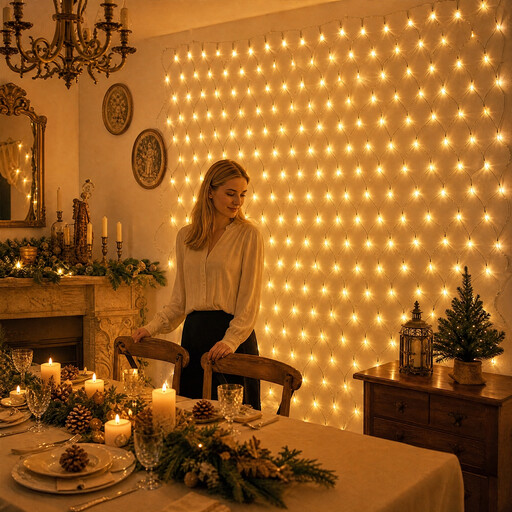
Why this product suits this user: The compact 3×2 metre size is suitable for smaller hedges, windows, railings and sections of a space. Mains power is handy if you don’t need a solar panel.
The clearly stated coverage makes planning easier. Before installation, make sure the power supply and connection are protected from direct contact with water.
250 warm white LEDs, eight lighting modes and a mains plug.
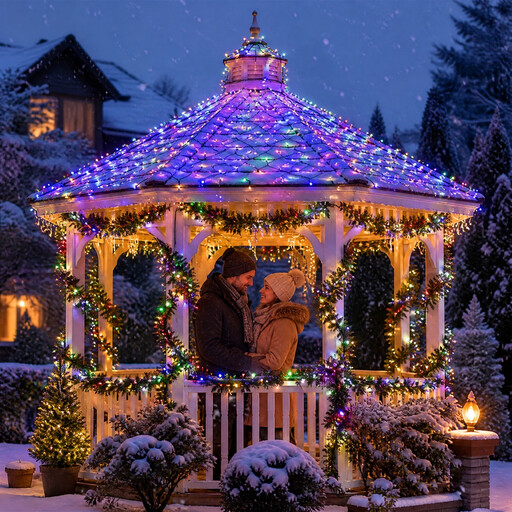
Why this product suits this user: The large size covers wide fences, walls or hedges. Its multicoloured lights are designed for seasonal displays and larger celebrations.
The 6×4 metre size and 480 LEDs make it easy to assess the coverage and density of the lights before buying. That helps you avoid choosing a net that doesn’t cover enough area.
480 LEDs, eight lighting modes, multicoloured lighting and mains power.
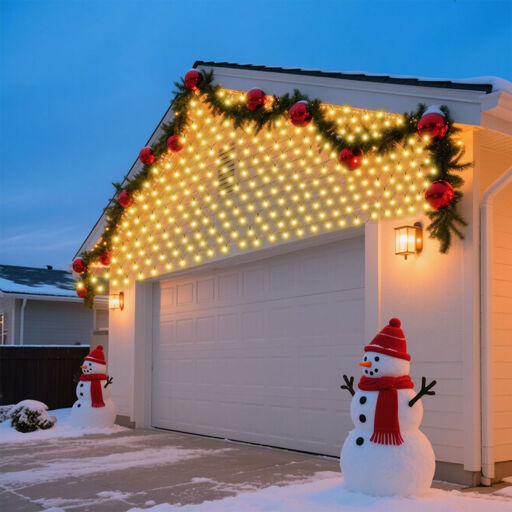
Why this product suits this user: The solar-powered design is suitable for gardens, fences and areas without a nearby socket. Its stated IP67 rating and 13 lighting modes are aimed at regular outdoor use.
Solar power reduces reliance on an outdoor socket. For predictable lighting time, install the panel in an open spot that gets as much sun as possible.
6×2 metres, 280 warm white LEDs, 13 lighting modes, timer and memory functions, and an IP67 rating according to the product information.
We’ve put together a complete, regularly updated list of products that meet these strict selection criteria and fully comply with the safety regulations in force in the EU.
Unfold the net fully before hanging it up. This makes creases easier to spot and helps distribute the lights more evenly. For hedges and fences, use weather-resistant clips or suitable cable ties. Don’t stretch the net tight or let it rub against sharp edges.
For products designed for indoor and outdoor use, keep the power supply, controller and connections dry, unless the product description states otherwise. Check the cables and LEDs for visible damage before each use. Damaged lights shouldn’t be used outdoors.
First spread out the net, then attach it at intervals to a fence, hedge, railing or wall. The fixings should distribute the weight evenly. Don’t bend the power cable sharply. For larger areas, it’s a good idea to check the socket location and cable length before installation.
Their actual lifespan depends on operating hours, storage, physical strain and weather conditions. Integrated LED lighting needs little maintenance, but the individual LEDs can’t be replaced separately in many products. To help the net last longer, store it dry and loosely packed, away from frost and pressure.
The cost depends on the power rating and how many hours a day the lights are used. The calculation is: power in kilowatts × operating hours × electricity price. Solar versions don’t use mains electricity while operating, but their lighting time depends more heavily on location, weather and charge level.