
Lieferung heute & morgen

Qualitätsgarantie

Willkommens-Angebote freischalten: KOSTENLOSE Lieferung | Bis zu 80 % RABATT | Kostenlose 30-Tage-JoyPlus-Testphase
App herunterladen
Outdoor solar lights offer an attractive way to illuminate your garden, balcony, or driveway without laying cables or incurring extra electricity costs. Installation is usually straightforward, and their operation is environmentally friendly. However, the market is confusing, and many products don't live up to their advertising promises. Before you make a purchase, it's crucial to understand the typical pitfalls that often lead to disappointment and unnecessary expense.
This guide will help you separate the wheat from the chaff by addressing the three most common mistakes when choosing solar garden lighting and explaining which technical features truly matter.
To avoid a bad purchase, you should be guided not by marketing promises, but by objective technical data. The following three parameters are decisive for the performance and longevity of your solar lights.
The IP (Ingress Protection) rating indicates how well an electrical device is protected against the ingress of foreign objects (first digit) and water (second digit). For outdoor solar lights, the following values are relevant:
The runtime depends directly on the battery's capacity and the solar panel's efficiency.
These two values determine the effect of the light.
Instead of making a blanket recommendation, we have matched products to different needs and user profiles.

Why This Fits Their Persona: Ideal for users looking for a simple and cost-effective solution to mark paths or flowerbeds. The stainless steel housing offers a higher-quality feel and greater durability than all-plastic models in this price range.
This model avoids the brightness misconception as it is clearly designed as an orientation light. The IP44 rating is sufficient for its intended use as a path light and is not advertised as comprehensive protection against severe weather.
Tool-free installation with ground stakes; robust stainless steel and plastic housing; automatic on/off function via a dusk-to-dawn sensor.
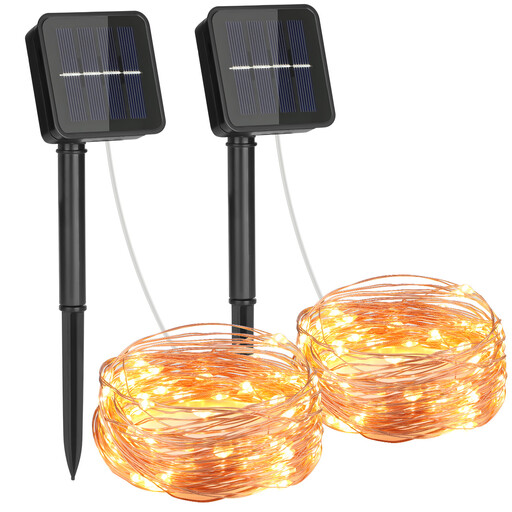
Why This Fits Their Persona: Perfect for creative users who want to create a cozy atmosphere on their balcony, patio, or in the garden. The flexible copper wire of these outdoor solar string lights can be easily wrapped around railings, plants, or objects.
These string lights are explicitly designed as decorative solar lights with warm white light, thus avoiding false brightness expectations. With an IP65 rating, they are also protected against water jets, sidestepping the "weatherproof" deception.
Eight different lighting modes with a memory function; according to the manufacturer, a runtime of 8-14 hours on a full charge; high flexibility for creative designs.
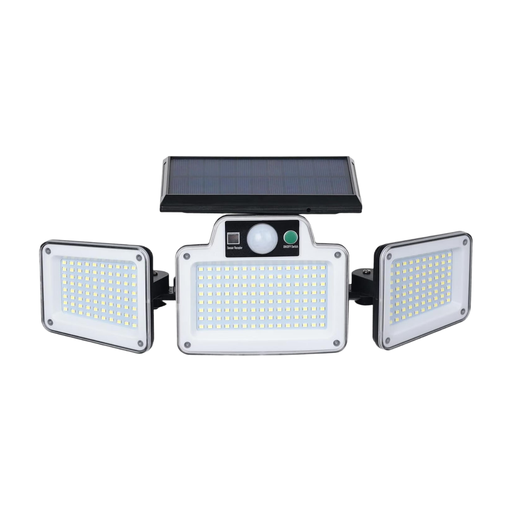
Why This Fits Their Persona: Suitable for homeowners who want to brightly illuminate driveways, garages, or dark corners to enhance security. The three flexibly adjustable heads of this solar LED floodlight with motion sensor allow for wide and targeted coverage.
This solar security light bypasses the runtime trap by using an intelligent motion sensor that consumes energy only when needed. The IP65 rating and the 2400 mAh battery are solid features for a durable product.
Three adjustable lighting modes via remote control; separate solar panel with a long cable for optimal sun exposure; 280 LEDs for high brightness.
We've compiled a complete, up-to-date list of products that fully meet these strict selection criteria and safety regulations.
The lifespan of a solar light depends on the quality of its components. The LEDs themselves have a very long life, often exceeding 15,000 hours. The battery is typically the component with the shortest lifespan and may need to be replaced after 1 to 3 years, depending on quality and usage. On high-quality models, replacement is possible. The housing, especially if made of plastic, can become brittle over time due to UV radiation.
Yes, solar lights also charge in diffuse light, but with significantly lower efficiency than in direct sunlight. On cloudy days or in winter with shorter days, the runtime at night will be correspondingly shorter. For reliable year-round operation, models with high-quality, large solar panels and high-capacity batteries are preferable.
That depends on the IP rating. High-quality, waterproof garden lamps with an IP65 rating or higher can generally be left outside all year. For models with a lower protection rating (e.g., IP44) or in regions with very heavy frost, it may be wise to store the lights in a dry place over the winter to extend their lifespan.