
Lieferung heute & morgen

Qualitätsgarantie

Willkommens-Angebote freischalten: KOSTENLOSE Lieferung | Bis zu 80 % RABATT | Kostenlose 30-Tage-JoyPlus-Testphase
App herunterladen
Proper food storage is crucial for preserving freshness, streamlining kitchen organisation, and conveniently preparing meals on the go. Plastic food containers are a versatile solution, perfect for pantry storage, as a lunch box for work, or as meal prep containers for the entire week.
This guide is designed to help you find the right storage boxes with lids for your needs. We will highlight the most important features to look for and present a selection of practical models for 2026.
The range of food storage containers is vast. To make an informed decision, three criteria are particularly relevant: material, functionality, and the right size.
Modern food containers are typically made from high-quality plastics like polypropylene (PP). A crucial feature to look for is the BPA-free label. BPA (Bisphenol A) is an industrial chemical that was used in the past to manufacture certain plastics. Products marked as BPA-free are made without this chemical, thus meeting a common standard for food-contact materials.
A good food container is more than just a box. Look for the following features that make daily use easier:
Whether for a single-person household or a family, the required sizes vary. A food container set often offers excellent value and covers a range of uses. Small containers are suitable for snacks or sauces, medium-sized ones for a lunch portion, and large plastic storage containers for salads, soups, or storing dry goods like pasta and rice.
Based on the criteria mentioned, we have compiled a selection of products that are suited for different purposes due to their specific features.
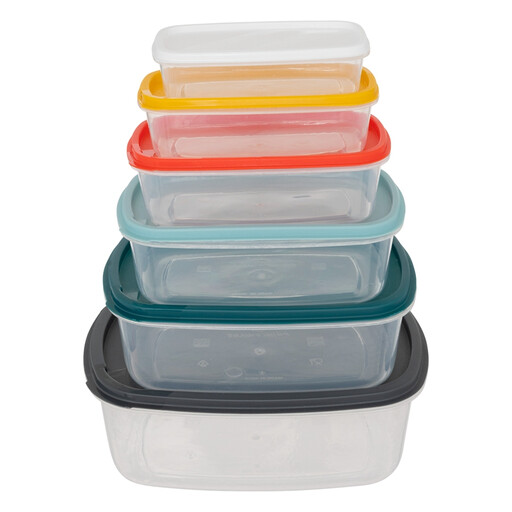
What makes this product stand out
This set is an excellent starter kit for any household. With six different sizes and colours, it offers a flexible and organised solution for your kitchen. The colour-coding makes it easy to quickly find the right size.
Advantages
Who is it for? This set is ideal for families and individuals looking for a versatile and cost-effective starter set for general food storage and kitchen organisation.
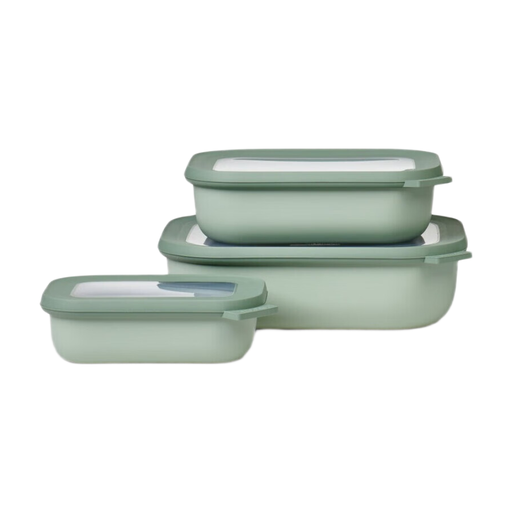
What makes this product stand out
The Mepal Cirqula set combines functionality with a thoughtful design. Its rectangular shape makes optimal use of space in the fridge or freezer. The containers are designed to go straight from the freezer to the microwave (without the lid) and then to the table.
Advantages
Who is it for? For users who value a durable, leak-proof, and stylish system. It's an excellent choice for preparing meals and storing leftovers where freshness and a tight seal are top priorities.
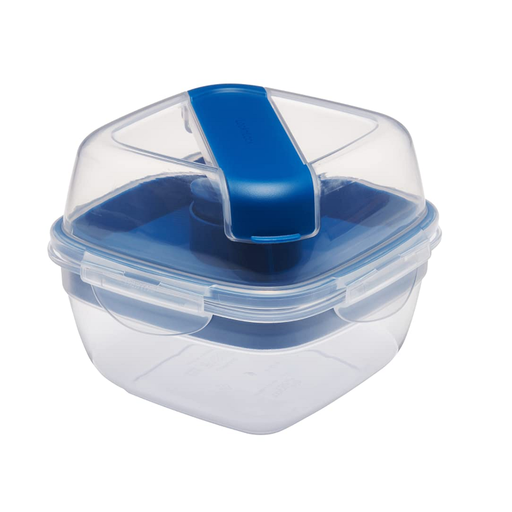
What makes this product stand out
This lunch box from LocknLock is an all-in-one solution for meals on the go. With its separate compartments, included cutlery, and an extra sauce pot, it allows you to transport salads and other dishes without the ingredients mixing.
Advantages
Who is it for? Perfect for professionals, students, and anyone who regularly takes a fresh and well-organised meal to work, school, or on trips. A classic meal prep container for on-the-go use.
The selection presented here covers common use cases. However, if you are looking for different shapes, specific sizes, or other colour variations, it's worth taking a look at our broader range.
Discover a wider variety in our Colourful Plastic Containers with Lids category and find the perfect solution for your kitchen.
1. Are plastic food containers safe for the microwave? Yes, as long as they are explicitly marked as microwave-safe. It is important to follow the manufacturer's instructions, especially removing the lid before heating to prevent pressure build-up. Materials like polypropylene (PP) are widely used for this purpose.
2. What does "BPA-free" mean and why is it important? "BPA-free" means that the chemical Bisphenol A was not used in the manufacturing of the product. This is now an established standard for plastic products that come into contact with food, to rule out any potential transfer of the substance to the food.
3. What is the best way to clean plastic food containers to avoid stains and odours? Rinse the containers with cold water immediately after use to minimise food residue from sticking. Most containers are dishwasher-safe (check the manufacturer's instructions). For stubborn stains, such as from tomato sauce, or lingering odours, it can help to rub the container with a paste of baking soda and water, let it sit for a few hours, and then rinse thoroughly.