
Lieferung heute & morgen

Qualitätsgarantie

Willkommens-Angebote freischalten: KOSTENLOSE Lieferung | Bis zu 80 % RABATT | Kostenlose 30-Tage-JoyPlus-Testphase
App herunterladen
A pleated blind without drilling is a practical choice for rented homes, homeowners and temporary solutions. It leaves the window frame largely untouched while allowing you to control light, privacy and sunlight. However, not every style is suitable for every window. Common problems include measuring the width incorrectly, choosing an unsuitable surface for adhesive fittings or misunderstanding how much light the fabric lets through.
This buying guide explains what to look for in a clamp-fit pleated blind, a pleated blind with clamp fittings or a pleated blind with adhesive fittings.
The size shown, such as 65x120 cm, 70x120 cm or 90x120 cm, usually refers to the width x height of the pleated blind. The important thing, though, is how the model is fitted and how much of the window it needs to cover.
For many styles, it is recommended that you choose a blind that is approximately 4 cm wider than the glass. The height should be based on the full height of the window sash. Before buying, you should therefore:
A blind that is too narrow lets light in and allows people to see in at the sides. A model that is too wide may catch on the window handle.
Calling a pleated blind opaque does not automatically mean it will darken the room completely. Light-filtering fabrics reduce visibility and sunlight, but still let daylight through. A blackout pleated blind made from light-blocking fabric is a better choice for bedrooms or rooms with screens that are sensitive to glare.
So check the product details carefully:
Even blackout fabric does not automatically provide completely lightproof side coverage. Narrow gaps may remain between the fabric and the window frame.
A pleated blind with adhesive fittings needs a clean, dry and preferably smooth surface. Dust, moisture, textured coatings and rough frames can affect how well the fittings stick. Some models are explicitly not suitable for uneven or rough surfaces.
Clean the frame before fitting the blind and let it dry completely. Press the fittings firmly into place as instructed. Also check whether your window is suitable for clamp brackets. A clamp-fit pleated blind can be fitted to a suitable frame without tools, but not every system is designed for roof windows, wooden windows or sliding windows.
With a pleated blind fitted using clamp brackets, the brackets attach to the window sash. This is a good option for renters because it does not leave holes. Check the range of frame thicknesses the brackets can accommodate and the clearance around the window handle.
Adhesive fittings attach directly to the cleaned frame or another suitable smooth surface. They offer flexibility, but may come loose in heat or damp conditions, or if the surface has not been prepared properly. In kitchens and bathrooms, avoid exposing the blind to direct water on a regular basis. The polyester used in the products described is moisture-resistant, but not waterproof.
Polyester fabric is common in the models listed. It can usually be cleaned with a slightly damp cloth. Harsh cleaning products, vigorous rubbing and sharp objects can damage the material.
Use this guide to help choose a blind for each room:
White and beige have a subtle look and can make a room feel brighter. Anthracite reduces the amount of light visible in the room and suits modern, high-contrast interiors. Light grey sits between the two. The actual effect on light levels depends on the fabric, the window and its orientation to the sun.
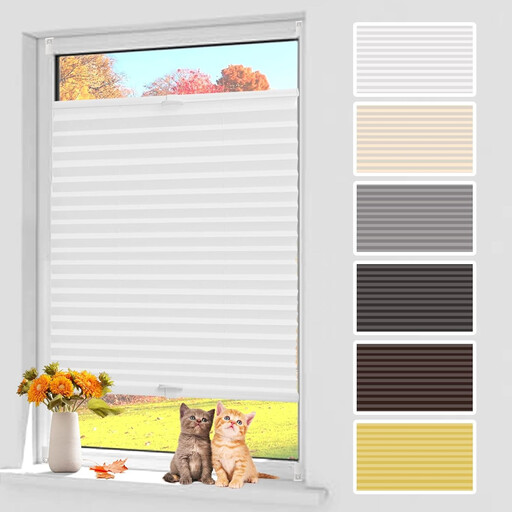
Why this product suits this need: Its compact size is suitable for narrower interior windows. The product description says it is fitted using adhesive brackets, with no drilling required, and describes the white polyester fabric as opaque and room-darkening.
The product details specify the size, fitting method and light control separately. This makes it easier to compare the blind with your window measurements and the level of room-darkening you want.
65x120 cm, white, polyester fabric, adhesive fittings and, according to the supplier, a light-blocking function.
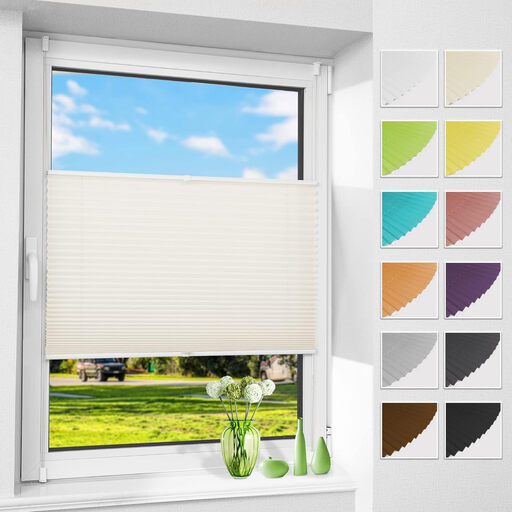
Why this product suits this need: According to the product description, the adjustable clamp brackets are designed for frames 10–23 mm thick. Top and bottom rails can be moved independently, giving you finer control over the light.
The specified frame thickness makes it easier to check whether the blind will fit. The product also clearly states that it is not suitable for roof, wooden or sliding windows.
90x100 cm, beige, clamp fitting with no drilling, polyester fabric with an aluminium bar and adjustable brackets.
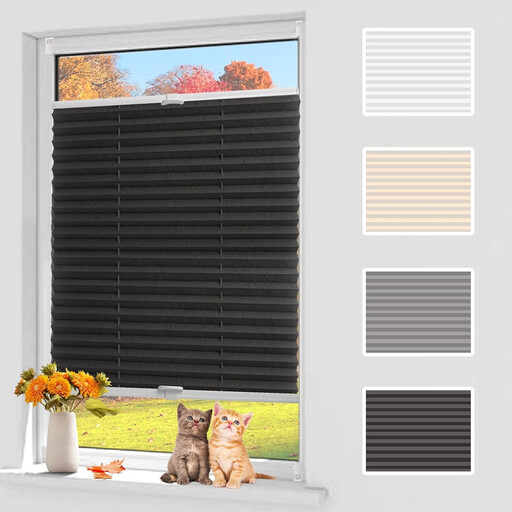
Why this product suits this need: Its width makes it suitable for larger windows or doors. The anthracite version is described as light-filtering and offering privacy, with clamp-fit installation.
The product description distinguishes between light filtering, privacy and sun protection. This means you won’t assume that it provides complete room-darkening.
90x120 cm, anthracite, polyester, tool-free clamp-fit or adhesive installation and height-adjustable operation.
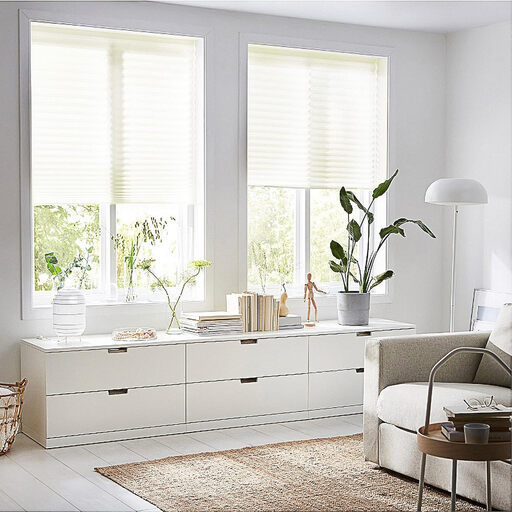
Why this product suits this need: The beige, light-filtering version is suitable for living rooms, studies or kitchens where privacy and adjustable daylight matter more than making the room as dark as possible.
This style is described as light-filtering, rather than being marketed solely as a blackout blind. That makes it easier to choose for rooms where you want to keep the daylight.
70x120 cm, beige, clamp-fit system, height-adjustable position and polyester fabric.
We’ve put together a complete, regularly updated list of products that meet these strict selection criteria and fully comply with the safety regulations in force in the EU.
Keep cords and controls a safe distance from children. Check adhesive fittings regularly to make sure they are secure, especially if you open and tilt the window frequently.
How long it lasts depends on the fittings, the surface of the frame, room temperature, humidity and how often it is used. Smooth, clean and dry surfaces generally provide a better base than rough or dusty ones. It’s a good idea to check the fittings regularly.
This depends on the design and the clearance between the blind and the window frame. Clamp brackets can stabilise the window sash, but not every model will prevent it from moving or swinging slightly. Before buying, check the product details for information about tilt windows, frame thickness and bracket position.
A manual pleated blind does not use electricity, so there are no running costs for power. Ongoing costs are mainly limited to cleaning and, if necessary, replacing the adhesive fittings. If the fabric is damaged or a fitting comes loose, replace the relevant part in accordance with the manufacturer’s instructions.