
Lieferung heute & morgen

Qualitätsgarantie

Willkommens-Angebote freischalten: KOSTENLOSE Lieferung | Bis zu 80 % RABATT | Kostenlose 30-Tage-JoyPlus-Testphase
App herunterladen
A portable power station can be a practical solution for camping, motorhomes, vans or as a mobile power supply during a power cut. However, high wattage figures, fast charging times and terms like "solar generator" don't automatically mean you've found the right solution. What really matters is whether the capacity, output power, connections and intended use match your actual needs.
Power in watts (W) describes which devices the power station can run at the same time. Capacity in watt-hours (Wh) tells you how much energy is stored.
A unit with 1,000 W output can, for example, power an appliance drawing 800 W. However, that doesn't mean it will run that appliance for many hours – capacity is what determines that. With an 800 W appliance and a 1,000 Wh power station, the theoretical runtime is around 1.25 hours. Inverter losses and safety reserves will reduce the practical figure.
Many listings quote a high peak or surge power rating. This is usually only available briefly for starting certain appliances. For heaters, coffee machines, fridges or power tools, you should check the rated power and the short-term peak power separately.
A backup generator or power station with an inverter is only suitable if the power consumption of the connected device falls within these values. For sensitive electronics, a pure sine wave output may also be important.
A power station with a solar panel can extend your running time, but the charging time depends on the panel's power output, orientation, shading, temperature and the station's maximum solar input. The stated solar power rating is a maximum value and won't be achieved consistently in everyday use.
For mobile use, a built-in charger for mains sockets and vehicles is often sufficient. If you're planning a solar storage system for a balcony or home supply, you'll need a compatible overall system, suitable inverters and a clear installation solution.
First, work out the power consumption of your devices and the desired runtime:
Power in watts × operating time in hours = watt-hours required
In practice, you should allow for a reserve margin. A laptop, router or LED light uses far less energy than a cool box, coffee machine or heater. For short trips, a camping battery with around 200 to 500 Wh may be enough. For several days, larger appliances or a home backup power supply, 1,000 Wh or more is often sensible.
A LiFePO4 power station uses lithium iron phosphate cells. This chemistry is designed for many charge cycles. What matters is the manufacturer's specific claim about remaining capacity, for example "80% after 3,000 charge cycles". Such figures aren't a guarantee for every usage scenario – they refer to the stated operating conditions.
Also look for a battery management system (BMS) with protection against overcharging, deep discharge, overcurrent, short circuits and overheating. Charging may be limited at low temperatures. Some systems offer a charging or self-heating function for this.
Check whether the connections you need are available:
An expandable power station can be useful if your energy needs grow later. The additional battery, charger and system controller must be explicitly compatible. One example of defined system compatibility is the Zendure AB3000X: according to product information, it is designed for the SolarFlow 2400 AC and is not intended as a freely combinable standalone battery.
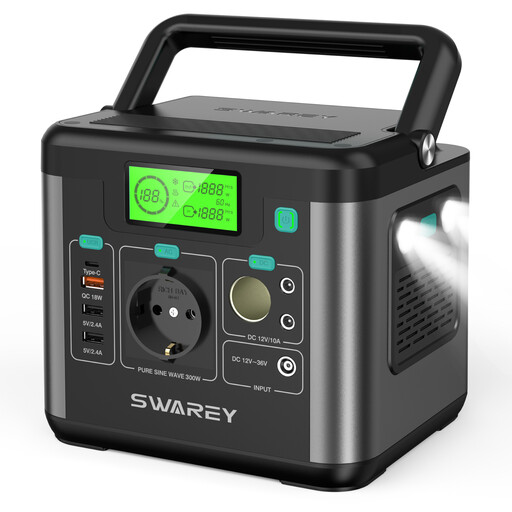
Why this product fits the profile: The compact station is designed for smaller appliances, weekend trips, cameras, smartphones and laptops. According to product information, it weighs around 7 lb and has a carry handle.
The rated power of 300 W is clearly separated from the peak power of 600 W. This makes it easier to realistically match the station to your own devices.
222 Wh capacity, 65 W USB-C port, pure sine wave and optional solar charging up to 150 W.
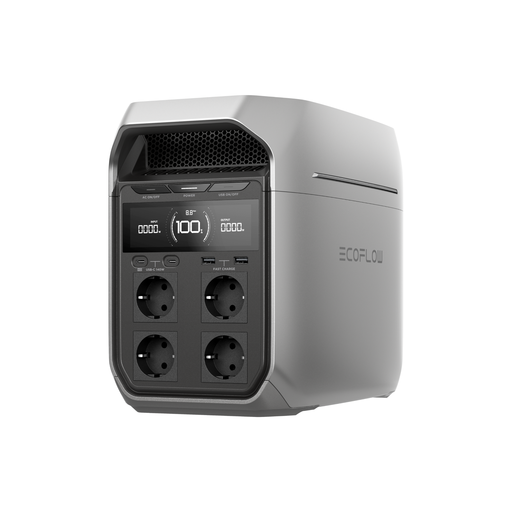
Why this product fits the profile: The 1,024 Wh class and multiple charging methods suit camping, motorhomes and temporary backup power for selected household appliances.
The specifications distinguish between rated power, peak power, solar input and expansion. A UPS switchover time of under 10 ms is stated in the product data, but this doesn't replace checking device compatibility.
1,800 W rated power, 3,600 W peak power, LiFePO4 cells, up to 4,000 charge cycles according to product information and expansion up to 5 kWh.
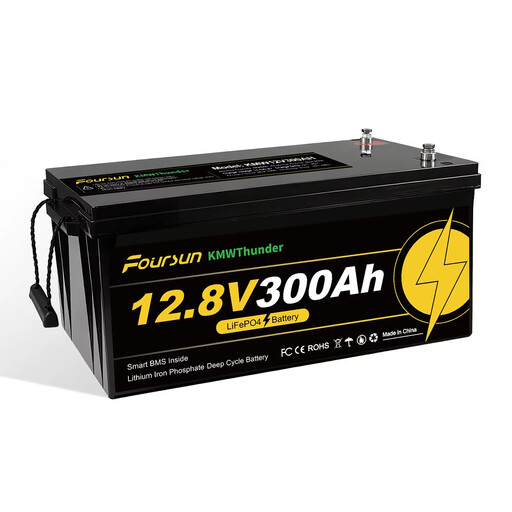
Why this product fits the profile: The battery is aimed at owners of motorhomes, boats and off-grid solar systems who need a 12-volt solution with high capacity.
The stated 12 V, 3,840 Wh and BMS protection functions make system planning easier. For series or parallel connections, battery voltage, charge state and cable cross-section must be taken into account.
LiFePO4 cells, IP67 rating, low-temperature BMS and according to product information, 4,500+ charge cycles.
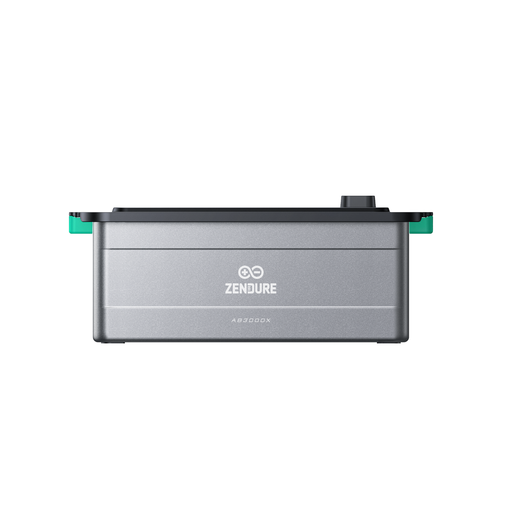
Why this product fits the profile: The battery is intended for users who want to store excess solar power and gradually expand a compatible SolarFlow system.
The limited compatibility with the SolarFlow 2400 AC is explicitly stated. This helps you avoid buying a battery without a compatible inverter or control system.
2.88 kWh per battery unit, IP65 rating, 48-volt system and according to product information, expansion up to 17.28 kWh with six units.
We've put together a complete, regularly updated list of products that fully meet these strict selection criteria and the safety regulations in force in the EU.
That depends on the capacity, efficiency and power consumption. A power station with 500 Wh can theoretically power a 50 W device for around ten hours. In practice, losses occur. With AC power, you should also factor in the inverter's own power consumption.
A portable power station is usually suitable for selected devices, not for the entire house installation. Check the rated power, capacity, switchover time and connection type. For a fixed home backup power supply, a professionally planned storage and switching system may be required. Changes to the house installation should be carried out by a qualified electrician.
Connect a compatible solar panel to the designated solar input and observe the voltage, current and power limits. The actual charging time varies depending on sunlight. For longer storage periods, the manufacturer's instructions on charge level, temperature and maintenance intervals should be followed.