
Lieferung heute & morgen

Qualitätsgarantie

Willkommens-Angebote freischalten: KOSTENLOSE Lieferung | Bis zu 80 % RABATT | Kostenlose 30-Tage-JoyPlus-Testphase
App herunterladen
A pressure washer can make the laborious task of cleaning patios, walkways, and vehicles significantly easier. However, the market is flooded with models whose performance specs often overpromise and underdeliver. As your Joybuy Product Recommendation Officer, I'll help you identify the critical features and sidestep marketing traps, ensuring you find a machine that truly fits your needs.
Many buyers focus on the wrong metrics or overlook critical design details. This leads to disappointment and unnecessary expense. Pay close attention to these three points:
To buy the right pressure washer, you should focus on the technical specifications that are relevant to actual performance.
These two values are inextricably linked and define a machine's cleaning power.
For your orientation:
Most consumer-grade units are corded and offer consistent power. For jobs without direct access to a power outlet, such as in an allotment garden or when cleaning a boat, a cordless pressure washer is a practical alternative. These models are often more compact, designed as a portable pressure washer, draw water from a bucket or canister, and offer maximum flexibility for smaller cleaning jobs.
Look for a pump made of aluminium or brass. These materials are significantly more durable and resilient than plastic. When it comes to accessories, less is often more. A high-quality patio cleaner with a splash guard is a worthwhile investment for large surfaces. A foam nozzle that effectively lathers detergent is useful for washing vehicles.
Here are some recommendations tailored to different needs, all of which meet the quality criteria mentioned above.
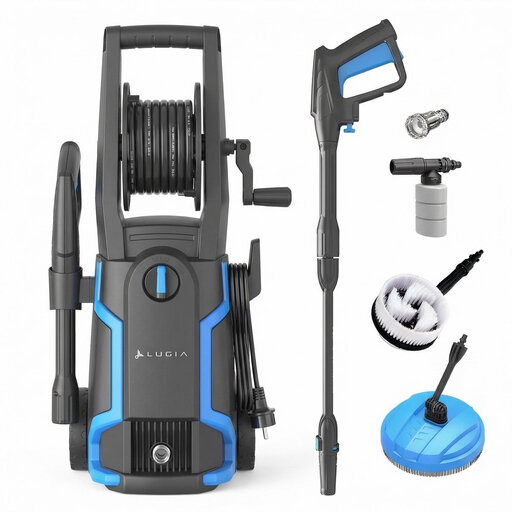
Why This Fits Their Persona: With 135 bar and 430 l/h, this model offers solid performance for typical tasks around the house, such as cleaning garden furniture, bicycles, or small patios. It's a pragmatic choice for anyone who doesn't need a professional-grade machine.
The unit sidesteps the accessory trap by providing a set with genuinely useful attachments, like a patio cleaner and a rotating brush, that offer real added value.
The aluminium pump promises greater longevity than many competing models in this price range. The start-stop system protects the motor and conserves water.
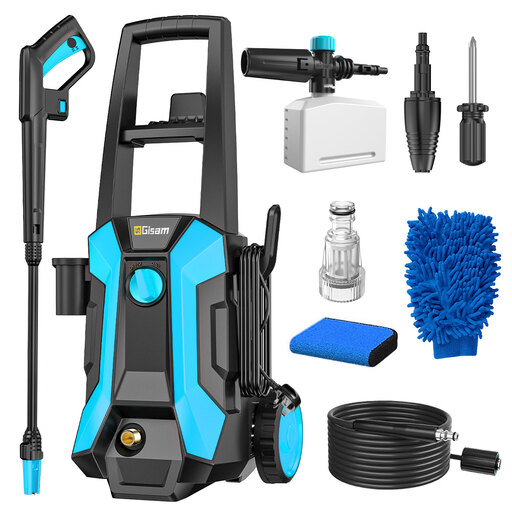
Why This Fits Their Persona: For homeowners with larger areas and regular cleaning tasks, this model's 180 bar and 480 l/h provide high cleaning power to efficiently remove even stubborn dirt from driveways, fences, and facades.
This machine avoids the "bar bluff" by combining high pressure with a strong flow rate. The result is noticeably more effective and faster cleaning compared to units with unbalanced performance specs.
The integrated hose reel and 8-metre hose ensure tidiness and a large operating radius, making it much more convenient to handle for large-scale jobs.
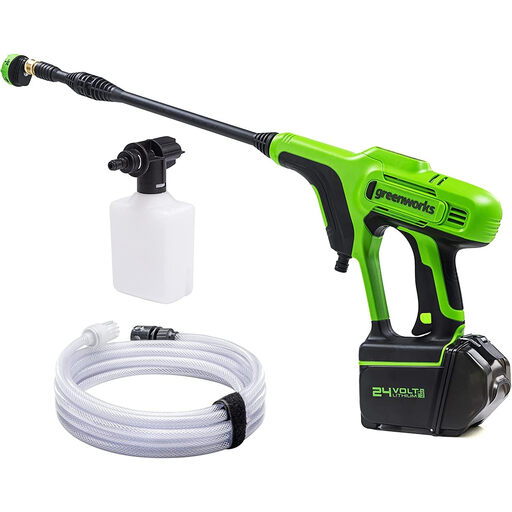
Why This Fits Their Persona: Perfect for users who need to clean in places without a power or water connection. This portable, cordless pressure washer is ideal for quickly cleaning mountain bikes after a ride, for balconies in rental apartments, or for camper vans.
This unit doesn't promise unrealistic performance. It clearly positions itself as a flexible solution for lighter tasks and excels with its ability to draw water from any source (e.g., a bucket, a lake).
Maximum portability thanks to battery operation and a self-priming function. The 5-in-1 nozzle allows for quick changes between different spray patterns without the hassle of swapping accessories.
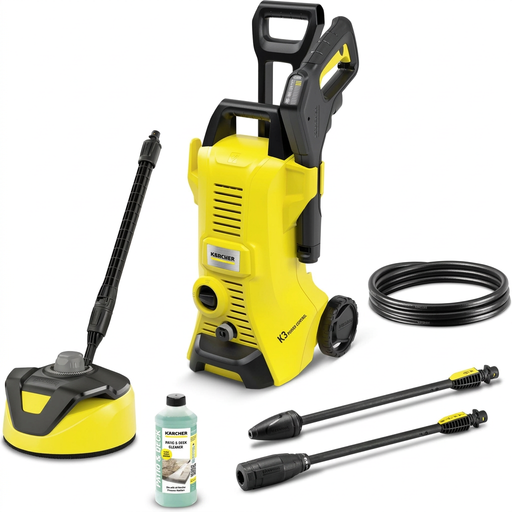
Why This Fits Their Persona: This kit from the K?rcher brand is specifically designed for the efficient, splash-free cleaning of patios and other large surfaces. The included T 5 surface cleaner makes the job significantly faster and more uniform than a standard nozzle.
Instead of relying on a multitude of attachments, this kit focuses on one core task. The T 5 surface cleaner is a high-quality, functional accessory, not a cheap add-on.
The combination of the pressure washer and the specialised patio cleaner allows for highly efficient cleaning. The app support also helps in selecting the correct pressure level for different surfaces.
We have compiled a complete, up-to-date list of products that fully meet these strict selection criteria and all relevant safety standards.
The required bar rating depends on the application. For most household uses, such as cleaning patios, garden furniture, and cars, a machine with a working pressure between 110 and 140 bar is a good choice. More important than maximum pressure alone is the interplay with a sufficient flow rate (at least 400 l/h).
A pressure washer works with cold or lukewarm water that is sprayed at high pressure onto a surface to mechanically dislodge dirt. A steam cleaner (or hot water pressure washer) heats the water to over 100°C. The hot steam is particularly effective at dissolving oily and greasy grime and has a sanitising effect, but it is less commonly used in the private sector.
Yes, pressure washers can typically be connected to a standard outdoor tap with a ?-inch thread. It is important to use a garden hose of sufficient diameter (usually ? or ? inch) and without any kinks to ensure a constant water supply to the pump. Connecting to an indoor tap (e.g., in the kitchen) is also possible with the right adapters, but it is often impractical.