
Lieferung heute & morgen

Qualitätsgarantie

Willkommens-Angebote freischalten: KOSTENLOSE Lieferung | Bis zu 80 % RABATT | Kostenlose 30-Tage-JoyPlus-Testphase
App herunterladen
A rechargeable night light can be practical at night when breastfeeding, changing nappies, getting up or walking to the wardrobe. Unlike a permanently installed light, it can be positioned flexibly, used without cables and taken to other rooms as needed. However, models vary considerably in battery life, brightness, charging connection and controls.
If you only look at a high number of hours or a wide range of light colours, you can quickly overlook important details. Three common purchasing misconceptions are particularly widespread:
For a rechargeable night light, battery capacity is an important point of reference. A specification in mAh describes the battery’s electrical charge capacity, but on its own says nothing about the actual operating time. Brightness, light colour, sensor operation and timer settings all affect power consumption.
You should therefore look for the following details:
A timer reduces unnecessary operating time. For a bedside lamp used during nighttime routines, switching off after 30 or 60 minutes can be useful. For a sensor-activated wardrobe light, automatic activation is more important than particularly long continuous illumination.
Colour temperature is specified in Kelvin (K). Warm-white light in the region of around 2,800 to 3,200 K feels less technical in a room than cool light of 6,500 K or more. For a baby night light, children’s night light or dimmable bedside lamp, a low brightness setting with a warm-white light colour is often practical.
For worktops, wardrobes and stairs, neutral- or cool-white light can make it easier to find your way around. What matters is whether the brightness can be adjusted. A model with just one very bright setting can be disruptive in a bedroom, while an LED night light that is too dim may not provide enough visibility in a hallway.
For technical specifications such as lumens (lm), the following applies: lumens describe the total luminous flux. A 400-lm lamp may be suitable for a small room or worktop, but that does not automatically make it right for every situation. Even light distribution through a cover or light guide panel can be more important than a high individual figure.
Touch controls are suitable for a bedside table because there is no switch to search for. A motion-sensor night light, on the other hand, is practical for hallways, stairs, kitchens or wardrobes. With sensor lights, you should pay attention to the range and detection area. For example, the two ultra-thin wardrobe lights in 20 cm and 30 cm versions specify a PIR range of 3 to 5 metres.
Various mounting solutions are available:
Check the load-bearing capacity before mounting. Lights must not be positioned where they could fall. In damp areas, follow the relevant manufacturer’s instructions and check the specified protection rating.
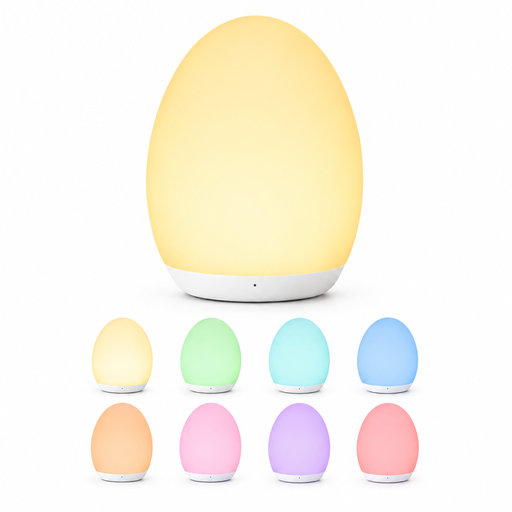
Why this product suits this profile: This compact baby night light is designed for bedside tables, children’s rooms and travel. Touch controls, warm-white dimmable light and a timer cover typical everyday situations.
Runtime is specified separately for each brightness level. The automatic shut-off after 1 hour helps limit unnecessary battery consumption.
2000-mAh battery, 8 colour modes, touch controls and dimensions of 9.2 × 9.2 × 11 cm.
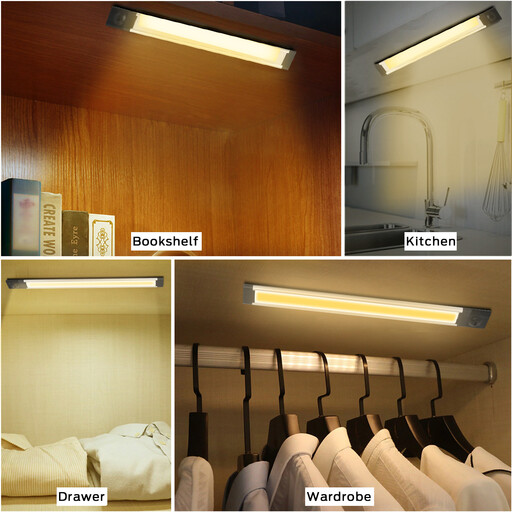
Why this product suits this profile: This elongated LED light fits in hallways, wardrobes, garages or on stair walls. Magnetic mounting and hooks allow installation without drilling.
The product details specify 400 lm, a colour temperature of 2800 to 6500 K and exact dimensions of 26 × 4 × 1 cm, rather than relying on vague claims about brightness.
36 Epistar-4014 SMD LEDs, PMMA light guide panel, gesture control and stepless brightness adjustment.
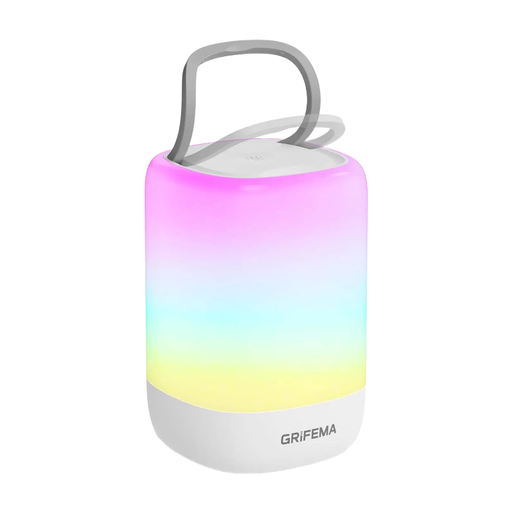
Why this product suits this profile: This portable lamp is designed for bedrooms, children’s rooms, camping and changing locations. RGB modes and warm-white light provide different settings.
As well as seven RGB colours, the light can be dimmed from 100% to 5%. The 30-minute timer makes runtime easier to plan.
1500-mAh lithium-ion battery, USB-C charging, touch controls and a stated battery life of 15 hours.

Why this product suits this profile: Two slim lights with PIR sensors are suitable for kitchens, wardrobes, shelves or hallways when several areas need illuminating without permanent wiring.
The motion sensor handles activation, while three colour temperatures cover different task areas. The 30-cm design is clearly specified.
41 LEDs, PIR detection with a range of 3 to 5 m, 1100-mAh battery and adhesive mounting without drilling.
A USB-C night light is convenient in everyday life if you already have compatible cables and power adapters. Nevertheless, check the power supply specified by the manufacturer. For example, the VAVA model is specified as compatible with a DC 5 V/1 A power source.
A children’s night light should stand securely or be safely attached. Charging cables must be kept out of children’s unsupervised reach. Products with silicone or plastic housings should only be cleaned in accordance with the manufacturer’s instructions. Water, high humidity, heat and aggressive cleaning products can damage materials and electronics.
For a wireless table lamp in the living area, stability, colour temperature and ease of use are also important. For example, the Aigostar rechargeable table lamp offers three colour temperatures of 3,000, 4,000 and 5,000 K, touch dimming and a flexible lamp neck. An RGB night light may be more suitable for decorative purposes; for focused reading, you should assess the light distribution in the specific room.
We have put together a complete, regularly updated list of products that fully meet these strict selection criteria and the safety regulations applicable in the EU.
Runtime depends on brightness, light colour, sensor use and the timer. Manufacturer specifications often refer to the lowest brightness setting. Therefore, do not compare only the maximum number of hours; also check the runtime for the way you actually plan to use the light.
For nighttime care, breastfeeding or changing nappies, a dimmable warm-white setting can be practical. The product details should specify a concrete colour temperature. RGB colours are an additional decorative feature and are not essential.
Suitable locations include hallways, stair areas, wardrobes and kitchen cupboards. The sensor should not be obstructed by objects. Mount the light securely and ensure it cannot come into contact with water, strong heat sources or easily accessible charging cables.