
Lieferung heute & morgen

Qualitätsgarantie

Willkommens-Angebote freischalten: KOSTENLOSE Lieferung | Bis zu 80 % RABATT | Kostenlose 30-Tage-JoyPlus-Testphase
App herunterladen
A cluttered refrigerator wastes space and makes it harder to keep track of your food. Refrigerator storage boxes can group specific areas together, separate opened packages and simplify the way you use your refrigerator, freezer or pantry. However, not every box is suitable for food, liquids or the dishwasher.
Product specifications also vary considerably. Some containers are airtight and leakproof, while others are designed solely as open refrigerator organisers. Focusing only on transparency or generous capacity can mean overlooking important limitations relating to materials, cleaning and temperature resistance.
An airtight food storage container protects its contents from contact with the surrounding environment and may be more leak-resistant during transport. Microwaves, however, are subject to separate requirements. According to the product specifications, several LocknLock models may only be heated without their lids. A plastic food storage box should also never be placed in the oven or on a hob unless this is expressly stated.
A transparent refrigerator box makes it easier to see what is inside. That does not, however, indicate whether it can be stacked safely. The 5five Smart Fridge Storage Bins, for example, are described as suitable for side-by-side placement but not for stacking. This can be a practical solution for tall refrigerator compartments, but makes them less suitable for vertical storage.
A container with a capacity of 3.5 or 4.8 litres is suitable for larger portions, but requires sufficient depth and height. Before buying, compare the internal dimensions of the refrigerator compartment with the external dimensions of the box. Handles, lid fasteners and rounded corners can also affect the amount of usable space.
Measure the available width, depth and height of the intended compartment. For individual ingredients and snacks, 0.5 to 1.5 litres is often sufficient. Families and meal-prep users may benefit from larger meal-prep containers with capacities of 3.5 or 4.8 litres.
Also consider:
Polypropylene (PP) is widely used for food storage containers and, depending on the design, may be suitable for the freezer, microwave and dishwasher. PET is often used for transparent refrigerator organisers, but is not automatically microwave-safe. Polystyrene (PS) can be used for dry food; according to the product specifications, the 5five Flixo box is not intended for dishwasher cleaning.
For a BPA-free food storage container, the relevant manufacturer’s statement should be available. “Food-safe” and “BPA-free” describe specific material properties, but do not replace the applicable instructions regarding heat, cold and cleaning.
For soups, sauces and prepared meals, a secure lid and a leakproof food storage container are essential. Check whether the lid locks securely all the way around and whether the seals can be removed. The LocknLock HPL311 with a 550 ml capacity is specified as having a four-sided locking system and a silicone seal.
Cleaning is equally important:
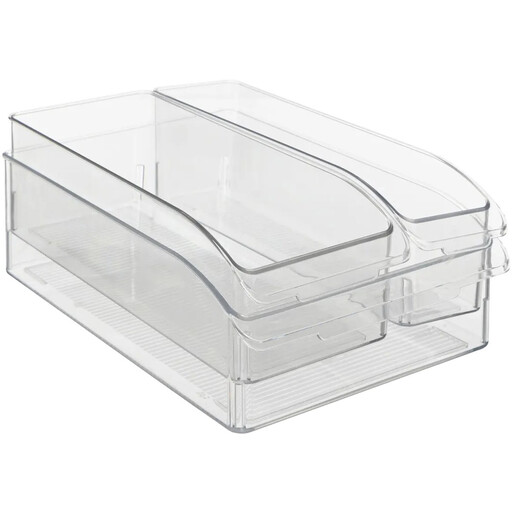
Why This Fits Their Persona: Three transparent containers are ideal for households looking to organise their refrigerator without investing in multiple specialist boxes. Each measures 30.5 × 21 × 9 cm.
The product description explicitly states that the boxes are not stackable, making it easier to plan their placement realistically before buying.
PET construction, a transparent design and cleaning with a damp sponge or, according to the specifications, in the dishwasher.
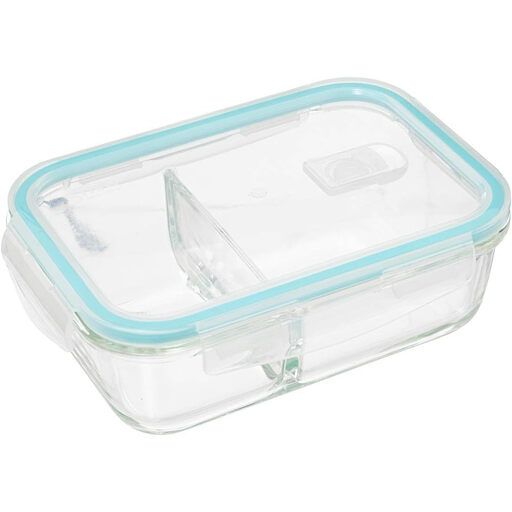
Why This Fits Their Persona: Made from borosilicate glass, this container is well suited to users who prefer glass to plastic and want to keep different components of a meal separate.
The specifications mention dishwasher compatibility and a silicone closure, but do not automatically confirm suitability for the oven or microwave. These functions should be checked separately before use.
Borosilicate glass, a divided interior and a dishwasher-safe design.
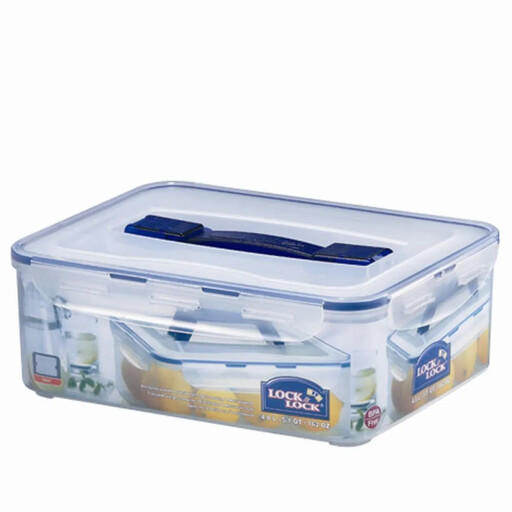
Why This Fits Their Persona: The generous capacity is designed for families, batch cooks and anyone who stores larger quantities in the refrigerator or freezer.
The external dimensions of 29.4 × 23 × 10.5 cm make it essential to check the available space before buying. According to the specifications, microwave use is permitted only without the lid and at temperatures up to 120 °C.
4.8-litre capacity, PP plastic, a silicone seal and, according to the product specifications, suitability for the freezer and dishwasher.
Organise food according to how often it is used and the temperature zone in which it belongs. Frequently used products should be kept at the front, while items needed less often can be stored further back. Open packages can be grouped together in a transparent box. A box with a handle makes it easier to pull out, but should not be overloaded.
Specialist bottle organisers can be useful for drinks. Small 550 ml containers are suitable for snacks, sauces or individual portions. In the freezer, use only boxes for which the manufacturer specifies suitable temperature resistance. Anyone looking to create a clearer layout in freezer drawers will find additional options in the Freezer Drawer Organisers category.
Our selection includes a range of refrigerator and freezer boxes, with details on size, material, stackability and cleaning.
That depends on the material and the specific product specifications. Some PP and glass containers can be cleaned in the dishwasher. PET or PS boxes, on the other hand, are sometimes intended for hand washing only. Lids and seals should be cleaned in accordance with the manufacturer’s instructions.
For meal prep, stackable food storage containers with the right capacity and a secure closure are particularly practical. For larger portions, models with capacities of 1.65, 3.5 or 4.8 litres may be suitable. An integrated divider can be useful for keeping ingredients separate. Before reheating, check whether the container is microwave-safe and whether the lid needs to be removed.
No. Only a box expressly labelled as freezer-safe should be used at low temperatures. Avoid sudden temperature changes and do not force frozen containers open at the closure. Also check that sufficient space remains for the contents to expand.