
Lieferung heute & morgen

Qualitätsgarantie

Willkommens-Angebote freischalten: KOSTENLOSE Lieferung | Bis zu 80 % RABATT | Kostenlose 30-Tage-JoyPlus-Testphase
App herunterladen
By a Joybuy Product Recommendation OfficerUpdated July 28, 2026
Rice paper is the foundation for light and versatile dishes like fresh summer rolls or crispy imperial rolls. But anyone who has tried to work with these paper-thin sheets knows the challenges: the paper tears when soaked, sticks to your fingers, or turns into a gummy mess. The selection in supermarkets or online can be overwhelming, and not every product delivers on its promise.
Before you buy rice paper, it's helpful to understand the common problems that lead to frustration in the kitchen. Many home cooks invest in products that are unsuitable for beginners due to their texture or whose marketing claims don't match reality.
To avoid these problems, you should pay attention to a few key parameters. These objective criteria will help you assess the quality of rice paper sheets regardless of advertising claims.
The texture and handling of Vietnamese rice paper are largely determined by its ingredients. The main components are almost always rice flour, water, salt, and often tapioca starch.
Rice paper is available in various shapes and sizes, each suited for different purposes.
The way you need to prepare rice paper also reveals something about its quality. High-quality paper typically requires only a brief dip (5-10 seconds) in lukewarm water. It then becomes soft and flexible on a smooth surface without immediately disintegrating. If a product requires a long soak or is very sensitive to water temperature, it can be more complicated to handle.
Based on these objective criteria, we have identified several products that are suitable for different needs and skill levels.
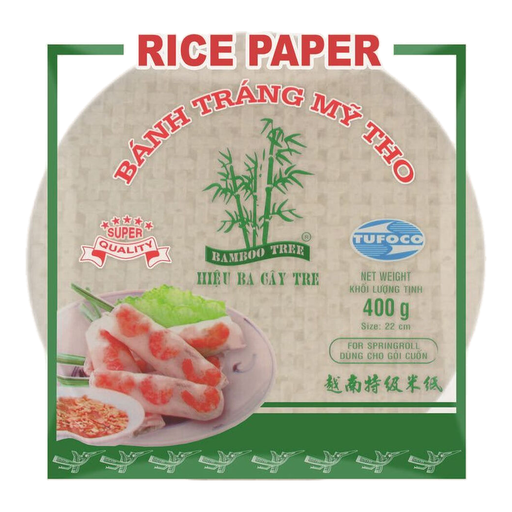
Why This Fits Their Persona: Ideal for anyone making summer rolls for the first time. The classic 22 cm round shape and balanced texture make rolling straightforward and lead to quick, successful results.
The blend of tapioca starch and rice provides good elasticity. The paper becomes pliable when soaked without tearing immediately, minimizing the typical problem of overly brittle sheets.
Made in Vietnam, it offers an authentic foundation. According to the manufacturer, the sheets are thin yet durable and versatile enough for fresh or fried rolls.
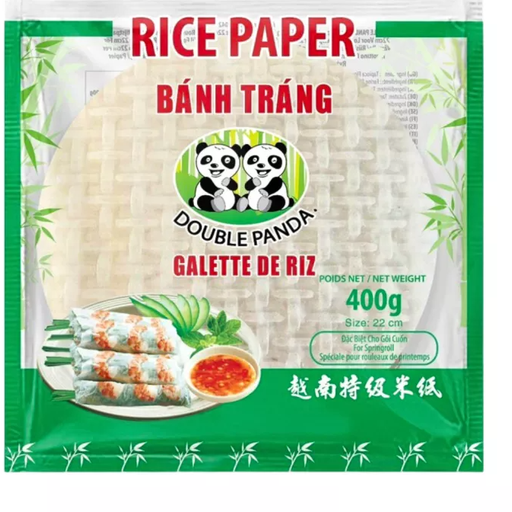
Why This Fits Their Persona: Anyone who regularly makes summer rolls in large quantities for family or guests needs a reliable product. The 400g package offers a good supply, and the paper's described strength is advantageous for quick prep.
The composition, with a high tapioca flour content, ensures a pliable texture and good tear resistance. This prevents the sheets from sticking together during prep or becoming soggy too quickly from moist fillings.
The 22 cm diameter is a practical standard. The sheets are designed to securely enclose even generous fillings without losing their stability.
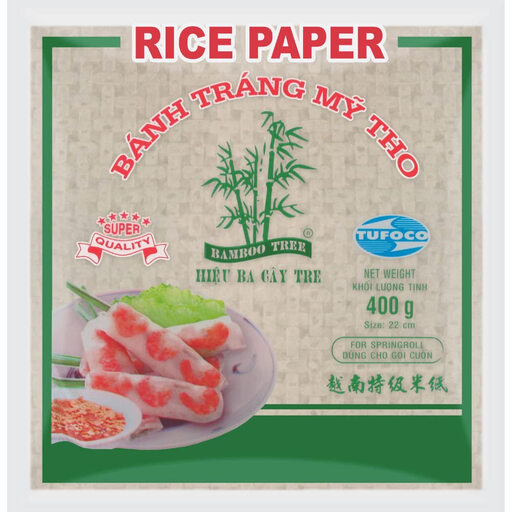
Why This Fits Their Persona: For chefs who love to experiment and value a special presentation. The square shape allows for alternative folding techniques and a very clean, uniform result that visually stands out from the crowd.
The square shape bypasses the problem of uneven soaking that can occur with round sheets in bowls that are too small. The straight edges are also easier and more precise to fold, which simplifies handling.
Allows for rolling very compact, sturdy rolls that are easy to slice and arrange. The shape is ideal for creating intricate rolls where the filling is artfully arranged.
We've compiled a complete, up-to-date list of products that fully meet these strict selection criteria and German food regulations.
The key is the water temperature and soaking time. Use a large, flat dish with lukewarm water (not hot). Dip each sheet individually for only about 5-10 seconds, until it just begins to soften. It should still have some firmness when you take it out of the water. Place it on a smooth, damp surface (like a clean cutting board). The paper will continue to soften on its own while you add the filling.
Although the terms are sometimes used interchangeably, there are differences. Rice paper for fresh summer rolls (G?i cu?n) is very thin and is eaten immediately after soaking and rolling. Rice paper specifically intended for fried spring rolls (Ch? giò) often contains a higher proportion of tapioca starch or sometimes even wheat flour, which makes it crispier and more stable when fried. Pay attention to the product description to find the right type for your dish.
Yes, rice paper is very versatile. You can cut it into strips and use it as a gluten-free noodle alternative in soups or salads. It can also serve as a wrapper for steamed or baked packets of fish, meat, or vegetables. Some people even use it to make crispy chips by briefly frying or baking the dry sheets.