
Lieferung heute & morgen

Qualitätsgarantie

Willkommens-Angebote freischalten: KOSTENLOSE Lieferung | Bis zu 80 % RABATT | Kostenlose 30-Tage-JoyPlus-Testphase
App herunterladen
A robot vacuum with a mopping function can take much of the effort out of day-to-day floor care. However, models vary considerably when it comes to navigation, carpet detection, maintenance and mopping technology. That’s why a high Pa rating alone tells you little about whether a model is right for your home.
Families, busy professionals and pet owners in particular will benefit from taking a closer look at the technical specifications. The following criteria can help you see past the marketing claims and avoid common buying mistakes.
Suction power is usually measured in Pa. A powerful robot vacuum with a high rating may perform well when picking up crumbs, dust and pet hair. But the main brush, airflow, carpet detection and ability to prevent hair from getting tangled around the brush matter just as much.
A high number can’t make up for a design that isn’t right for your needs. If you have pets, look out for anti-wrap or anti-tangle systems in particular.
Basic models simply drag a damp cloth across the floor, making them better suited to light dirt. Models with rotating mop pads, roller mops or automatic mop washing can automate more of the cleaning, but they need more space at the station and regular care of the water tanks.
If you have carpets, look for automatic mop-pad lifting too. Otherwise, damp mop pads may leave marks on carpeted floors.
Even a robot vacuum with a self-emptying station needs looking after. Check the filters, side brushes, sensors, main brush, and dirty- and clean-water tanks in line with the instruction manual. A station with self-cleaning, hot-water washing or warm-air drying can reduce the amount of work you do by hand, but it won’t eliminate it altogether.
Moderate power settings are enough for hard floors in many homes. On carpets, in floor joints and when dealing with pet hair, the right brush design and automatic power adjustment are more important. Look for:
Pa ratings aren’t always directly comparable across different manufacturers. Treat them as a guide rather than the only factor in your buying decision.
A robot vacuum with laser navigation will usually create systematic maps and can clean specific rooms on demand. LiDAR or LDS systems support virtual walls, no-go zones and room maps. Cameras, structured light or additional sensors can help detect cables, furniture and other obstacles.
Also check the height before you buy. A low-profile model can get under cupboards and sofas more easily, while one with a raised laser unit may bump into them.
When comparing mopping functions, look for:
Hot-water washing and drying cycles can help keep the station hygienic. Check the product specifications for details of the temperature, cycle length and features. Keep children and pets away from stations that use water heated to up to 75 °C while they’re running.
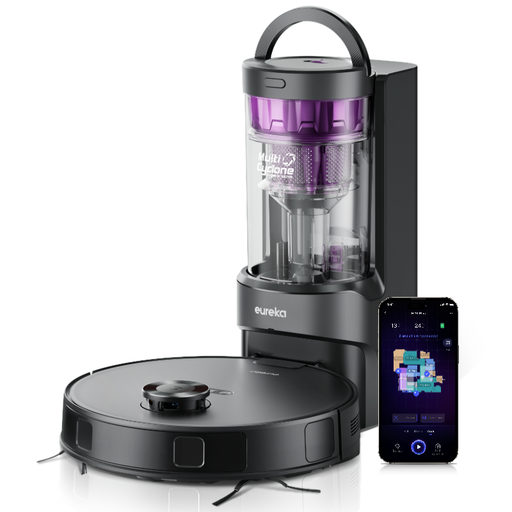
Why this product suits this profile: With 8,000 Pa suction power, a 180-minute run time, app control and a bagless station, this model is designed to help you get started with automated floor care.
The 10 mm mop lift can help when the robot moves onto carpets. LiDAR navigation and 3D obstacle detection are designed to handle less predictable routes.
A 2-litre bagless station, app and voice control, and an anti-tangle system.
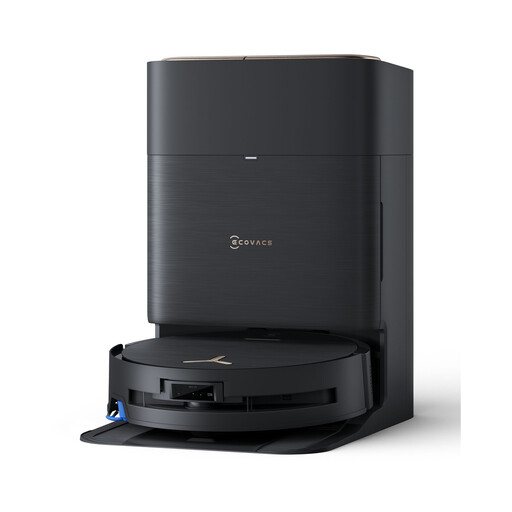
Why this product suits this profile: The OZMO roller-mop system, OMNI station and structured obstacle detection are designed for households with high expectations when it comes to vacuuming and mopping.
Lifting the mop helps keep wet and dry areas separate. According to the product specifications, the station washes the mop at a temperature-controlled setting between 40 and 75 °C, then dries it with warm air.
Rated suction power of 16,600 Pa, a roller mop with continuous self-cleaning, and automatic dust emptying.
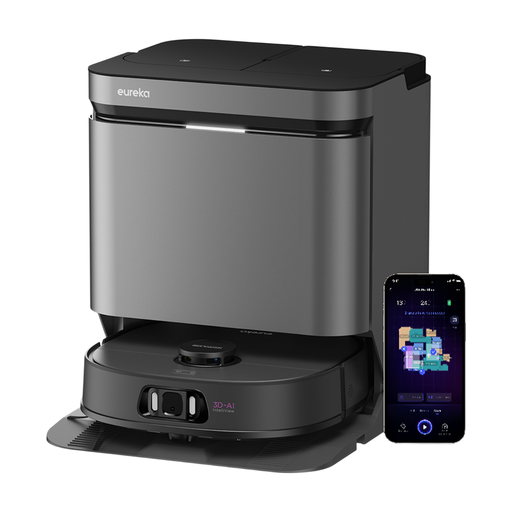
Why this product suits this profile: Families and pet owners can benefit from the stated anti-wrap technology, edge cleaning and automated station maintenance.
According to the product description, the FlexiRazor brush is designed to prevent hair from tangling. The brush lift may also be useful when dealing with liquids and larger particles.
Rated suction power of 16,200 Pa, 75 °C hot-water washing and a self-cleaning base station.
We’ve put together a complete, regularly updated list of products that meet these strict selection criteria and fully comply with the safety regulations in force in the EU.
It depends on the amount of dust and pet hair in your home, as well as how often you use the robot. Check the brushes and sensors regularly, clean the filters and wash the mop pads after use. A self-emptying or OMNI station means you’ll need to empty the dustbin by hand less often.
Yes, as long as the model can detect carpets and automatically lift its mop pads, or lets you exclude carpeted areas in the app. If you have deep-pile carpets, also check the maximum obstacle height and brush design.
As well as electricity, you may need to pay for replacement parts, dust bags, filters, mop pads and cleaning solution. Bagless stations avoid the cost of dust bags, while larger bins or dust bags can mean longer intervals between maintenance.