
Lieferung heute & morgen

Qualitätsgarantie

Willkommens-Angebote freischalten: KOSTENLOSE Lieferung | Bis zu 80 % RABATT | Kostenlose 30-Tage-JoyPlus-Testphase
App herunterladen
A robot vacuum and mop can make everyday floor care easier – provided the model is right for your home. Many disappointing purchases aren’t down to missing features, but to misunderstood specifications: a high Pa figure alone tells you little about navigation, brush maintenance or how well a model actually handles carpets.
Before you buy, check for these three common pitfalls:
Suction power is often measured in Pa. A model with 1,800 Pa may be enough for hard floors and low-pile carpets, while models with higher manufacturer figures may be worth considering for larger areas, deeper-pile carpets or homes with lots of pet hair. However, this figure is no guarantee of a particular cleaning result.
Also look for:
A robot vacuum for pet hair is particularly useful in homes with animals if it can not only suck up hair but also reliably remove it from the brush.
A robot vacuum with laser navigation will generally create systematic maps and can clean specific rooms on demand. Models with LiDAR or similar laser technology are worth considering if you need to manage several rooms, no-go zones or maps for multiple floors.
Obstacle-detection sensors can help the robot navigate around furniture, cables and items left lying around. However, they’re no substitute for preparing the room: pick up loose cables, thin fabrics, small items and fragile objects before starting the robot. This is especially important in homes with children and pets.
Also check:
A robot mop is best suited to smooth, sealed floors such as tiles, laminate or suitable parquet. The mopping function won’t replace a thorough manual clean when floors are heavily soiled. Look for a water tank of sufficient capacity, washable mop pads and clear guidance on cleaning products.
In larger homes, battery life should be suited to the floor area. It’s useful if the robot can return to its charging station automatically and then resume cleaning. A station that washes and dries the mop and empties the dust canister means less hands-on work, but takes up more space and needs regular care.
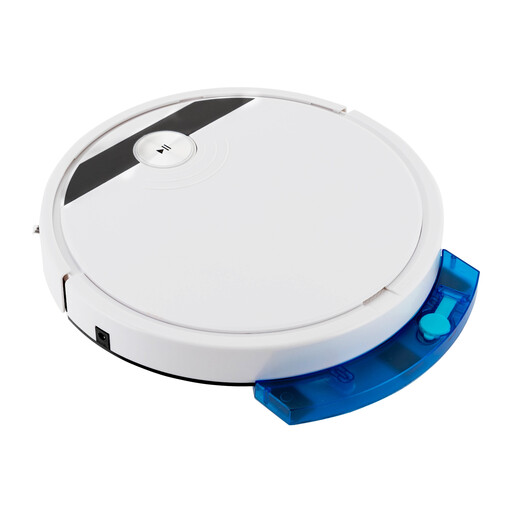
Why this product suits this type of home: For small to medium-sized homes with hard floors and low-pile carpets, this model offers six cleaning modes, app and remote control, and a stated runtime of up to 90 minutes.
The product specifications explicitly mention hard floors and low-pile carpets. This makes it easier to assess whether it’s suitable than a general claim about floor area.
1800 Pa according to the product description, a stated noise level of 55 dB, and control via the app or remote.
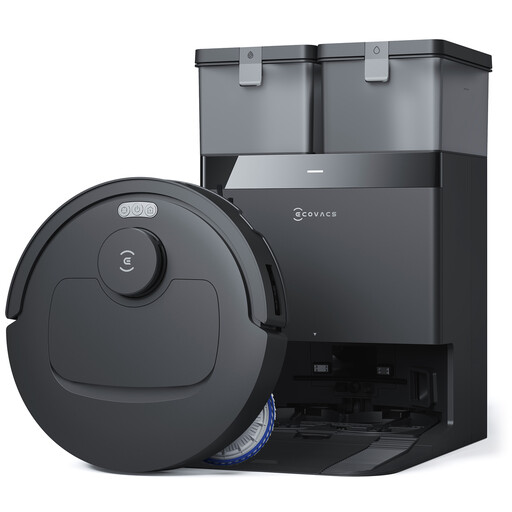
Why this product suits this type of home: This model combines laser navigation, app control, automatic mop washing and a stated runtime of up to 180 minutes.
According to the product description, the mops lift automatically on carpets. This helps prevent damp mops from coming into contact with textile flooring.
25,000 Pa according to the manufacturer, 75 °C mop washing, 45 °C hot-air drying and ZeroTangle 3.0.
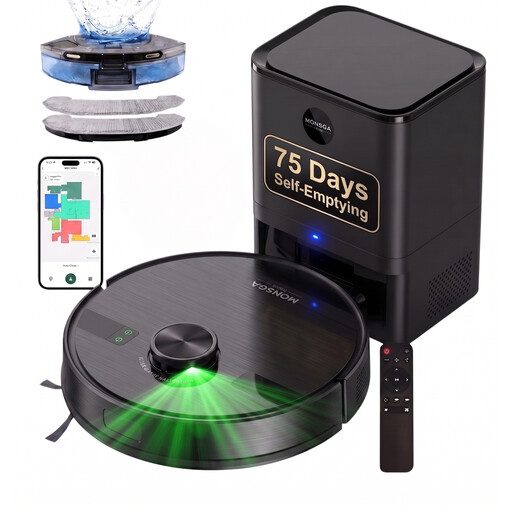
Why this product suits this type of home: For larger homes with hard floors and carpets, the stated LiDAR navigation, runtime of up to 180 minutes and 4-litre self-emptying station are all worth noting.
The instructions say to place the station on a hard, level floor with clear space around it. Planning for this in advance helps avoid docking and emptying problems.
9000 Pa according to the product specifications, LiDAR navigation, and app, remote and voice control.
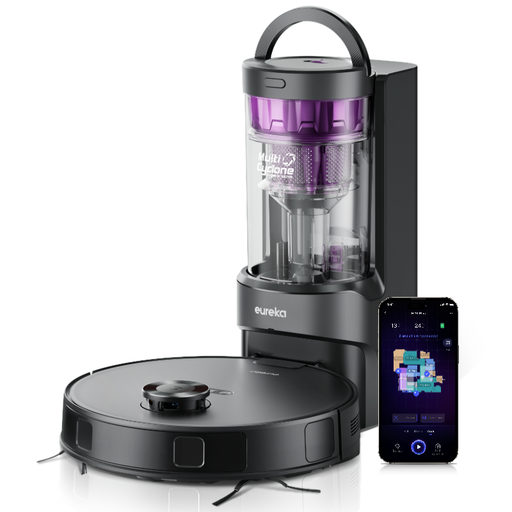
Why this product suits this type of home: This model is worth considering for homes with a mix of carpets, hard floors and pet hair, particularly if you prefer a bagless station.
The specifications mention an automatic mop lift when carpets are detected. Even so, check the carpet height and app settings before buying.
8000 Pa, 180-minute runtime, a 2-litre dust container in the station and DuoDetect 3D obstacle detection according to the product description.
We’ve put together a complete, regularly updated list of products that meet these strict selection criteria and fully comply with the safety regulations applicable in the EU.
Check filters, brushes and mop pads regularly, and clean them according to the instruction manual. Even a self-cleaning station still needs its clean- and dirty-water tanks, wash tray and sensors to be maintained. Pet hair may mean you need to clean the robot more often.
It depends on the model. A robot vacuum for carpets and hard floors should detect carpets and lift the mop, or support defined no-mop zones. For deep-pile carpets, pay particular attention to the manufacturer’s guidance on carpet height, clearance over edges and brush clearance.
In addition to electricity, you may need to budget for filters, mop pads, brushes, dust bags and cleaning solution. Bagless stations reduce the need for dust bags, while systems with automatic mop washing use more water and may require special cleaning products. Check the price and availability of replacement parts before you buy.