
Lieferung heute & morgen

Qualitätsgarantie

Willkommens-Angebote freischalten: KOSTENLOSE Lieferung | Bis zu 80 % RABATT | Kostenlose 30-Tage-JoyPlus-Testphase
App herunterladen
A shoe bench with storage serves two purposes: it keeps shoes organised and gives you somewhere to sit while putting them on or taking them off. To make sure your purchase remains practical in your home for years to come, look beyond the colour and upholstery. The key considerations are the dimensions, weight capacity, storage layout and suitability for the room you have in mind.
A hallway bench may look compact in photos, but can quickly take up valuable floor space in a narrow entrance. Before buying, measure the available width, depth and height. You should also leave enough clearance around doors, radiators and wardrobe fronts so they can open fully.
Depth is particularly important: a shoe bench that is 30 cm deep takes up less room than one that is around 50 cm deep. However, seat height can vary. So compare the product dimensions not only with the space available, but also with the seating position you have in mind.
Figures such as ‘up to 150 kg’ refer to the maximum weight capacity stated by the seller. They do not automatically tell you how much weight each shelf or drawer can support over time. Stability is also affected by how evenly the load is distributed and whether the bench is on a level surface.
Look for clear assembly instructions, secure fixings and guidance on how to use the bench. A shoe bench is designed for sitting; avoid standing or jumping on it unless the manufacturer specifically says this is safe.
A shoe rack with a seat cushion can be handy if you want easy access to the shoes you wear most often. However, open compartments leave their contents on show. A closed compartment or drawer is better suited to shoe care products, keys, gloves and other small items.
Check the height of the compartments too. Boots, high-top trainers and heeled shoes need more room than flat slippers. Adjustable shelves can be a real advantage here.
Before you choose a bench, note down the maximum floor space available. For a narrow hallway, a compact hallway bench around 55 to 68 cm wide may be a good option. Longer models over 100 cm can seat several people, but need a suitably wide stretch of wall.
Seat height matters too. An entrance bench should be high enough to make putting on and taking off your shoes comfortable. The cushion adds to the overall seat height, so be sure to factor this in when planning where to put it.
A bamboo shoe bench is one option for indoor use if you want a hard-wearing, easy-care surface. Lacquered finishes can generally be cleaned with a dry or slightly damp cloth. Even so, avoid leaving wet items from outdoors on the bench for long periods.
Upholstery in fabric, velvet or linen-look material gives you a softer seat. For a busy household, removable covers or clear instructions for spot-cleaning are useful. Harsh cleaning products can damage surfaces and fabrics.
Compare more than just the number of compartments: look at how they are arranged too. A shoe cabinet with compartments keeps shoes out of sight, while open shelves make everyday pairs easier to reach. A bench with a drawer provides extra room for small accessories, but won’t replace larger shoe compartments.
Felt pads or similar protectors can help prevent damage to your floor. If the furniture is self-assembly, check all the screws once it has been put together and tighten them if needed. Keep small assembly parts out of children’s reach while you are putting the bench together.
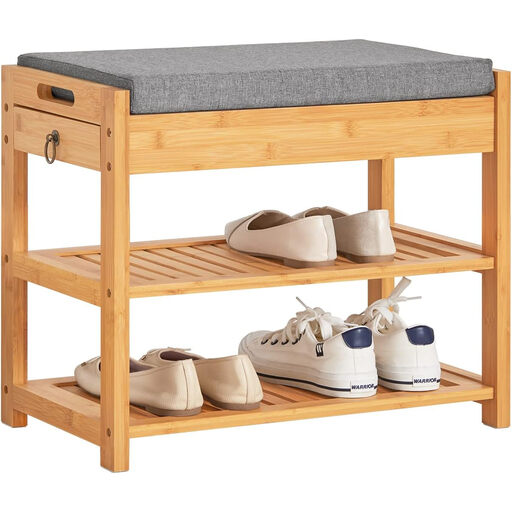
Why this product suits this profile: Measuring 55 × 30 × 46 cm, it’s a good fit for smaller hallways. Two shelves inside and a side drawer combine shoe storage with space for accessories.
The dimensions and exact compartment layout are provided. The seat has a 4 cm-thick cushion, and felt pads are designed to help protect the floor.
Bamboo construction, two internal shelves, a drawer and a seat cushion. The stated maximum weight capacity is up to 150 kg, with a recommended maximum load of 90 kg.
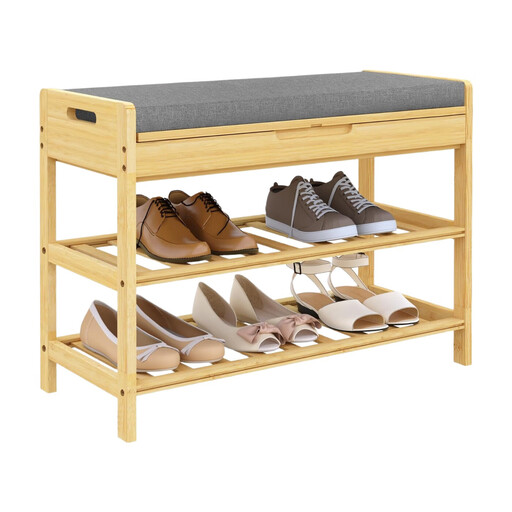
Why this product suits this profile: This model combines two open shoe shelves with a closed compartment beneath the seat. It’s a good choice for households that want to keep frequently worn shoes on show while tucking smaller items out of sight.
The product description sets out the storage layout, dimensions of 68 × 50 × 30 cm and cleaning instructions for a damp cloth. The seat is designed to be removable.
Bamboo with a clear lacquer finish, two open shelves, a closed compartment and a padded seat cushion. The stated maximum weight capacity is 150 kg.
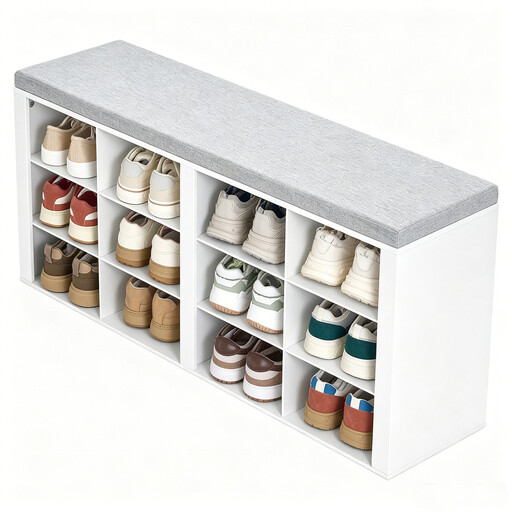
Why this product suits this profile: At 104.5 cm wide with twelve compartments, this model is suited to households with several types of shoes or regular rotation between everyday shoes, trainers and taller styles.
The height-adjustable shelves can be arranged to suit different shoe heights. Removable seat covers make it easier to clean individual upholstered sections.
Twelve compartments, adjustable shelves, removable seat covers and a stated weight capacity of 150 kg. Materials: chipboard, foam, cotton and linen.
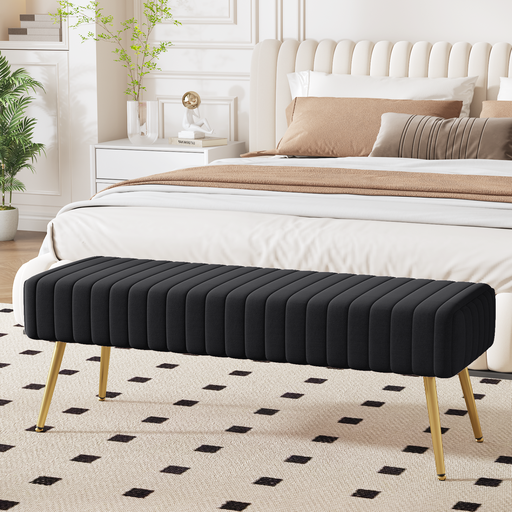
Why this product suits this profile: This longer, upholstered bench works well in a spacious entrance or as an extra seat at the end of the bed. It can also be used without built-in shoe compartments, alongside separate shoe storage.
The 113.5 cm length and the materials used are clearly specified. This makes it easy to check in advance whether the bench will fit your space and suit the way you plan to use it.
Padded velvet seat, foam filling and wooden legs. Designed as a bench for the hallway, bedroom or living room; the legs need to be assembled.
We’ve put together a comprehensive, regularly updated list of products that meet these strict selection criteria and fully comply with the safety regulations in force in the EU.
As well as the product dimensions, consider how doors open and how much space you need to walk through. A compact shoe bench with a depth of 30 cm leaves more room to move than a model around 50 cm deep. Try marking out the dimensions on the floor with masking tape. This will help you check that the entrance remains comfortable to use.
Its lifespan depends on the materials, assembly, load and care. Keeping it indoors in a dry place, setting it on a level floor and staying within the stated weight limit can all help it last. If you use your hallway bench regularly, check the screw fixings and stability from time to time.
It depends on your space and what you need. A shoe bench combines a seat and shoe storage in the same footprint. A separate rack may offer more storage capacity or be easier to expand. If sitting down to put on and take off your shoes is important, a shoe bench with a seat offers a practical advantage over a shoe rack alone.