
Lieferung heute & morgen

Qualitätsgarantie

Willkommens-Angebote freischalten: KOSTENLOSE Lieferung | Bis zu 80 % RABATT | Kostenlose 30-Tage-JoyPlus-Testphase
App herunterladen
By Joybuy Product Recommendation OfficerDate: August 28, 2026
A good marker is an indispensable tool in the office, lecture hall, and workshop. But the selection can be overwhelming, and a bad purchase quickly leads to frustration: the ink dries out, leaves unwanted permanent marks, or the pen leaks in your bag. The STAEDTLER Lumocolor series offers a solution for many applications, but the differences are in the details.
This guide will help you understand the key features and avoid the most common pitfalls when buying markers, so you can find a product that is precisely tailored to your needs.
Before you decide on a model, it's important to know the typical flaws that often only surface once you start using the pen.
To find the right Lumocolor pen, you should check three core parameters. These determine whether the pen is suitable for your purpose.
The most important distinction for a universal pen is the type of ink. The choice depends entirely on the surface and the purpose of the labelling.
The marker's tip determines the legibility and application of your writing. STAEDTLER uses clear classifications here:
The line widths are classified as follows:
Two features of the Lumocolor series offer significant practical value:
Here are some recommendations tailored to typical use cases.
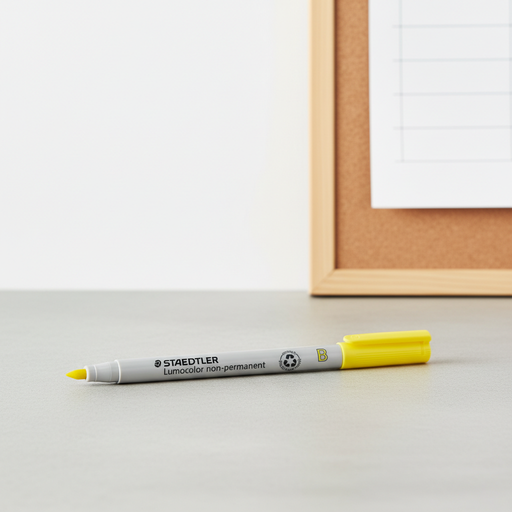
Why This Fits Their Persona: Ideal for lecturers and presenters who work with overhead transparencies or whiteboards. The chisel tip allows for both writing notes and highlighting key points without having to switch pens.
The water-soluble ink prevents the "permanent trap" on presentation surfaces. Markings can be effortlessly removed with a damp cloth, allowing for corrections and reuse of transparencies.
Versatile chisel tip (1.0 mm and 2.5 mm); high colour brilliance for excellent visibility; refillable with station 487 15.
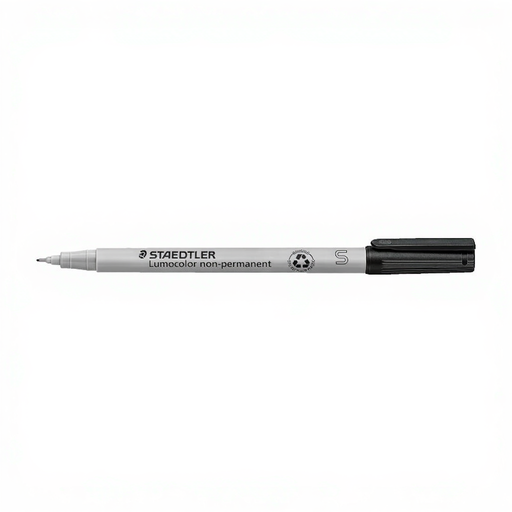
Perfect for office workers, students, and planners who need fine, detailed, and correctable labels on calendars, file dividers, or laminates.
The Airplane-Safe technology with automatic pressure equalisation prevents leaking in a laptop bag or backpack—solving a common problem for mobile users.
Superfine tip (S = 0.4 mm) for maximum precision; wipeable from most smooth surfaces; ideal for detailed, temporary notes.
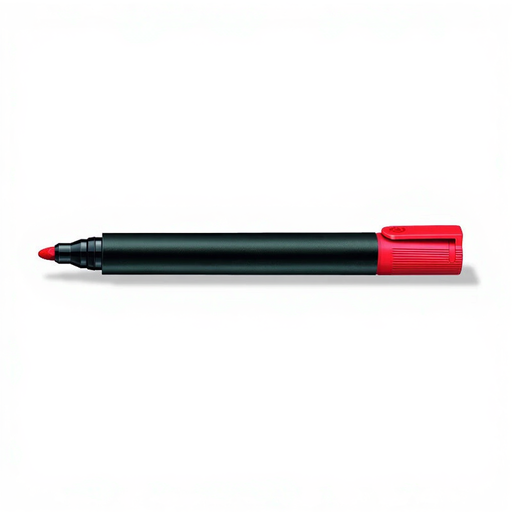
Suitable for trades, logistics, and industry, where robust, durable labelling that adheres to many materials and withstands moisture is required.
The DRY SAFE technology prevents the pen from drying out, even if the cap is forgotten in a hectic work environment. The waterproof ink ensures that the marking does not smudge.
Permanent, smudge-proof, and waterproof ink; robust round tip (2.0 mm); dries in seconds and is light-resistant.
We have compiled a complete, up-to-date list of products that fully meet these strict selection criteria.
A refillable Lumocolor pen can be easily refilled using the appropriate refill station (e.g., 487 15 for non-permanent or 487 17 for permanent). Insert the pen tip-down into the station. The pen draws in the ink via capillary action. According to the manufacturer, the pen is fully ready for use again after a few hours. Overfilling is not possible.
The main difference is the ink formula. A flipchart marker (e.g., Lumocolor 356) uses a water-based ink specially designed not to bleed through the paper. In contrast, a Lumocolor universal pen (permanent or non-permanent) is optimised for smooth, non-absorbent surfaces like transparencies or plastic and would bleed or show through on flipchart paper.
On smooth, non-porous surfaces like glass or metal, permanent ink can often be removed with alcohol (e.g., isopropyl alcohol or methylated spirits). Apply the liquid to a cloth and rub over the marking. However, on porous materials like paper or untreated wood, the ink is permanent and generally cannot be removed without a trace. Always test the cleaning method on an inconspicuous area first.