
Lieferung heute & morgen

Qualitätsgarantie

Willkommens-Angebote freischalten: KOSTENLOSE Lieferung | Bis zu 80 % RABATT | Kostenlose 30-Tage-JoyPlus-Testphase
App herunterladen
A STAEDTLER Lumocolor permanent marker can be used in the office, at university, at home, in the studio, laboratory or garden. But with so many nibs, colours and specialist options to choose from, it’s easy to end up with the wrong one. A marker with a broad chisel nib is unsuitable for small labels, while an extra-fine nib may not show up clearly on rough wood.
This buying guide explains which features really matter when choosing a permanent marker, and which Lumocolor option is best suited to different needs.
Permanent ink adheres to many smooth materials, including glass, plastic, metal and film, and sometimes wood. However, it can soak deep into porous surfaces and be difficult to remove. On non-porous materials, a suitable cleaning product, such as an alcohol-based cleaner, may be able to remove the mark.
It’s therefore a good idea to test the marker on an inconspicuous area before using it for the first time. Take particular care with furniture, coated appliances, textiles and delicate plastic surfaces.
The labels S, F, M and B refer to different nib widths:
A chisel nib can produce lines of different widths when you turn the marker. This is useful for headings and highlighting, but less suitable if you need a consistently fine line.
For selected Lumocolor models, STAEDTLER specifies DRY SAFE to ISO 554. According to the manufacturer, the marker can be left uncapped for several days without the nib drying out straight away. This helps during short interruptions, but doesn’t replace carefully recapping the marker after use.
For an even ink flow, horizontal storage is recommended for markers with chisel nibs. Make sure the cap clicks securely into place. If you’re storing the marker for a longer period, also follow the instructions on the product packaging.
A universal marker for glass, plastic, metal and wood is suitable for many smooth and slightly textured materials. The surface should be clean, dry and as grease-free as possible. On rough, untreated wood, the ink may spread or soak in more.
A weather-resistant garden marker is designed for plant labels, terracotta pots and wooden stakes used outdoors. Always check the specific product information for details of its resistance to weather and light.
A quick-drying marker is useful if your hand might pass over the writing. This is particularly relevant for left-handed users, technical illustrators and anyone marking film or glass. However, quick-drying ink can put more strain on the nib if the marker is often left uncapped.
The terms “waterproof” and “smudge-resistant” generally refer to the dried mark and the surface it’s on. Allow the ink to dry completely before it comes into contact with water.
A refillable permanent marker can last longer. According to the product information, several Lumocolor models are compatible with the STAEDTLER 487 17 refill station. A different refill station is specified for some models. Before buying, check that the station and marker are compatible.
Refillable markers still need an intact cap and suitable storage. Refilling is particularly useful if you regularly use the same line width and colour.
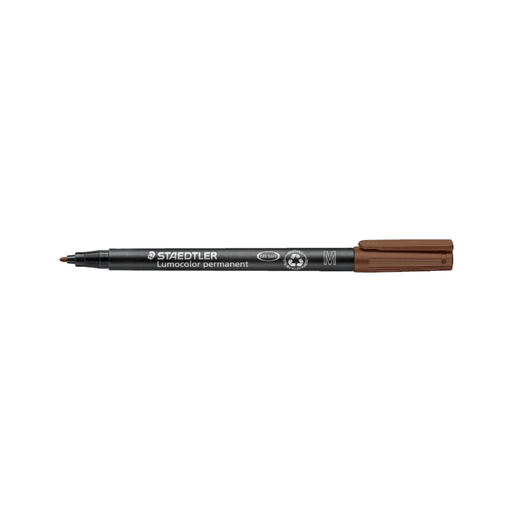
Why it suits this need: The medium nib, at approximately 1.0 mm, is suited to everyday labelling on different surfaces, without being limited to one specialist use.
Its line width isn’t limited to very fine details or large areas. However, you should still replace the cap after every use.
Approximately 1.0 mm line width, quick-drying permanent ink, and a PP barrel and cap.
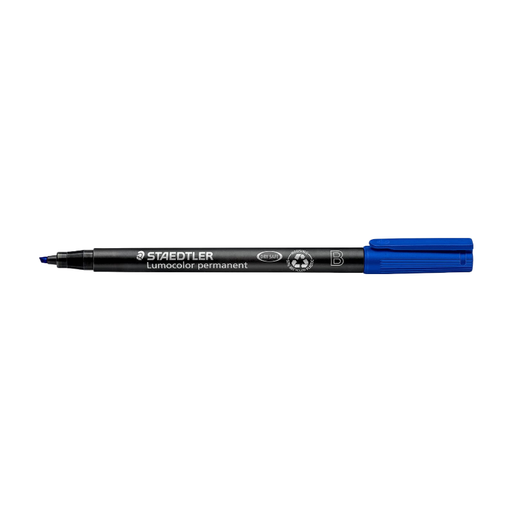
Why it suits this need: According to the product information, the chisel nib covers approximately 1.0 and 2.5 mm, allowing you to make both fine and broader marks.
The variable nib means you’re less likely to need several markers for different line widths. For very small writing, an F or S nib is more suitable.
DRY SAFE to ISO 554, according to the product information, quick-drying ink and refillable using station 487 17.
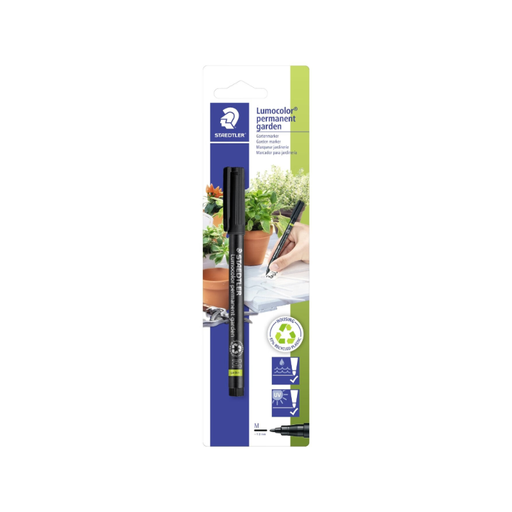
Why it suits this need: The black M nib, at approximately 1.0 mm, is designed for plant labels, wooden stakes, plastic signs and other materials used outdoors.
It’s designed for outdoor marking, rather than just use indoors in dry conditions. The surface and drying time still matter, though.
According to the product information, water-, smudge- and light-resistant ink for outdoor use, plus a quick-drying M nib.
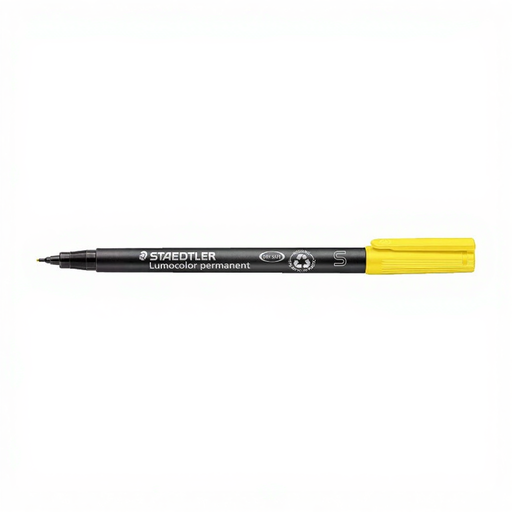
Why it suits this need: The superfine nib, at approximately 0.4 mm, is designed for small labels, fine technical lines and detailed markings.
The fine nib stops short labels from becoming unnecessarily thick. A chisel nib is better suited to large headings or rough wood.
Approximately 0.4 mm line width, DRY SAFE to ISO 554 according to the product information, and refillable with STAEDTLER 487 17.
We’ve put together a complete, regularly updated list of products that meet these strict selection criteria and fully comply with the safety regulations applicable in the EU.
A few simple steps will help you make a clean mark:
Keep permanent ink away from skin, food and surfaces that come into contact with food. Keep caps and small parts out of reach of children under three. For alcohol-based inks, make sure the area is well ventilated and keep the marker away from naked flames.
According to the product information, many Lumocolor universal markers are designed for glass, plastic, metal, film and other smooth surfaces. Before making a permanent mark, check that the marker is suitable for the specific material.
How long it lasts depends on the line width, writing pressure, frequency of use and storage. You can keep using a refillable model as long as the nib and barrel are in good condition and a compatible refill station is available. You should still replace the cap after every use.
For small labels and fine technical writing, an S nib at around 0.4 mm or an F nib at around 0.6 mm is a good choice. For larger headings and variable line widths, consider an M nib or a B chisel nib.