
Lieferung heute & morgen

Qualitätsgarantie

Willkommens-Angebote freischalten: KOSTENLOSE Lieferung | Bis zu 80 % RABATT | Kostenlose 30-Tage-JoyPlus-Testphase
App herunterladen
Clutter often isn’t caused by a lack of storage space, but by a storage solution that doesn’t match how you actually use it. A box with an interior that’s too small will sit half-empty, an unstable lid makes access awkward, and fabric boxes without enough structure quickly lose their shape on a shelf.
When buying storage boxes, households, families, students and residents of smaller flats shouldn’t focus solely on price or an attractive product photo. What really matters are dimensions, material, access and where you plan to use them.
A box can look large from the outside, but thick walls, a lid or reinforcements can significantly reduce the interior space. For clothing, bedding or shoes, always check the internal dimensions and the actual capacity. For under-bed storage, the available height beneath the bed is also crucial.
Stackable storage boxes need a flat lid, a sturdy base and, ideally, a non-slip design. If heavy items are placed on top or the weight exceeds the manufacturer’s recommendation, boxes can warp or topple. With plastic storage boxes in particular, pay attention to material thickness, reinforcing ribs and a clear weight limit.
Foldable storage boxes save space when they’re not in use. However, for heavy books, tools or full ring binders, they’re only suitable if the base and sides are sufficiently sturdy. Fabric boxes for shelves are generally better for clothing, toys, accessories or lightweight household items.
Before buying, compare the available space with the product dimensions:
Polypropylene (PP) is lightweight, wipe-clean and suitable for many areas around the home. Clear plastic storage boxes make it easy to see the contents, while opaque versions hide them away. With fabric boxes, check the base boards, seams and handles. Most models shouldn’t be machine-washed; a damp cloth and thorough drying is usually the gentlest way to care for them.
Storage boxes with lids protect the contents from dust and make stacking easier. A flip-top, zip or snap-on lid each has different advantages:
For delicate textiles, make sure the contents are stored dry. Medicines belong in a dedicated pill box, not loose in general household boxes. Always follow the instructions on the packaging or the advice of medical professionals for taking and storing medication.
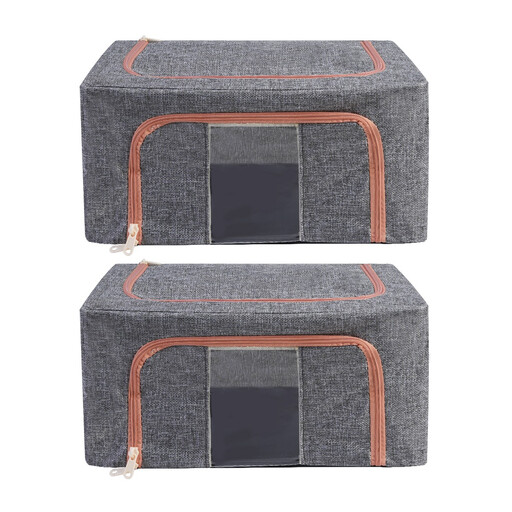
Why this product fits the profile: The foldable design is ideal for students, rented flats and households that want to store extra boxes compactly when not needed. Two viewing windows make it easy to check the contents.
Front opening and viewing windows reduce repeated opening. The boxes can be folded flat when not in use, rather than taking up permanent floor space.
40 x 30 x 20 cm per organiser, 24 litre capacity according to the product specification, carry handles and two access options.
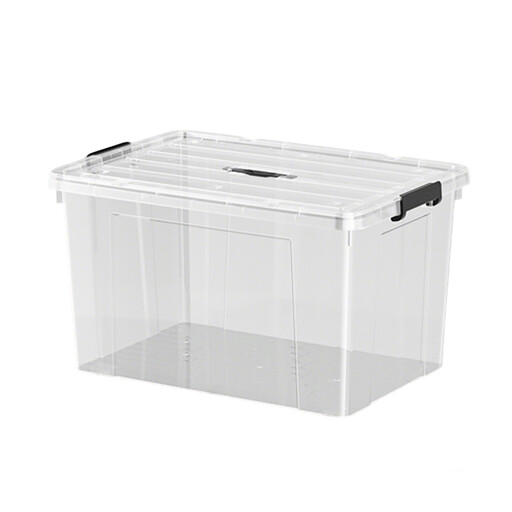
Why this product fits the profile: For the cellar, storage room, balcony or wardrobe, clear boxes with lids are useful when you need to quickly see the contents and stack them.
The product specification states a 2.5 mm thick PP body, reinforcing ribs, a non-slip base and a snap-on lid. The maximum load should still be observed.
51 x 39 x 35 cm, integrated handles, stackable design and wipe-clean PP surface according to the product description.
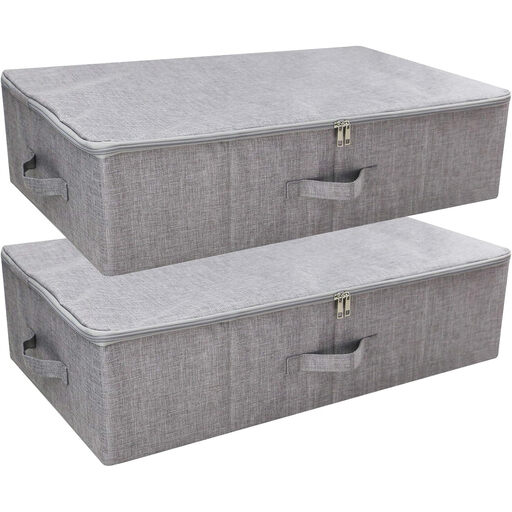
Why this product fits the profile: Two flat boxes make use of the space under the bed for seasonal clothing, blankets or accessories, without taking up shelf compartments.
The 18 cm height can be checked against your bed clearance before buying. The zip protects the contents from dust; avoid placing excessive weight on the boxes.
70 x 43 x 18 cm per box, foldable design, two per pack and a wipe-clean surface.
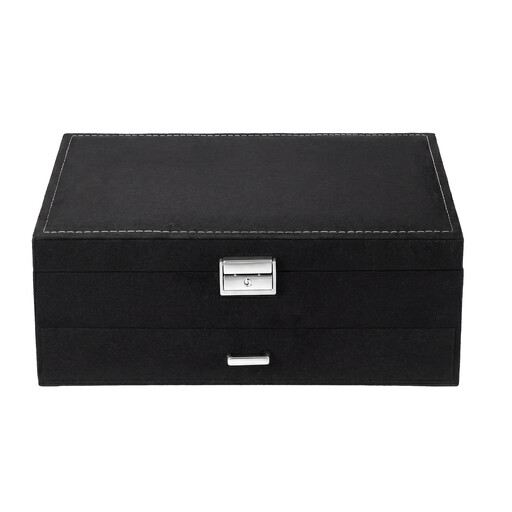
Why this product fits the profile: For jewellery, rings, earrings and necklaces, a jewellery box with separate compartments offers a different benefit than a large general-purpose box.
Separate compartments prevent small items from getting mixed up loosely. The box should be stored in a dry place, away from direct sunlight and out of reach of children.
Two tiers, drawer, velvet lining, lock and dimensions of 18.5 x 27 x 10.5 cm according to the product specification.
We’ve put together a full, regularly updated list of products that fully meet these strict selection criteria and the safety regulations in force in the EU.
For clothing, fabric boxes for shelves, foldable organisers with viewing windows or flat boxes for under the bed are all good options. What matters is dry storage conditions, the right dimensions and a closure that keeps dust out. Knitwear shouldn’t be packed so tightly that it permanently loses its shape.
Not every plastic box is airtight. A snap-on lid can protect the contents from dust, but it doesn’t automatically replace a tested seal. For textiles stored for longer periods, make sure the contents are completely dry. If there’s moisture in the storage area, it’s a good idea to check regularly.
Heavy boxes go at the bottom, lighter ones on top. The surface should be level, and the lids must be fully closed. When stacking several boxes, don’t exceed the weight limit stated by the manufacturer. Filled shoeboxes, book boxes and storage containers should therefore be sorted by weight.