
Lieferung heute & morgen

Qualitätsgarantie

Willkommens-Angebote freischalten: KOSTENLOSE Lieferung | Bis zu 80 % RABATT | Kostenlose 30-Tage-JoyPlus-Testphase
App herunterladen
A spilled glass of wine on the new sofa, muddy paw prints on your favourite armchair, or stubborn stains on the car seats—these mishaps are an unavoidable part of daily life. While a surface wipe often just pushes dirt deeper into the fabric, an upholstery cleaner promises a deep-cleaning and hygienic solution. However, the market is flooded with devices making grandiose advertising claims that often fail to deliver in practice.
As a Joybuy Product Recommendation Officer, I analyse product data daily to help you distinguish functional, long-lasting appliances from those with superfluous or poorly implemented features. This guide will walk you through the most common pitfalls and highlight the crucial criteria you should focus on.
Many devices look convincing at first glance, but a closer look often reveals flaws that can make your purchase a disappointment. Pay close attention to these three points to avoid a bad buy.
The Wattage Trap: High Power, Low Suction Manufacturers often advertise high wattage ratings (e.g., 600W), which many buyers equate with powerful cleaning performance. However, wattage only describes the motor's power consumption, not its actual suction power. An inefficient motor can use a lot of electricity while generating weak suction. The result: the fabric gets soaked, but the dirt isn't fully extracted, leading to water spots and longer drying times.
The Single-Tank Dilemma: Unhygienic and Impractical Budget-friendly models often use a single tank for both fresh and dirty water, or systems where separation is nearly impossible. This means that already-extracted dirt can mix back in with the clean water, potentially spreading it back onto the surface you're cleaning. Furthermore, these tanks are often difficult to empty and clean, making maintenance a hassle.
Limited Reach: Cables and Hoses That Are Too Short An often-overlooked but critical flaw in everyday use is a limited operating radius. A short power cord or a stiff, short suction hose can turn cleaning car interiors, stairs, or large sectional sofas into a frustrating task. Constantly having to switch outlets or manoeuvre the entire unit in tight spaces severely limits its usability.
To ensure your new wet/dry vac performs its job reliably, you should check the following technical specifications before you buy.
The true effectiveness of an upholstery cleaner is revealed by its suction power, measured in Kilopascals (kPa). This value indicates the strength of the vacuum the machine creates to pull water and dirt out of the fabric fibres.
A hygienic and efficient wet cleaner always features a distinct dual-tank system. One tank is exclusively for clean water (often mixed with a cleaning solution), while the second tank collects the dirty water separately. This ensures you are always cleaning with a fresh solution and prevents cross-contamination. Look for tanks that are removable and easy to rinse to simplify maintenance.
For flexible use, whether you're cleaning a sofa or using it as a car seat cleaner, the operating radius is crucial.
Based on the criteria above, we have identified several models that offer a well-designed solution for different user profiles and needs.
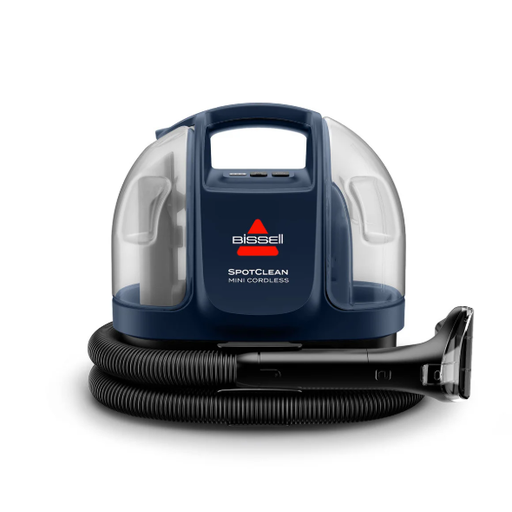
Why This Fits Their Persona: Ideal for those in apartments or smaller homes who need a quick, straightforward solution for everyday mishaps like spills or small stains. Its compact and lightweight design makes it easy to store and ready to use at a moment's notice.
This model avoids the impractical tank trap with a proven dual-tank system that ensures a hygienic separation of clean and dirty water, even in its compact form.
Compact design and low weight (approx. 4 kg) for effortless handling and storage. Reliable cleaning performance for everyday stains.
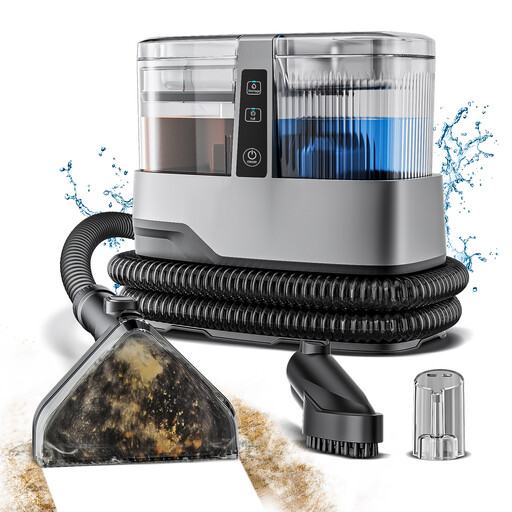
Why This Fits Their Persona: For households with children or pets, where stubborn messes like food spills, mud, or pet hair are common. The high suction power is crucial for deeply eliminating stains and odours, especially for pet stains.
This device escapes the "wattage trap" by combining high motor power (600W) with verifiably strong suction of 17 kPa. It delivers real power, not just high consumption figures.
The combination of powerful suction and a wet cleaning function allows for the thorough removal of deep-seated dirt and allergens.
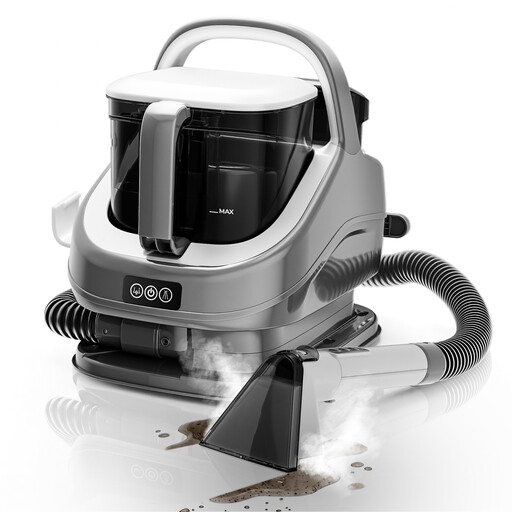
Why This Fits Their Persona: Perfect for users seeking a versatile solution for a wide variety of stain types—from fresh spills to old, set-in, or oily stains. The different modes offer a tailored treatment for every challenge.
This device solves the problem of lacking specialised features. Instead of a "one-size-fits-all" approach, it offers targeted tools for more effective stain removal with its cold water, hot water, and steam modes.
Three cleaning modes for maximum flexibility. The high power of 1300W is particularly effective for rapid heating in the hot water and steam modes.
We have compiled a complete, up-to-date list of products that fully meet these strict selection criteria and safety standards.
1. Can I use any cleaning solution in an upholstery cleaner? No, it is important to only use cleaning solutions recommended by the device manufacturer or those explicitly designated for use in wet/dry vacs and carpet cleaners. Conventional household cleaners can create too much foam, which can damage the motor and leave residue in the upholstery.
2. What is the difference between an upholstery cleaner and a pure steam cleaner? An upholstery cleaner (or wet/dry vac) works on the principle of spray extraction: it sprays a water-and-solution mixture onto the surface and immediately vacuums it up along with the dissolved dirt. A pure steam cleaner primarily loosens dirt with hot steam but typically lacks a suction function to remove the dislodged grime and moisture. Models that combine both features offer superior cleaning efficiency.
3. How long does it take for upholstery to dry after cleaning? Drying time depends on the machine's suction power, the ambient room temperature, and ventilation. A device with a high kPa rating will extract more water, reducing drying time to just a few hours (typically 2-6). With low-suction devices, it can take up to 24 hours.