
Lieferung heute & morgen

Qualitätsgarantie

Willkommens-Angebote freischalten: KOSTENLOSE Lieferung | Bis zu 80 % RABATT | Kostenlose 30-Tage-JoyPlus-Testphase
App herunterladen
Watercolour markers combine the controlled handling of a marker with effects reminiscent of liquid watercolours. This makes them ideal for illustrations, sketches, journaling, calligraphy and hand lettering. The range extends from artist-grade pens with high pigmentation to water-soluble markers for creative projects with children.
However, not every marker with a brush tip is automatically a watercolour marker. Before you buy, there are three typical pitfalls to watch out for: unsuitable ink, impractical tips and paper that is too thin.
Water-based ink can mix with water, but it doesn’t have to be completely removable from fabric or skin. For watercolour techniques, what matters is whether the colour can be reactivated with a damp brush after application. For children, you should also look for specific information about washability and age recommendations.
Also, be aware of the difference between water-soluble markers and waterproof artist pens. A waterproof Pitt Artist Pen, for example, is suitable for outlines that need to stay stable when painted over. For classic colour washes, you’ll need watercolour markers or watercolour pens with soluble ink.
A large marker set looks appealing if you’re after many shades. For practical use, however, at least two tips are often more important: a flexible brush tip for variable line widths and a fine, fibre or chisel tip for outlines.
Some dual-tip markers combine a 0.4 mm fine tip with a 1–6 mm brush tip. Other models use a brush tip and a chisel tip. So check the exact construction before you decide on a set.
Watercolour markers often release a lot of colour. On standard printer paper, washes can become patchy, the reverse side may show through, or the paper surface can roughen when mixed with water. For wet-on-wet techniques and intense colour layers, watercolour paper or mixed-media paper with sufficient weight is the more practical choice.
For journaling and notes, a marker with a lower ink flow may be more suitable. Always test new pens first on a separate sheet of the same paper.
Especially with markers for drawing and lettering, the hardness of the tip determines your control. A very flexible brush tip creates expressive lines but requires a steady pressure.
Watercolour markers usually contain water-based, water-soluble ink. This allows you to create colour transitions using a water brush or a conventional brush. For illustrations that need to stay visible over time, you should also look for lightfastness. This property is often listed separately from water solubility in the product details.
Waterproof artist pens, such as certain Pitt Artist Pens, are intended for outlines and dry drawing techniques. According to the product description of each model, they can be water-resistant and lightfast; you should check the specific information before buying.
A set of 10 or 12 colours is enough for a reduced colour palette, sketches and initial practice. 20 colours offer more possibilities for watercolour mixing. Sets with 40, 60 or 120 colours are aimed more at users who regularly colour, compare shades or work on several projects at once.
A colour chart helps you document the actual ink colour on the paper you use. A pouch or box protects the tips and makes them easier to transport. Store the markers horizontally if possible, close each cap carefully after use, and keep them away from direct sunlight and extreme temperature fluctuations.
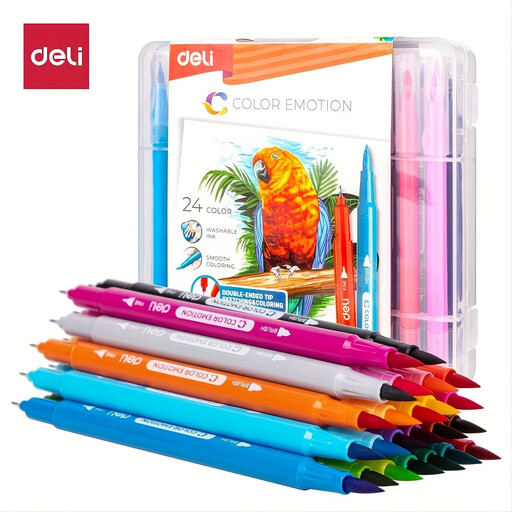
Why this product fits the profile: The 24-colour set offers a manageable introduction to drawing, colouring and basic watercolour techniques with two tips per marker.
The dual-tip design reduces the need for additional fine or chisel pens. The colour selection stays compact and is easier to organise than with very large marker sets.
24 colours plus a combination of brush tip and second precision tip.
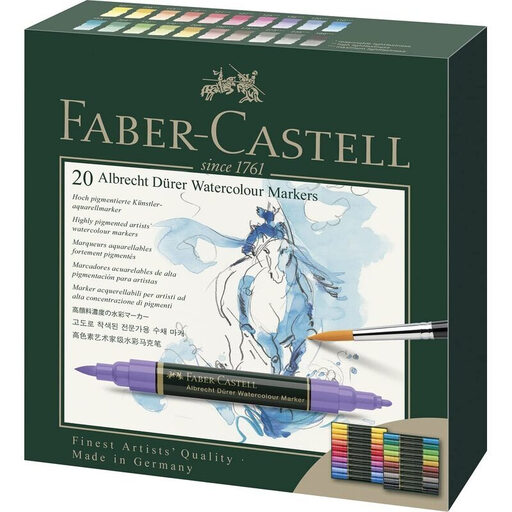
Why this product fits the profile: This set is aimed at artists, illustrators and ambitious hobby creatives who want to combine water-soluble ink, two tips and travel-friendly storage.
The product details specify water-based, water-soluble and highly pigmented ink as well as high lightfastness. This means the relevant information for watercolour processing is clearly stated.
20 markers, brush tip and sturdy fibre tip, plus a compact wallet for on the go.
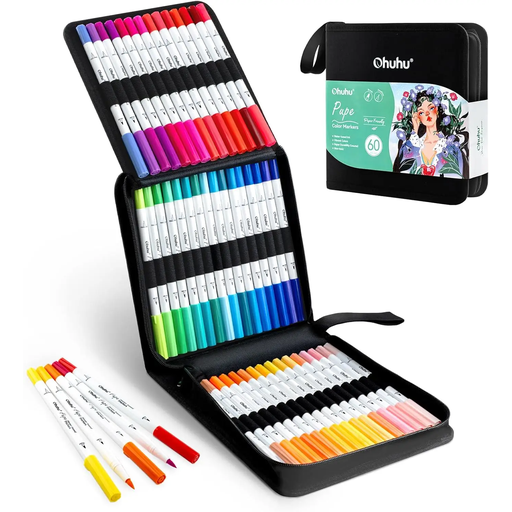
Why this product fits the profile: For regular colouring, journaling, hand lettering and illustrations, this set offers a broad colour palette with a fineliner and flexible brush tip.
The 0.4 mm fine tip complements the broad brush tip and prevents the need for a second pen system for details. A storage box helps with organisation.
59 colour shades plus a colourless blender, water-based ink and included storage.
We’ve put together a complete, regularly updated list of products that fully meet these strict selection criteria and the safety regulations in force in the EU.
First apply the colour dry onto watercolour paper. Then reactivate individual areas with a damp brush or water brush. Work with little water and test the colour intensity beforehand on a scrap piece. Some inks dry quickly; washes should therefore be done section by section.
The lifespan depends on usage, paper and storage. Close the caps immediately after use and store the pens horizontally. With frequent use, brush tips can wear out faster than fine tips. Sets with replaceable tips are practical for heavy users.
That depends on the individual product. Look for a stated age recommendation, safety information and details about washability. Even water-based ink can stain fabrics or surfaces. Caps and replacement tips are also small parts and should be kept away from young children.