If you’re specifically looking for wholegrain
You want chocolate flavour for Sunday breakfast, but you also want to know which wholegrain ingredients a product contains and whether their proportion is stated.


When wholegrain is a priority at Sunday breakfast, choose chocolate cereals or chocolate muesli with a clearly stated wholegrain content or specifically named wholegrain ingredients. Compare sugar per 100 g separately from the portion you actually eat: a high wholegrain content does not automatically mean a product is low in sugar. Ingredients and allergen information can help narrow down your choice further.
You want chocolate flavour for Sunday breakfast, but you also want to know which wholegrain ingredients a product contains and whether their proportion is stated.
You want to compare chocolate cereals using the nutritional information per 100 g, then see what those figures mean for your portion.
Before buying, you may need to check for cereals containing gluten, milk, nuts, soya or ‘may contain’ warnings. A wholegrain claim doesn’t answer these questions.
First, check whether the cereal base meets your wholegrain preference. Then compare nutritional values, product type and the ingredient information that matters to your household.
| Criteria | What to check when buying | Who it matters most to |
|---|---|---|
| Wholegrain and fibre | Check the stated wholegrain content or named wholegrain ingredients; compare fibre per 100 g separately. | If I’m specifically looking for wholegrain for a chocolate breakfast, I need clear information rather than just an impression from the pack. This is a priority for around 36% of consumers. |
| Sugar and sweetening | Check ‘of which sugars’ per 100 g and per portion, as well as the ingredients list for sweeteners. | I want to know how much sugar is in my bowl and whether a product is sweetened differently. Around 29% of consumers give this priority. |
| Product type and texture | Distinguish between flakes, granola and muesli; for crunchy mixes, compare sugar and fat per 100 g too. | For a leisurely Sunday breakfast, I want to decide whether I prefer flakes or crunchy chocolate muesli. Around 21% of consumers prioritise this preference. |
| Allergens and gluten | Read the ingredients, highlighted allergens and ‘may contain’ warnings on the pack you buy; check specifically for a gluten-free label if you need one. | In my household, a product needs to meet our ingredient and allergen requirements before taste or nutritional values come into it. This is the main concern for around 14% of consumers. |
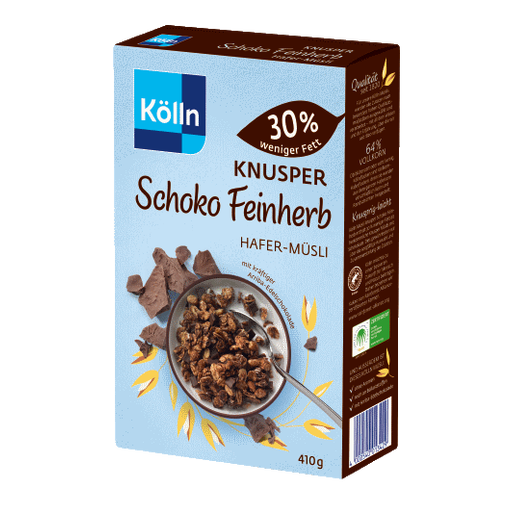
Retailer information for Nestlé FITNESS Granola Chocolate states 56% wholegrain and 17.8 g of sugar per 100 g. EDEKA24 lists wholegrain ingredients and 20 g of sugar per 100 g for Kölln Knusper Schoko Feinherb. Wholegrain and sugar therefore answer different questions when you’re choosing a product.
Check both figures separately before deciding based on product type and chocolate flavour.
Retailer information for Nestlé FITNESS Cocoa Protein lists maltitol syrup as a sweetener, as well as wheat and oats. So a no-added-sugar claim doesn’t tell you everything about how a product is sweetened or whether it meets your ingredient requirements.
As well as checking the front of the pack, read the full ingredients list and allergen information.
Wholegrain can come from cereals that contain gluten. Other dietary claims don’t replace a specific gluten-free label either.
If you need a gluten-free product, check for the relevant label and read the ingredients on the current pack.
Kellogg's Deutschland lists wheat flour as the first ingredient in Choco Krispies Chocos. The word ‘cereal’ alone doesn’t tell you the wholegrain content.
If you’re looking for a wholegrain option, check for a specific wholegrain claim or clearly named wholegrain ingredients.
The products featured cover different types: Cocoa Protein cereals and chocolate granola.
Kölln Knusper Schoko Feinherb is one of the muesli options featured, if you’re looking for an oat and wheat base with chocolate.
Choco Krispies Chocos are included here as a comparison with products that state their wholegrain content clearly.
These products are chocolate oat mueslis and crunchy chocolate mueslis for Sunday breakfast. For the variety you’re interested in, compare the wholegrain ingredients, nutritional information and allergen warnings on the pack.
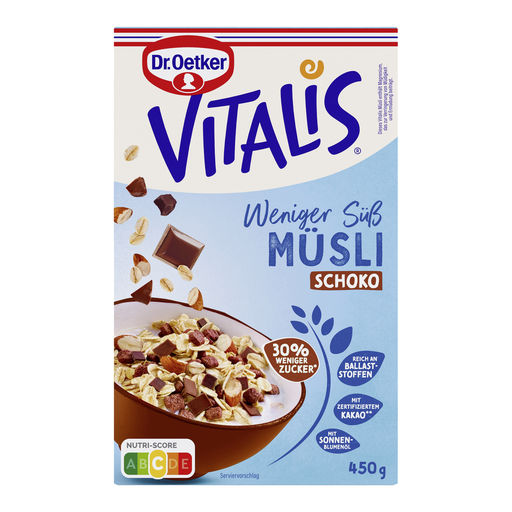 No image available
An option if you’re looking for crunchy chocolate muesli. Before buying, check the nutritional information, ingredients and allergen warnings on the pack.
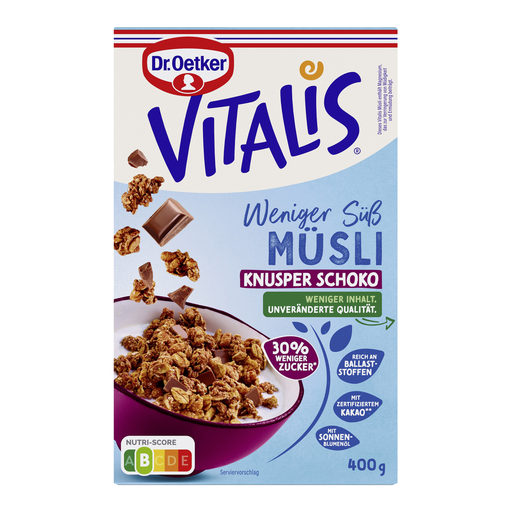 No image available
For anyone who prefers a crunchy chocolate mix for breakfast. Compare the figures per 100 g and check the ingredients and allergens on the pack you choose.
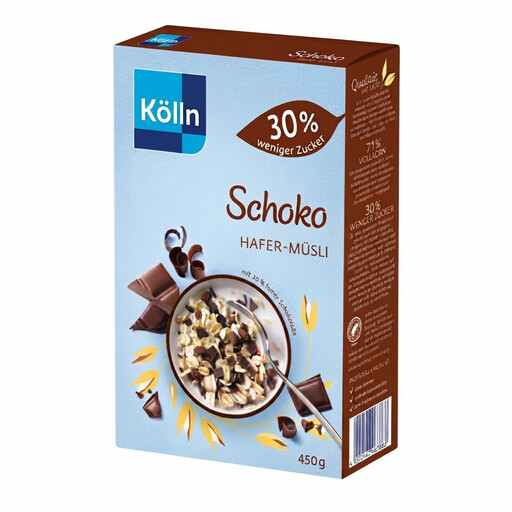 No image available
A chocolate oat muesli for anyone choosing their breakfast mix based on the information on the pack. Compare sugar and fibre per 100 g, and check the allergen warnings if needed.
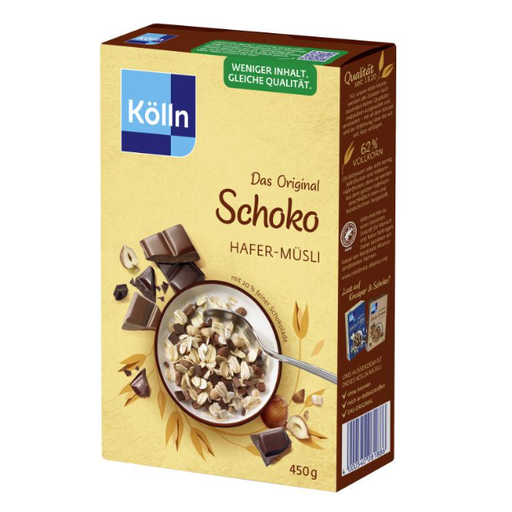 No image available
An option if you’d like to combine chocolate with oat muesli. To compare it with other varieties, read the nutritional information, ingredients and allergen warnings on the pack.
 No image available
For a breakfast of crunchy chocolate oat muesli. Check the wholegrain ingredients and compare sugar and fat per 100 g before choosing this variety.
The front of the pack alone isn’t enough for a comparison: check for a stated wholegrain content and read the ingredients list. Lebensmittelverband Deutschland explains that ingredients are listed in descending order by weight. This can also help you see which cereal ingredients are included in different chocolate cereals.
Start by using ‘of which sugars’ per 100 g as a common basis for comparison, then consider how much you actually eat. Lecker24 lists 1.8 g per 100 g for Nestlé FITNESS Cocoa Protein; EDEKA24 lists 20 g per 100 g for Kölln Knusper Schoko Feinherb. Check the ingredients too, as a no-added-sugar claim doesn’t describe every type of sweetener.
Not necessarily: a wholegrain claim describes the cereal base, not whether it is gluten-free. If you need a gluten-free product, look specifically for the relevant label and check the ingredients on the pack you’re buying.
Check the highlighted allergens in the ingredients list and, where relevant, any ‘may contain’ warnings for the variety you choose. For the types of products featured here, information about cereals containing gluten, milk, nuts or soya may be particularly important; always go by the pack you buy.
No. Bundeszentrum für Ernährung describes the Nutri-Score as a five-level way of showing a product’s nutritional composition. If it appears on the packs you’re comparing, it can offer an additional point of reference; you should still check wholegrain ingredients, sugar per 100 g and allergens individually.