
Lieferung heute & morgen

Qualitätsgarantie

Willkommens-Angebote freischalten: KOSTENLOSE Lieferung | Bis zu 80 % RABATT | Kostenlose 30-Tage-JoyPlus-Testphase
App herunterladen
A 10 kg washing machine is ideal for families, larger households and anyone whose bedding, towels and everyday clothes regularly pile up. The larger drum can combine several loads and is particularly practical if you wash frequently. However, a high load capacity alone is not enough to base your choice on.
Many models advertise steam functions, short programmes or especially low consumption figures. What matters is whether these features suit your available space, the amount of laundry you generate and your actual washing habits.
The 10 kg figure refers to the maximum load for certain programmes, not automatically to every wash cycle. Short programmes, care programmes and delicate fabrics often have lower load limits. Regularly overloading the drum can result in poorer washing performance, more creasing and additional imbalance during the spin cycle.
You should therefore check the instruction manual to see which programmes support the full capacity. For a household that regularly generates large amounts of laundry, a family washing machine with a capacity of 9 to 11 kg can be a sensible choice. For two people, a smaller front-loading washing machine is often sufficient.
A washing machine with a quick programme is intended for lightly soiled and smaller loads. A 15-minute programme can save time in everyday use, but it cannot replace a longer Eco or cotton cycle for heavily soiled laundry, bedding or towels.
Also check whether the advertised running time only applies to a partial load. For example, according to the product details, the SuperSpeed programme on the Samsung WW7000D is based on 5 kg in 39 minutes.
A washing machine with steam can, depending on the model, be used to freshen fabrics, reduce creasing or form part of a special programme. The function does not replace the appropriate washing temperature or correct detergent dosage. Claims regarding bacteria or allergen reduction should only be assessed in connection with the specific programme, test conditions and stated evidence.
According to the manufacturer’s information, certain TCL models reduce 99.99 per cent of the tested bacteria; an SGS report citing Staphylococcus aureus and Escherichia coli is given as the basis. This figure applies to the stated test conditions and should not be equated with a general medical efficacy claim.
A large drum with a diameter of, for example, 530 mm can make it easier to load large items. Even with a 10 kg washing machine, you should compare the actual external dimensions. The width, height and depth determine whether the appliance will fit through doors and whether there is sufficient clearance at the intended installation position for the wall, water connection and drain hose.
A slim washing machine can be an alternative where space is limited. According to the product details, the Comfee CFP01EW70W-JD is 440 mm deep and offers a 7 kg capacity. The CHiQ JW75883G is specified as having a depth of 47 cm and a 7 kg capacity. With particularly shallow appliances, check that the door can open fully.
The EU energy efficiency classes range from A to G. You should also check the energy consumption per 100 wash cycles and the water consumption per Eco 40–60 cycle. These figures are easier to compare than purely promotional claims such as “particularly economical”.
Some models are advertised with additional ratings such as A-10 per cent or A-30 per cent. Always compare these figures with the official energy label and product data sheet. An energy-efficient washing machine saves resources above all when Eco programmes and suitable load sizes are used regularly.
A 1,400 rpm washing machine removes more water from laundry in many cases than a model running at 1,000 or 1,200 rpm. This can reduce the subsequent drying time. A lower spin speed is often preferable for delicate fabrics.
Noise levels are stated in decibels and should be considered separately for washing and spinning. Spin noise levels of around 70 to 76 dB are frequently found in the product data for front-loading machines. An inverter or BLDC motor can enable precise speed control, but the actual noise level also depends on the installation, floor and load. A quiet washing machine therefore needs to be carefully levelled, with its feet adjusted correctly.
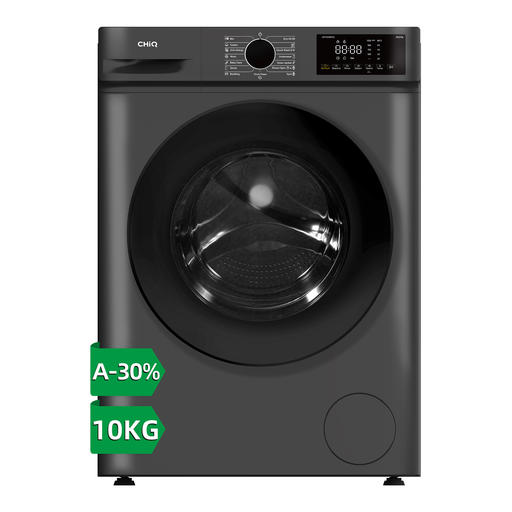
Why this product suits this profile: According to the product details, this front-loading washing machine combines a 10 kg capacity with a slim design measuring 465 mm, making it suitable for families with limited installation space.
The specifications explicitly list 16 programmes, a 15-minute quick programme and a maximum spin speed of 1,400 rpm. This makes it possible to compare advertising claims with specific functions.
10 kg capacity, BLDC motor, steam programme and, according to the manufacturer, A-30 per cent energy efficiency.
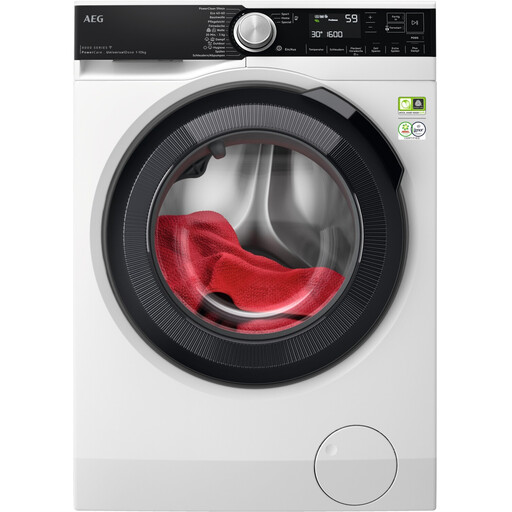
Why this product suits this profile: This 10 kg model is aimed at households looking to combine a high spin speed, automatic adjustments and app control in one appliance.
The product data states 51 kWh per 100 Eco cycles, 47 litres of water per cycle and 1,600 rpm. This makes key running costs and performance figures transparent.
A class, ÖKOInverter motor, 10 kg capacity, ProSteam programme and AquaStop according to the product details.
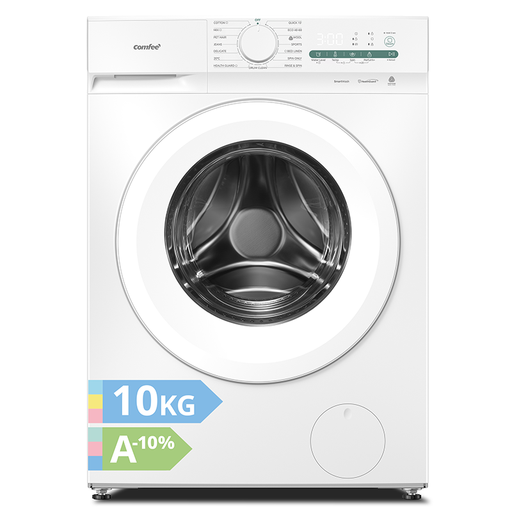
Why this product suits this profile: According to the data sheet, pet owners and households that regularly wash a variety of fabrics get a pet hair programme, steam, bedding and sportswear programmes.
The selection is not limited to a general hygiene claim. Instead, it lists specific programmes for pet hair, bedding, jeans, sportswear and delicate fabrics.
10 kg, 1,400 rpm, BLDC inverter motor, 15-minute quick programme, add-laundry function and 16 programmes according to the product details.
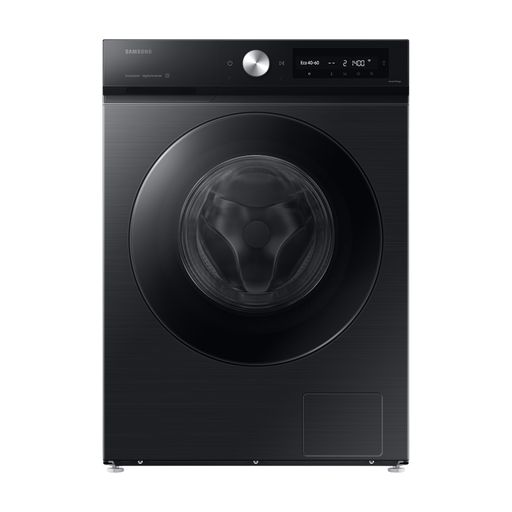
Why this product suits this profile: With an 11 kg capacity, this front-loading machine is aimed at households that want to combine large loads, bedding and frequent washes in one drum.
The product data separates the capacity, 1,400 rpm, 72 dB during spinning and 42 kWh per 100 cycles. It also explicitly states that the quick wash is based on a partial load of 5 kg.
11 kg, A energy efficiency class, Digital Inverter motor, Hygiene Steam programme, add-laundry function and app control according to the manufacturer’s information.
We have put together a complete, regularly updated list of products that fully meet these strict selection criteria and the safety regulations applicable in the EU.
Many front-loading machines are approximately 60 cm wide and 85 cm high. The depth varies considerably and can be around 52 to 66 cm with large drums. Also measure the space needed for opening the door, hoses and ventilation.
That depends on the amount of laundry. For two people with little washing, a 7 or 8 kg machine may be more economical. Anyone who frequently washes duvets, workwear or sportswear can benefit from 10 kg, but should not continuously run the drum with small partial loads.
Running costs depend on the electricity price, water price, consumption per cycle and frequency of use. You should therefore compare the figures on the EU energy label, particularly kWh per 100 cycles and litres per wash cycle. Short programmes save time, but are not automatically the cheapest option for every load.