
Lieferung heute & morgen

Qualitätsgarantie

Willkommens-Angebote freischalten: KOSTENLOSE Lieferung | Bis zu 80 % RABATT | Kostenlose 30-Tage-JoyPlus-Testphase
App herunterladen
A 2000W electric heater is suitable as a portable supplementary heater for living rooms, bedrooms, offices, studies, cellars and other indoor spaces. Its high power rating allows rooms to warm up quickly, but it also means correspondingly high electricity consumption when operated continuously.
Three common marketing traps in particular can lead to poor purchasing decisions: a stated room size is not realistic for every home, an ‘Eco mode’ does not guarantee automatic savings, and a low decibel rating says little if the appliance operates continuously with a powerful airflow. The technical specifications, design and safety features are therefore what really matter.
Manufacturer specifications such as ‘suitable for 20 to 25 m²’ are intended as a guide. Actual heating performance depends on factors including ceiling height, insulation, window area, outdoor temperature and the desired room temperature. A 2000-watt appliance may perform differently in a well-insulated room than in a draughty period property or an unheated cellar.
For smaller rooms, an electric fan heater rated at 1000 to 1500 watts may be sufficient. In larger or poorly insulated rooms, a 2000-watt appliance should generally be planned as a supplementary heater rather than automatically relied on as the sole source of heat.
An electric heater converts electrical energy into heat. At full power, a 2000-watt electric heater uses 2 kWh per hour of operation in theory. You can estimate the actual cost using this formula:
Power in kW × operating time in hours × electricity price per kWh = cost
A thermostat, timer or ECO mode can reduce operating time once the target temperature has been reached. However, this does not automatically change the maximum power consumption of 2000 watts. An energy-saving fan heater is therefore most useful when its temperature control works reliably and the appliance does not run unnecessarily.
Overheat protection and tip-over protection are important features for a portable heater. However, they are no substitute for safe use. The appliance should be placed on a level, dry and stable surface. Curtains, furniture, bedding and other flammable materials must be kept at a sufficient distance. Heaters must not be covered or used to dry clothes.
A convection heater warms the room air through natural air circulation. It generally operates without a powerful fan, which can make it pleasant to use in living and working spaces. However, heat is usually distributed more slowly than with a fan heater.
A ceramic fan heater uses a PTC ceramic element and a fan. This means warm air can be felt quickly, although it also creates an audible airflow. A portable fan heater is well suited to short-term warming, for example at a desk or in the bedroom before going to bed.
Several heat settings are practical, for example 1000, 1500 or 2000 watts. They allow you to adjust the appliance to the room size and heating needs. A fan heater with a thermostat switches the heating elements off or back on once the target temperature has been reached. Look for a clearly stated temperature range and easy-to-understand controls.
A quiet fan heater is particularly important in bedrooms, children’s rooms and offices. With fan-assisted appliances, the design should also be taken into account alongside the decibel rating. A convection heater typically operates without a fan, making it an interesting option for noise-sensitive users.
A fan heater with remote control makes it easier to operate the appliance from the sofa or bed. An electric heater with a timer can switch the appliance off automatically. Check whether the timer supports a switch-off time only or also programmed start times.
A 2000-watt appliance should be connected directly to a suitable wall socket. Depending on their design, multi-socket extensions and extension leads may place an additional load on the electrical system. Ventilation openings must remain unobstructed. An ordinary electric room heater is not automatically suitable for bathrooms, utility rooms or areas exposed to splashing water. An IP rating should only be taken into account when it is clearly specified for the particular product and the intended location is suitable.
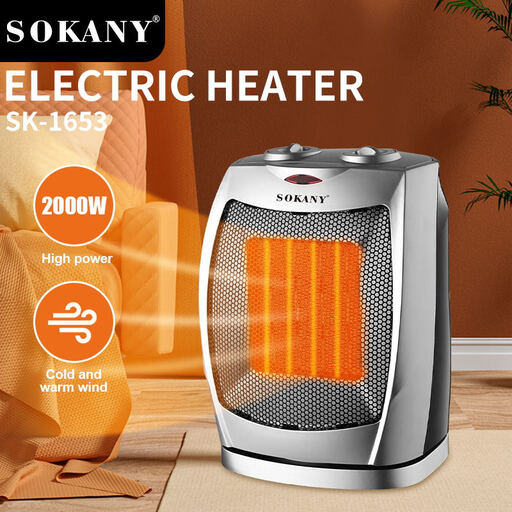
Why this product suits this profile: This compact appliance offers 1000- and 2000-watt settings, a built-in carry handle, plus heating and fan modes for use in smaller rooms, offices or bedrooms.
The second power setting means you do not have to heat continuously at maximum power. Overheat protection is explicitly specified.
Two heat settings, fan mode, carry handle and automatic shut-off in the event of overheating.
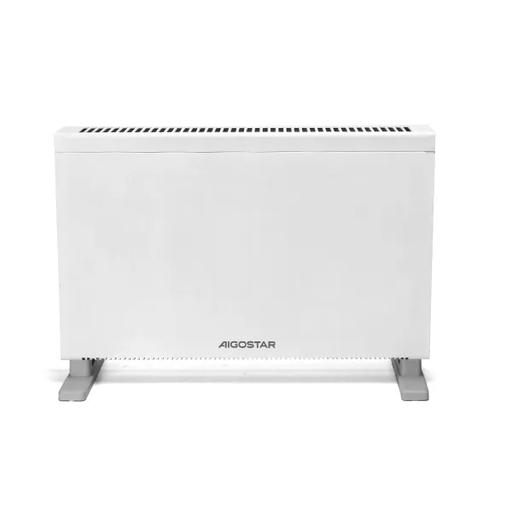
Why this product suits this profile: According to the manufacturer, this convection heater is designed for 20 to 25 m² and combines natural convection with touch controls, a remote control and temperature adjustment from 5 to 35 °C.
The stated room size is linked to specific power settings of 1250 and 2000 watts. Overheat and tip-over protection are specified.
Natural convection, 24-hour timer, remote control and adjustable temperature.

Why this product suits this profile: This appliance is an interesting option for users who want to combine several operating modes, a thermostat, ECO mode, a 24-hour timer and portability for living rooms, cellars or offices.
The timer and adjustable temperature help limit unnecessary operating times. Overheat and tip-over protection are listed in the product specifications.
Five operating modes, ECO mode, remote control, thermostat and 24-hour timer.

Why this product suits this profile: This compact ceramic fan heater is designed for rooms measuring 10 to 20 m² and has a stated noise range of 25 to 42 dB, together with temperature control from 5 to 35 °C.
The specific decibel rating allows for a more objective comparison than simply describing an appliance as ‘whisper-quiet’. Several safety features are specified.
PTC ceramic technology, three power settings, remote control, timer and tip-over protection.
We have put together a complete, regularly updated list of products that fully meet these strict selection criteria and the safety regulations applicable in the EU.
At full power, it uses 2 kWh per hour in theory. The thermostat, power settings and timer can reduce the actual operating time. For an individual calculation, multiply the consumption by your current electricity price.
No. The appropriate power rating depends on the room size, insulation, ceiling height and target temperature. Product area specifications are intended as a guide. A 1500-watt appliance may also be sufficient for smaller, well-insulated rooms; in larger rooms, a portable electric heater is often best used as a supplementary heater.
Its service life depends on operating time, exposure to dust, storage conditions and build quality. Keeping ventilation grilles clear, storing the appliance in a dry place and avoiding continuous operation at maximum power can reduce strain on the appliance. Before every use, check the casing, cable and plug for visible damage.