
Lieferung heute & morgen

Qualitätsgarantie

Willkommens-Angebote freischalten: KOSTENLOSE Lieferung | Bis zu 80 % RABATT | Kostenlose 30-Tage-JoyPlus-Testphase
App herunterladen
An electric fan heater can warm up a room quickly, but it doesn’t automatically replace a permanently installed heating system. For rented flats, home offices, bedrooms or smaller living areas, it’s therefore important to choose the right heat output, a safe placement and sensible controls.
Many poor purchases come down to three typical marketing pitfalls:
A 2000-watt fan heater is generally suitable for medium-sized rooms, provided the building conditions are right. Some models offer multiple power levels, for example 750 and 1500 watts, or 1250 and 2000 watts. This allows you to adjust the heat output to the actual situation.
For smaller rooms, a 1500-watt unit may be sufficient. A ceramic fan heater with a PTC heating element uses a self-regulating ceramic element. Even so, the actual room performance still depends on air circulation and insulation.
As a practical guide:
A fan heater with a thermostat switches the heating function on and off depending on the set target temperature. This is usually more practical in daily use than a unit running continuously. Comfortable temperature ranges are around 5 to 35 °C, with adjustment in small steps.
You can roughly calculate the running costs:
Power in kW × hours of operation × electricity price per kWh = electricity costs
A 2000-watt unit equals 2 kW. If it runs for one hour, it theoretically uses 2 kWh. An energy-saving fan heater is therefore most useful when it offers low power levels, ECO control, a thermostat and a fan heater with a timer. The actual saving depends on usage, room temperature and your electricity tariff.
For bedrooms, children’s rooms or an office, a quiet fan heater with a low noise rating is beneficial. Units with a fan naturally produce an airflow; the manufacturer’s dB rating should therefore be treated as a comparative value.
A fan heater with a remote control is handy when you want to adjust the temperature, timer or oscillation from the sofa or desk. An automatic swivel function distributes the warm air over a wider angle, but doesn’t increase the heat output.
At a minimum, look for:
A multi-socket extension lead or an unsuitable extension cable can be problematic with high power consumption. Always follow the instruction manual for your specific unit.
The following models differ in power, design, controls and intended use. The details are based on the respective product descriptions.

Why this product fits the profile: This compact model offers fan-only mode, 750 watts, 1500 watts and ECO mode. LED display, remote control, oscillation and a timer from 1 to 12 hours cover all the essential everyday functions.
Multiple power levels mean you don’t have to heat at full power all the time. Tip-over protection and overheat protection are integrated according to the product description.
1500-watt PTC heating, 12-hour timer, remote control and wide oscillation.

Why this product fits the profile: The product description states a heat output of 1500 watts, a thermostat range of 5 to 35 °C, remote control and a noise level of 25 to 42 dB. This makes the unit ideal for users who pay particular attention to control and operating noise.
The stated dB values make the noise level more comparable. A thermostat and graduated power settings support controlled operation.
25 to 42 dB according to the product specification, temperature control from 5 to 35 °C and multiple safety features.
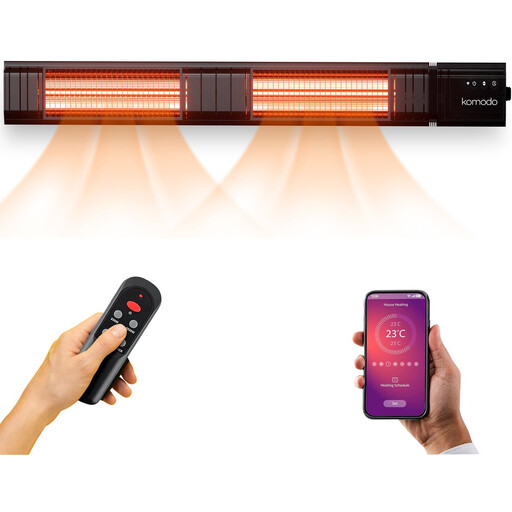
Why this product fits the profile: This infrared heater is designed for indoor and outdoor use and, according to the description, offers 3000 watts, nine settings, remote control, app control and 180-degree oscillation.
The IP65 rating is more specific than a general promise of weather resistance. However, the unit must not be submerged and must be set up according to the instructions.
Infrared heat, nine heat levels, 24-hour timer and app or remote control.
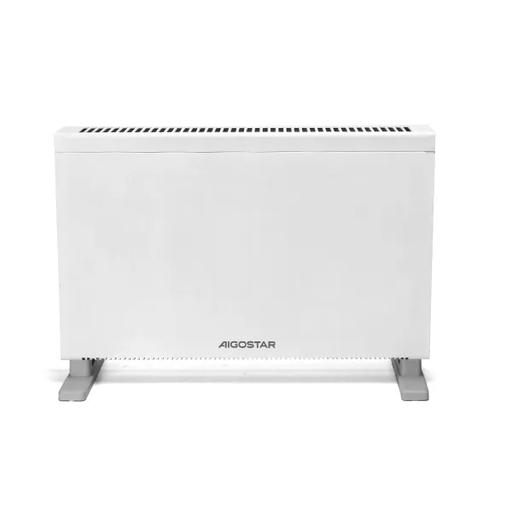
Why this product fits the profile: According to the product information, this convector heater is designed for approximately 20 to 25 m² and offers ECO, 1250 and 2000-watt operation, touch controls, remote control and a timer of up to 24 hours.
The two power levels and ECO mode offer alternatives to running continuously at 2000 watts. Anti-tip and overheat protection are specified.
Convection principle, 20 to 25 m² rating, 24-hour timer and remote control.
We’ve put together a complete, regularly updated list of products that fully meet these strict selection criteria and the safety regulations in force in the EU.
A portable fan heater should be placed on a hard, level and dry surface. Carpets, duvets or upholstered furniture can block the airflow. The unit must not be covered and should not be used for drying clothes.
For bathrooms, pools or permanently damp areas, ordinary indoor units are not suitable. An infrared patio heater described as an outdoor model may only be used within its specified protection rating and in accordance with the instructions. A balcony heater should also be positioned so that cables, the housing and hot surfaces do not become a trip or burn hazard.
A 2000-watt unit running at full power for one hour theoretically uses 2 kWh. A thermostat, timer and lower power levels can reduce the actual running time and therefore the consumption. The decisive factors remain room size, insulation, target temperature and your electricity tariff.
That depends on the instruction manual and the specific safety features. Even with overheat protection and tip-over protection, the unit should not be covered and must have sufficient clearance from textiles. A timer can limit the operating time; unsupervised continuous operation should generally be avoided.
The lifespan is influenced by operating time, dust exposure, transport and proper use. Regularly cleaning the air intakes, storing the unit in a dry place and switching it off immediately if the cable is damaged or if you notice unusual smells or noises all help to reduce risks. Maintenance and repairs should only be carried out according to the manufacturer’s instructions.